Contact Us

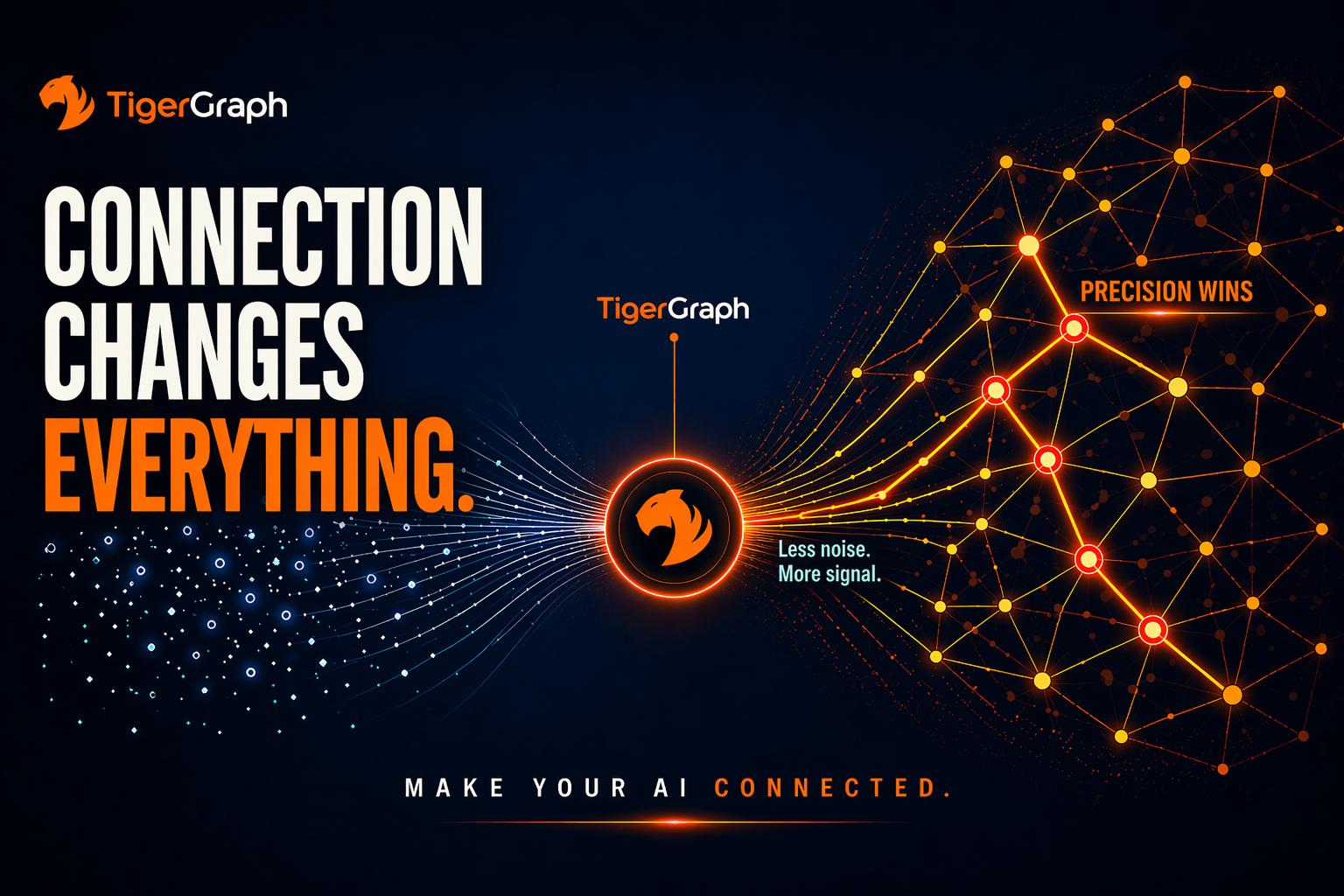
Connection Changes Everything

AI systems rarely fail because they lack data. In most enterprises, there is already more data than any model can reasonably consume. And increasingly, they don’t fail because the models themselves are insufficient. The capabilities of modern models are not the primary constraint.

They fail because the system has no persistent understanding of how its data connects. Call this missing capability what it is: Relationship Runtime.

A layer that computes how data connects, instead of asking the model to infer it on every request.

The Missing Context is Structure

That absence is subtle. On paper, most AI stacks look complete. They include applications, large language models, vector databases, and access to enterprise data. Retrieval works. Models respond. Outputs appear reasonable.

But underneath that surface, something critical is missing. The system has no representation of the relationships that define how that data behaves as a whole.

Similarity-based retrieval can surface fragments that appear relevant, but it cannot assemble those fragments into a coherent system. It identifies proximity, not structure. It tells you what looks related, but not what is connected.

In practice, most AI stacks look like this: data → vector search → model → application

What’s missing is the step in between: where relationships are computed, not guessed.

From Retrieval to Reconstruction

Consider what happens when a query is executed. A request such as “Is this behavior risky?” triggers retrieval of semantically similar items—transactions with overlapping characteristics, users with comparable patterns, or documents that describe related scenarios. What the system receives is a set of fragments.

What it does not receive is the structure that explains how those fragments fit together. The model is then asked to bridge that gap.

It must determine which entities refer to the same underlying object, infer how they are connected, reconstruct sequences across time, and resolve inconsistencies across sources. In effect, it is reconstructing a graph of relationships from unstructured inputs.

That reconstruction is not occasional. It is performed repeatedly, on every request, under latency constraints, and within the most computationally expensive layer of the system.

Disconnected data forces models to rebuild reality on every request.

Why This Doesn’t Scale

Once you see this clearly, the failure mode becomes difficult to ignore. The system is not simply retrieving answers. It is rebuilding state. And because that state is not preserved, it is recomputed repeatedly.

This pattern has predictable consequences. As more context is added to improve recall, the model must evaluate a larger set of possible relationships. The amount of computation required to reconcile that context grows, latency increases, and throughput declines as each request occupies resources for longer periods.

Under load, these effects compound. Systems that appear stable in controlled environments begin to degrade as usage scales, not because the model has changed, but because the amount of work required per request has increased.

The Problem is Where Computation Happens

This is not a model problem. It is not a data problem. It is a systems problem. The system is performing the wrong class of computation in the wrong place.

Relationship inference, figuring out how pieces of data connect, is being pushed into the model, where it is expensive, repeated, and opaque. What should be a structural property of the data becomes a per-request computation.

What Changes When Data is Connected

The alternative is not more data, larger context windows, or more sophisticated prompting. It is to change where that computation occurs.

When relationships are represented explicitly when data is modeled as a connected structure rather than a collection of independent fragments, the system no longer needs to infer that structure during inference.

It can traverse it directly, identifying relevant paths and assembling coherent context before the model is ever invoked.

This is the shift from reconstructing state to operating on state.

The Role of a Relationship Runtime

A relationship runtime resolves connections once and makes them reusable.

Instead of asking the model to reconstruct how entities relate, the system computes those relationships ahead of time and provides them as part of the context. The model is no longer responsible for discovering structure; it operates on structure that already exists.

This changes the system in fundamental ways. The amount of data processed per query decreases. The amount of computation required declines. Latency stabilizes. Throughput increases. What was previously recomputed repeatedly becomes reusable.

Where TigerGraph Fits

This isn’t about adding capability. It’s about moving a class of computation to where it belongs. TigerGraph fits into this architecture as the system responsible for that layer of computation.

It is designed to represent and traverse relationships at scale, allowing connected context to be constructed efficiently and reused across queries. What changes is not just the data that is sent to the model, but the type of work the model is required to perform.

Entire categories of repeated reasoning: inferring connections, reconciling fragments, and exploring irrelevant paths, are all removed from the inference loop.

At that point, the role of the model becomes clearer. It is no longer responsible for reconstructing the world from partial signals. It is responsible for interpreting a structured representation of that world.

The Real Difference

Connection, in this sense, is not an enhancement. It is the difference between a system that approximates reality on demand and one that operates on a consistent view of it. Without it, every request starts from scratch. With it, the system begins from a state that already reflects how its data behaves.

The Real Takeaway

Connection doesn’t just improve AI. It changes what AI has to do. Without it, every request rebuilds the same structure from fragments. With it, structure becomes the input.

The systems that scale won’t be the ones with the largest models. They will be the ones that stop doing the same work twice.


High-Performance Graph Database Schema Design for Connected Data | TigerGraph

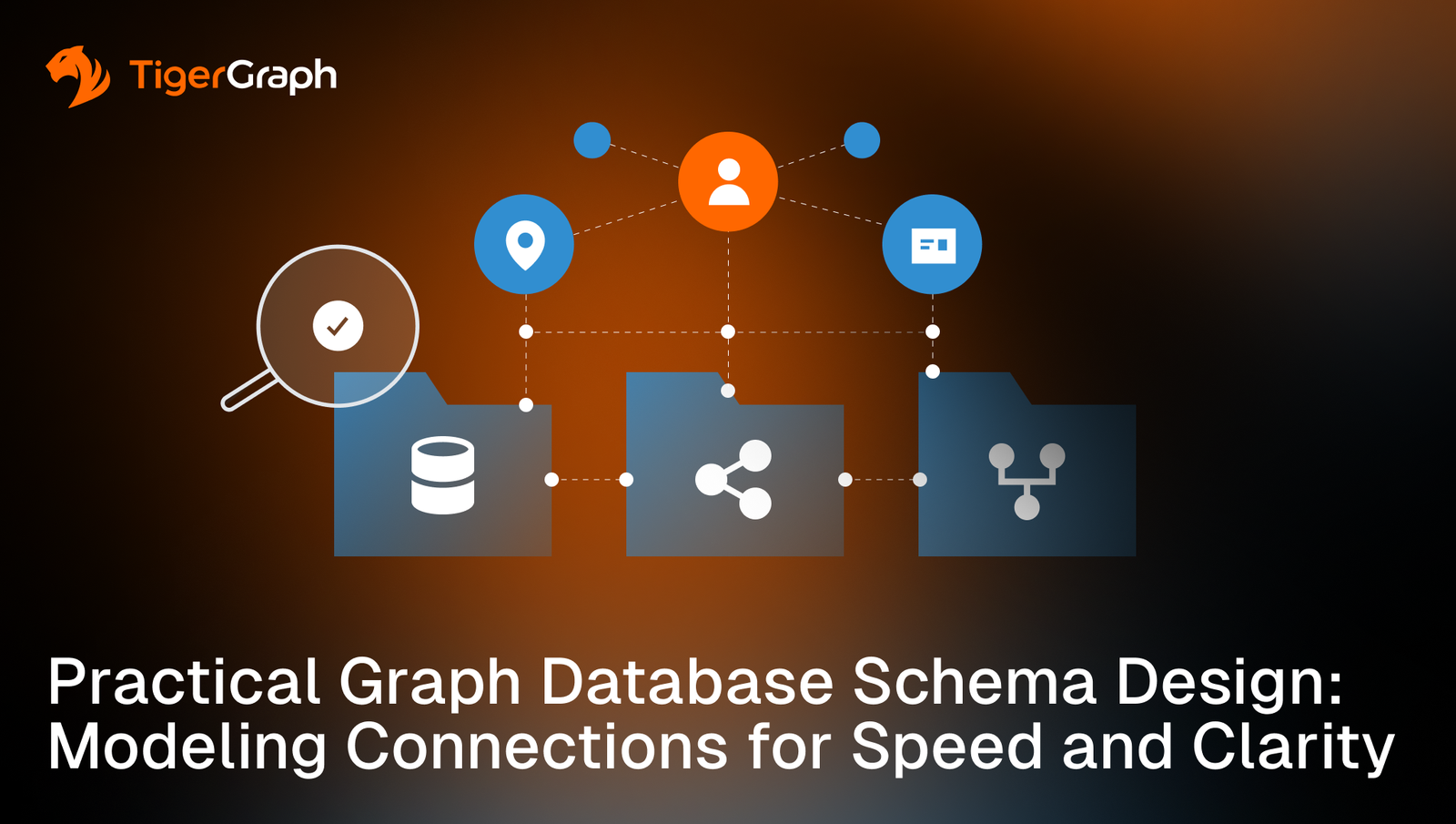
A graph database schema defines the structure of data, including the entities in the domain, the connections between them, and the rules that shape those connections. It acts as the blueprint for how information is stored and how traversal should behave. 

A clear schema makes it easier to answer complex questions because the relationships do not need to be rebuilt through joins. The graph already stores each link as an edge. This approach improves speed, accuracy, and scalability, especially as data grows. 

TigerGraph extends this model to enterprise workloads with high-performance traversal, parallel execution and real-time analytics, creating a strong graph database schema.

Why a Well-Thought-Out Graph Database Schema Matters

A schema defines the structure of a graph and it controls how information flows through it. Instead of splitting data across tables and reconnecting it through joins, a graph model records links directly as edges. This design shortens query paths, reduces processing cost, and produces clearer results.

A graph schema answers three core questions:

QuestionSchema Component
What is represented?Vertex types/ entities
How do those entities connect?Defined graph relationship types
What supports fast analysis?A well-thought-out graph database structure

TigerGraph uses this approach to deliver high-performance graph workloads, real-time exploration, and scalable analytics across large datasets.

Defining Nodes and Entities in a Graph Model

When designing a schema, the first stage is to identify the core objects in a domain. In node graphs, these objects become nodes. Each individual node belongs to a node type. Examples of node types include:

Each graph node stores attributes that describe the entity. Each node type has its characteristic attributes. For example, a Customer has a street address, but a Device doesn’t. Tips for defining nodes:

Designing Graph Relationship Types

A relationship type is a definition in the schema that describes how two node types can connect and what that connection means. This stage is critical because it is what sets a graph apart from other data structures. Relationships, also called edges of a graph, often correspond to verbs, both action verbs like “purchases” and existential verb phrases like “owns” and “is located at”. The relationship type sets the rule; the edge is the real instance of that rule.

A clear definition of a relationship helps both users and the database software interpret the relationship properly. Two aspects are the node types being connected and the directionality of the edge. The edge type’s definition should state what are the semantically valid types of nodes that may be at each end. Moreover, not every relationship is two-way. While friendship is typically a bidirectional relationship, some connections move in a single direction because the business meaning is not symmetrical.

Examples of well-defined relationship types:

These definitions tell the graph how traversal should behave. This way, analysts get consistent results when exploring patterns, dependencies or anomalies.

Designing relationship types:

Understanding Joins vs. Edges 

In a relational database, a join scans two sets of data and compares fields to rebuild a connection. This process slows and becomes harder to reason about as the data grows.

A graph model eliminates this overhead. Edge instances are stored directly. 

A graph avoids:

Edges let traversal follow real paths. This difference drives the speed and performance gains in modern graph database architecture.

Modeling Edges with Clarity and Purpose

Edges represent the actual connections defined by relationship types. In a graph, these edges form the backbone of analysis.

A schema can include:

Edges form the patterns analyzed by algorithms. This includes similarity, proximity, community detection, and shortest-path logic—areas where TigerGraph’s parallel compute engine performs at scale.

Using Node Graph Theory for Better Schema Design

Node graph theory provides a full framework for describing and analyzing any graph. Practitioners need to leverage that framework to design schemas that behave the way real data behaves. Graph theory offers powerful concepts for how entities connect, how information flows, and which paths matter for analysis. These principles help teams design schemas that stay clear as they grow and remain predictable during traversal.

Building on these principles creates a graph database schema that is easier to extend, tune and govern. The model remains stable as new node types or relationship types appear, and traversal stays efficient even when data volume grows. It also improves explainability because every connection follows rules the schema defines explicitly.

Structuring a High-Performance Graph Database

A good graph database structure is essential. It supports fast query execution and clear interpretation. TigerGraph’s architecture stores edges directly, and evaluates multi-hop patterns in parallel, which increases performance across large datasets.

Key components:

A clean structure improves explainability. This helps analysts trace paths and understand why results appear.

Building a Graph Database Architecture for Scale

A graph database architecture should support:

TigerGraph extends this with native parallel processing, high-performance storage, online updates and support for AI and ML workflows.

When architecture, schema design, and modeling practices align, a graph system is easier to maintain. And it is significantly faster than relational models.

Building a Strong Schema:

How TigerGraph Accelerates Schema-Based Workloads

TigerGraph is built for real-time, high-performance graph workloads. It offers:

TigerGraph supports enterprise-scale workloads in finance, supply chain, healthcare, manufacturing and customer intelligence. Its design supports billions of edges with millisecond-level query performance. And it can power yours too.

Reach out today to join thousands of developers and data scientists using TigerGraph’s leading graph analytics platform to solve complex problems with connected data. And start experimenting and prototyping at no cost, with a free TigerGraph Savanna.

Summary

A strong graph database schema provides the structure needed to model real-world connections. By defining nodes, relationships, and architecture clearly, enterprises gain a system that is fast, accurate, and easy to scale. With its high-performance engine and proven capabilities, TigerGraph delivers a platform designed for modern, connected workloads in every major industry.

Frequently Asked Questions

1. What is a graph database schema?

A graph database schema defines how data is structured in a graph, including node types (entities), relationship types (edges), their direction, and properties. It serves as the blueprint that determines how data is connected and how traversal behaves during queries.

2. Why is graph database schema design important?

Schema design directly impacts performance, accuracy, and scalability. A well-designed graph schema stores relationships natively as edges, eliminating costly joins and enabling fast, multi-hop traversal as data volume and complexity grow.

3. How is a graph database schema different from a relational schema?

Relational schemas rely on tables and joins to reconstruct relationships at query time. Graph schemas store relationships directly as edges, allowing queries to follow real-world connections efficiently and making them better suited for highly connected data.

4. What are nodes and relationships in a graph database?

Nodes represent real-world entities such as customers, accounts, devices, or transactions. Relationships define how those entities connect and what those connections mean. Together, nodes and relationships form the structure that enables graph traversal and analysis.

5. How do graph databases handle scale and performance?

Graph databases scale by storing relationships natively and executing traversals in parallel. Platforms like TigerGraph are designed to analyze billions of nodes and edges in real time, supporting high-performance enterprise workloads.