Contact Us

Why Connected Risk Is the Next Banking Imperative

Banking leaders recognize that risks do not operate in silos. A fraudster opening accounts in one channel may launder funds through another. A compliance gap in one business line may expose systemic weaknesses across the enterprise. Cyber intrusions can spread through third-party vendors.

Traditional tools are designed to monitor these issues separately: fraud teams chase anomalies, AML teams chase matches, and cyber teams chase alerts. The result is fragmented investigations, duplicated costs, and blind spots that allow risk to spread.

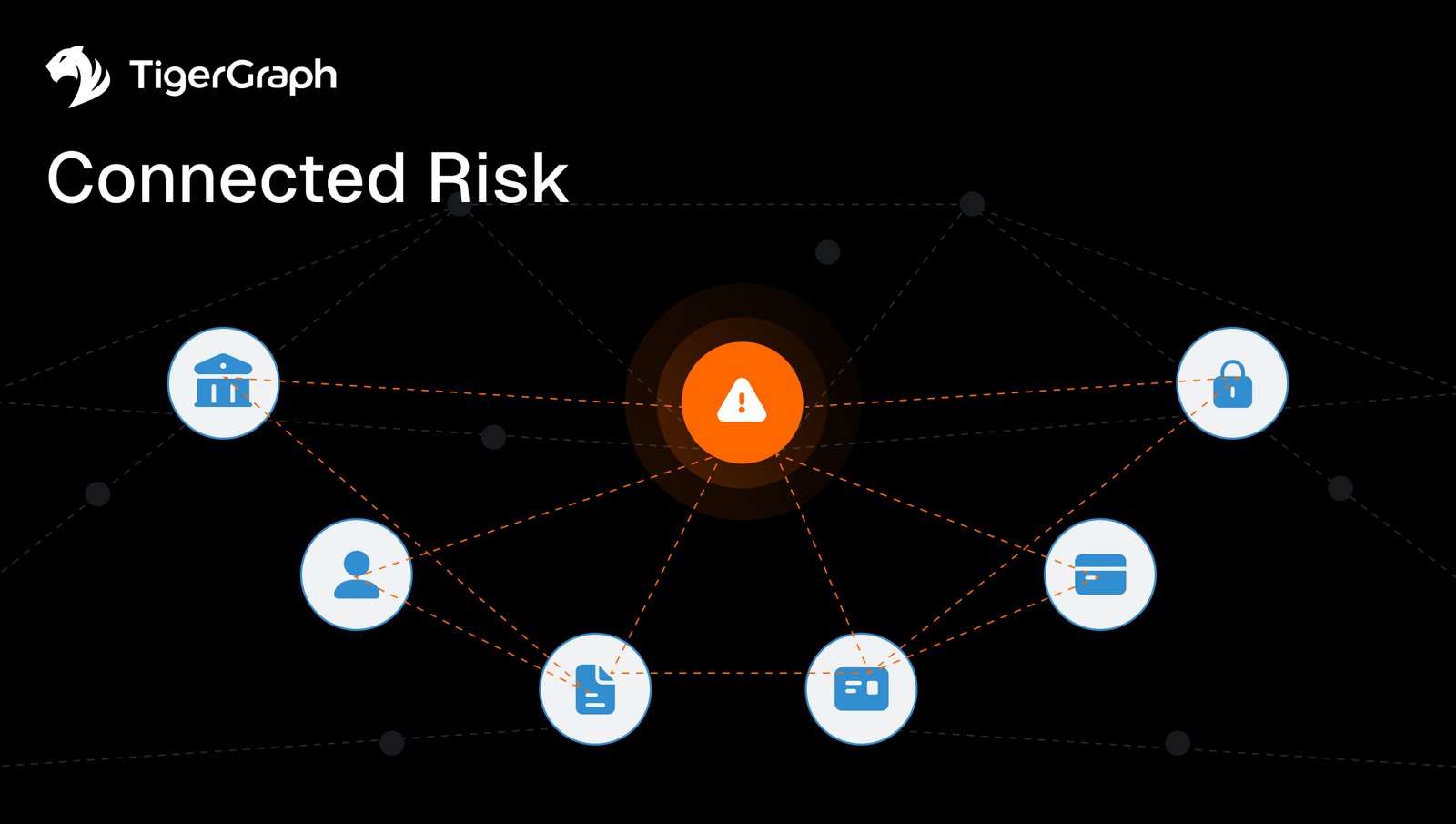
This is why connected risk in banking has become a board-level conversation. Executives and regulators alike recognize that risk today is networked, dynamic, and fast-moving. To manage it, institutions require systems that connect the dots across customers, transactions, devices, vendors, and counterparties.

Graph databases are the only technology purpose-built to model those relationships in real time. They transform static alerts into connected investigations, providing context that improves accuracy, reduces costs, and strengthens compliance.

The Cost of Fragmented Risk Management

Disconnected systems do not simply slow investigations; they create measurable financial exposure.
• Compliance fines. AML enforcement regularly exceeds hundreds of millions of dollars per action, with recent penalties surpassing $2B. Most failures result not from lack of data, but from lack of context: institutions could not connect suspicious activity across silos.
• Operational inefficiency. Investigators spend hours reconciling mismatched alerts, with up to 90% dismissed as false positives after manual review (Forrester TEI). That wasted effort represents both labor costs and missed opportunities to detect real risk.
• Fraud losses. Rules-based fraud systems plateau at approximately 65% detection accuracy, leaving billions exposed. Mule networks and synthetic IDs thrive in the gaps between siloed systems.
• Reputational damage. Customers expect rapid onboarding and seamless transactions. False positives frustrate legitimate users, while missed fraud generates headlines that erode trust.

Executive Takeaway: Fragmented systems create fragmented results — more fines, more losses, and more reputational risk.

Connected Risk in Banking in Practice: Unified Fraud and Identity Management

Connected risk analysis shifts the focus from monitoring anomalies in isolation to understanding how risks propagate across the network.

A graph database entity resolution platform builds this connected picture by:
• Unifying identities. Duplicate or inconsistent records collapse into a single contextual profile.
• Mapping relationships. Customers, accounts, devices, and merchants are linked in multi-hop networks that reveal fraud rings and collusive structures.
• Preserving lineage. Every alert is connected to a full path of supporting evidence — who, what, when, and how — that regulators and auditors can follow.

Instead of asking, “Is this transaction unusual?” banks can ask, “How does this entity connect to others, and what does that mean for risk?”

Real-World Examples of Connected Risk

These examples extend beyond fraud. They demonstrate the broader principle of contextual risk management. When institutions treat identity, fraud, AML, and compliance as connected, they uncover systemic vulnerabilities that siloed tools cannot.

Why Graph Is the Foundation for Connected Risk

Graph-powered connected risk analysis delivers four capabilities that legacy tools cannot:

Executive Takeaway: Connected risk is not only a better investigation method. It is a resilience strategy that reduces losses, avoids fines, and protects reputation.

Building the CFO Business Case for Graph-Powered Risk Management

CFOs evaluating connected risk initiatives should focus on three quantifiable outcomes:
• Fraud cost savings. Tens of millions annually in reduced fraud losses.
• Compliance ROI. Lower fines and remediation costs through regulator-ready evidence.
• Revenue protection. Fewer false positives, faster onboarding, and improved customer retention.

When framed in dollar terms — fraud savings, penalty avoidance, and revenue lift — the case for graph becomes a board-level priority.

TigerGraph’s Advantage in Connected Risk

TigerGraph provides unique strengths that align directly with CFO and CRO priorities:
• Performance. Sub-millisecond queries across billions of relationships.
• Concurrency. Thousands of simultaneous queries supporting fraud, AML, and KYC teams without bottlenecks.
• Graph feature factory. Continuous generation of graph-native features (centrality, PageRank, fan-in/fan-out, community detection) for ML pipelines.
• Audit-ready lineage. Regulator-traceable paths showing which entities and connections triggered an alert.
• Proven ROI. Independent Forrester TEI analysis reported 229% ROI over three years with a payback period under six months.

For banks, this means connected risk analysis with graph databases is not theoretical — it is operational and enterprise-proven.

Conclusion

Risk in banking is no longer siloed. Fraud, AML, cyber, and compliance issues overlap and propagate through shared infrastructure. Legacy systems that monitor them separately leave banks exposed to losses, penalties, and reputational damage. For executives, connected risk is not just an IT shift, but a strategy for financial crime risk management that safeguards revenue, reduces penalties, and strengthens resilience.

Connected risk analysis with graph databases provides the context, scalability, and transparency required for this resilience. It unifies identities, reveals networks, reduces false positives, and generates regulator-ready evidence — all while delivering measurable ROI.

Explore how TigerGraph enables connected risk in banking at enterprise scale. Read the Forrester TEI study or launch a TigerGraph Cloud instance to see connected risk analysis in action.

Frequently Asked Questions

What does “connected risk” mean in modern banking?

Connected risk refers to how different types of risk—fraud, AML, cyber, and compliance—are intertwined across systems, customers, and transactions. Instead of treating each issue separately, connected risk analysis uses graph databases to map relationships among people, accounts, devices, and vendors. This approach allows banks to see how one event (like a fraudulent account) links to others, enabling faster, more accurate detection and response.

Why are traditional risk management systems no longer enough?

Legacy systems monitor data in silos. Fraud detection tools, AML systems, and cybersecurity platforms often operate independently, leading to duplicate alerts and missed connections. Because modern financial crime spreads through shared infrastructure and third parties, disconnected tools can’t “see the whole network.” Graph analytics solves this by connecting data points into a single contextual view, reducing false positives and preventing hidden risk propagation.

How does graph analytics improve compliance and fraud investigations?

Graph analytics models the relationships among entities—customers, accounts, merchants, and transactions—in real time. Investigators can trace how suspicious behavior flows through a network, uncover hidden mule accounts, and demonstrate audit-ready lineage to regulators. This transparency strengthens AML/KYC programs and allows banks to satisfy compliance requirements with clear, evidence-based insights.

What measurable results have banks achieved using connected risk analysis?

Banks implementing graph-powered risk analysis report major financial and operational benefits. For example, one global bank reduced false positives and saved over $50 million annually, while Nubank increased fraud recall from 28% to over 90% without adding staff. These outcomes prove that connected risk management not only improves accuracy but also delivers direct ROI through cost savings, compliance efficiency, and revenue protection.

How can CFOs justify investment in connected risk technology?

Executives can build a business case around three core outcomes: fraud loss reduction, compliance cost savings, and customer retention. Graph-based connected risk systems deliver quantifiable ROI—Forrester’s TEI study showed a 229% return within three years and payback in under six months. For CFOs and CROs, connected risk is not just a technology upgrade; it’s a financial strategy that safeguards earnings and reputation.