Contact Us

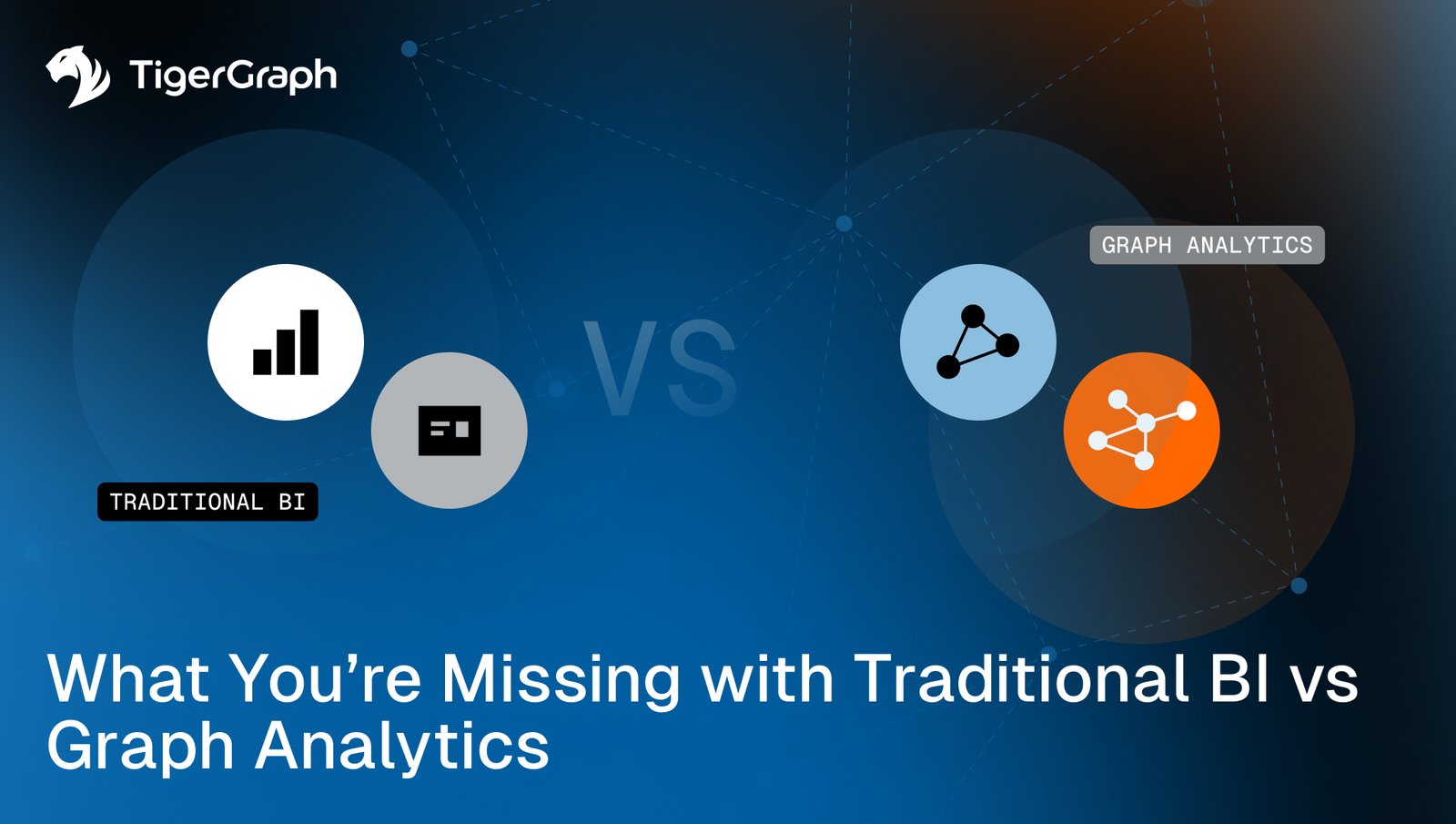
What You’re Missing with Traditional BI vs Graph Analytics

Most organizations feel confident in their data strategy because they have dashboards. The metrics are visible, the KPIs are tracked and trends are updated daily. On the surface, leadership appears to have a clear understanding of what is happening within the business. But dashboards are designed to summarize, not to explain.

Traditional business intelligence systems were built to aggregate, filter, and report. They excel at structured questions: What were sales last quarter? Which region underperformed? How many transactions triggered an alert? These are necessary views of the business. They are foundational.

The problem is that modern business risk and opportunity no longer live inside single domains or simple metrics. They move through relationships. And once relationships deepen, aggregation alone becomes insufficient.

Key Takeaways

The Structural Limitation of Traditional BI

Relational BI systems organize data into tables. Rows represent events and columns represent attributes. If you need to connect two entities, you “join” those tables together. That model works efficiently when relationships are shallow and predefined.

The strain begins when insight depends on chains of relationships.

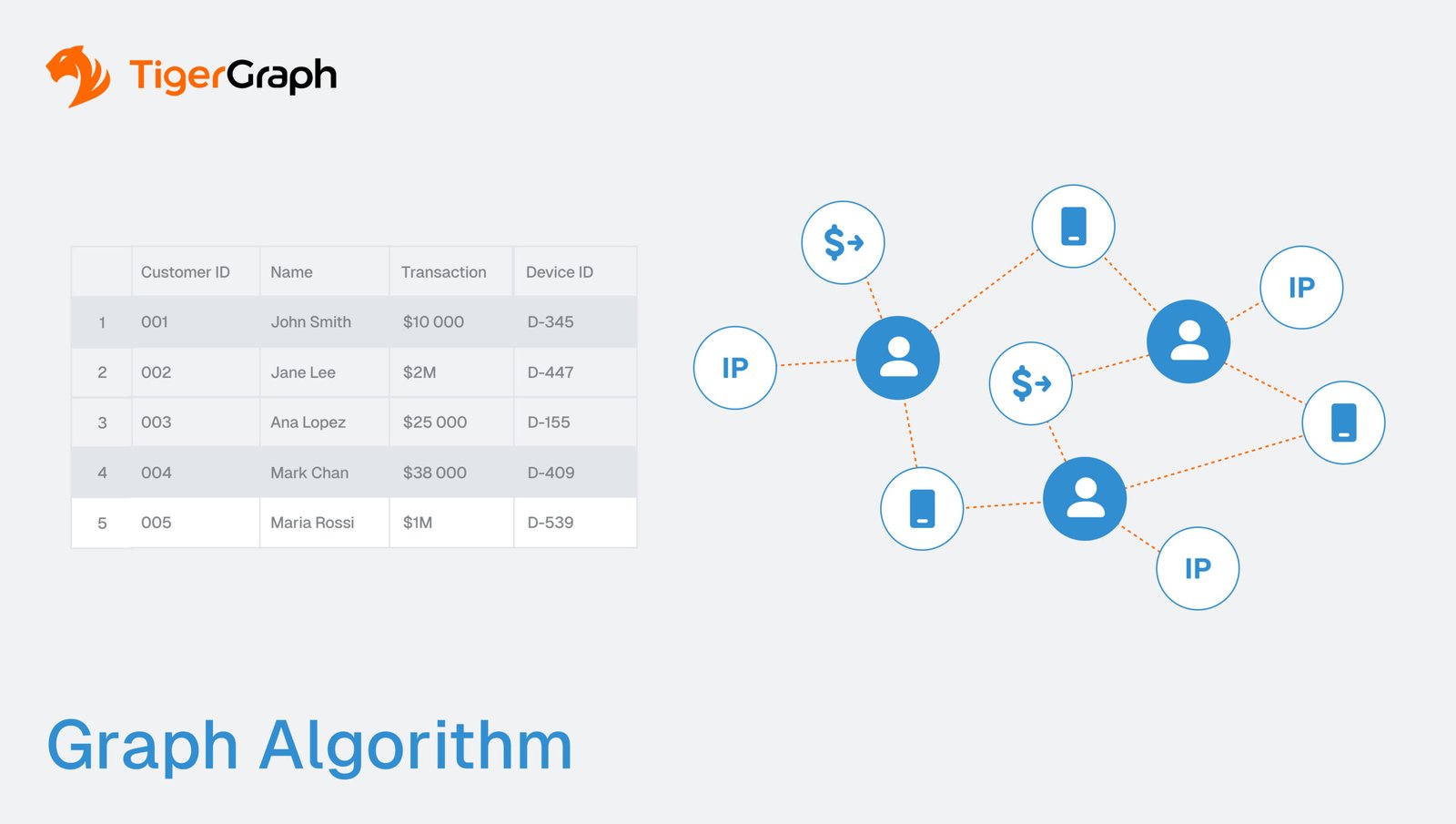
Consider a fraud investigation. A customer is linked to a device. That device is linked to other customers. Maybe one of those customers previously triggered a fraud alert. There are transactions occurring within similar time windows. Each additional layer of context requires another “join.” As these joins stack, the queries grow more complex, harder to maintain, and more computationally expensive.

Technically, the relationships exist. But operationally, they become difficult to explore.

Graph analytics approaches the same problem differently. Instead of reconstructing relationships through repeated joins, it stores those relationships directly and makes them traversable.

What does that mean in practical terms?

It means you can start at one entity, such as a customer, and move step by step across its connections. From that customer to a device. From that device to other customers. From those customers to prior alerts. Each connection is followed dynamically, without rewriting the query logic for every additional layer.

You are not rebuilding the relationship each time you want to examine it. You are walking the network that already exists.

This is not simply a performance optimization. It is a modeling shift, one where relationships are treated as primary data elements rather than inferred connections.

And that shift changes the types of questions that can be asked, because the structure remains intact rather than flattened into summaries.

When Aggregation Flattens Structure

Business intelligence systems aggregate first and drill down second. They compress complex interaction patterns into summary tables so that metrics can be tracked consistently.

Summaries are useful for operational visibility. They are less useful for structural reasoning.

When relationships are flattened into intermediate tables, the original network structure disappears. That structure, sometimes referred to as the system’s topology, represents the full pattern of how entities are connected. Once compressed into summaries, that connection pattern is no longer visible. A fraud ring becomes a set of individual transactions. A referral bottleneck becomes a wait time metric. A supply chain dependency becomes a delayed shipment count.

Graph preserves structure. Instead of collapsing relationships into static views, it allows dynamic exploration. Analysts can begin with a single entity and expand outward across multiple layers, observing how connections propagate.

The difference determines whether patterns are discovered or overlooked. It exposes insight gaps.

Cross-Domain Problems Expose the Gaps

Traditional BI assumes that data is organized by domain. We see finance systems living separately from customer systems, and supply chain data stored elsewhere. Integration requires ETL pipelines and predefined logic about how these systems relate.

Modern business challenges rarely respect those boundaries.

These are interconnected systems. And when organizations attempt to answer network questions using domain-bound reporting tools, they end up stitching together partial views. Each dashboard reflects a perspective, and none captures the full view.

Graph modeling begins with the assumption that entities are connected. When a new data source appears, it becomes another node or relationship type in the network. The underlying structure remains intact and the model evolves without needing to rebuild the analytical foundation.

Let’s see this in action:

A Fraud Scenario: Totals vs. Topology

Imagine a fraud analyst reviewing a spike in transaction volume. A traditional dashboard highlights elevated activity in a particular region. Average transaction values remain within expected ranges, and nothing appears dramatically abnormal.

When the same data is examined through a graph model, though, a different pattern emerges. The transactions form a circular flow across multiple accounts. Several accounts share the same device fingerprint. That device links to multiple shipping addresses that previously appeared in chargeback cases. The timing of activity overlaps across accounts.

The issue is both volume and coordinated structure. BI identifies what changed numerically. Graph reveals how entities are connected operationally. The difference determines whether coordinated fraud is detected early or treated as isolated noise.

A Supply Chain Example: Hidden Dependency

Now consider a retail organization analyzing declining performance across a product category. BI reporting shows lower sales in specific regions and fluctuations in inventory levels.

Graph analysis uncovers that several high-margin products share a common upstream supplier. That supplier connects to a limited set of logistics hubs. A disruption at one hub cascades through multiple product lines, even though each appears independent in the reporting system.

The vulnerability is not obvious in the sales data, but it certainly exists in the dependency network. Without structural modeling, though, leadership responds to surface symptoms rather than underlying fragility.

Capturing this insight starts with a shift in data analysis.

Exploration as a First Principle

Traditional BI usually works the same way every time. You decide what you want to measure, aggregate the data into a report, and then drill into predefined segments if something looks unusual.

Graph flips that sequence. So, instead of starting with a summary, you can start anywhere in the system.

You might begin with a single customer, a supplier, a provider, or even one transaction. From there, you follow the connections outward. Who is this entity linked to? How many others connect through the same path? Does it sit at the center of a dense cluster, or does it bridge two otherwise separate groups?

You are not limited to slices that were defined in advance. You are exploring the structure as it exists.

In traditional systems, doing this kind of deep exploration requires building increasingly complex queries and temporary views just to trace a few layers of connection. In a graph model, following those relationships is a natural operation because the system was designed to move across connections.

As relationships grow deeper and more interconnected, that difference becomes increasingly important. What feels manageable in a shallow dataset becomes unwieldy in a dense, evolving network. Graph is built for that density.

Maintaining Relationship Integrity Over Time

One of the subtler limitations of traditional BI is that each report reflects a chosen perspective. When data is flattened into a summary view, certain relationship paths are highlighted while others disappear. What you see depends on how the report was designed.

Graph preserves the original connection structure. The relationships remain intact, even as the questions change. Instead of rebuilding views each time you want to explore a new angle, you can follow the existing connections in different directions.

As risks and opportunities evolve, the questions change. The structure does not need to be rebuilt each time.

What Organizations Overlook

Graph analytics is not a replacement for business intelligence. Organizations still need dashboards, KPIs, and operational reporting. Aggregation remains essential. What is often missing is structural awareness.

When companies rely solely on BI, they see metrics without understanding how influence or risk propagates across connected entities. They observe symptoms without understanding pathways.

As relationships deepen and cross-domain dependencies expand, traditional reporting frameworks fragment insight into separate views. Graph restores continuity by preserving relationship depth and enabling multi-hop reasoning across systems.

If your data is connected, and in nearly every enterprise it is, your analytics must reflect that connectivity. Connections are not supplemental; they define the system itself.

Contact TigerGraph

If your organization is working to detect coordinated fraud, understand supply chain dependencies, model referral networks, or analyze cross-domain risk, graph analytics can provide structural visibility that traditional reporting cannot.

Contact TigerGraph to explore how connected data modeling can strengthen your analytics strategy and provide deeper insight into how your systems truly operate.

Frequently Asked Questions

1. When Should Organizations Use Graph Analytics Instead of Traditional Business Intelligence Tools?

Organizations should consider graph analytics when insights depend on multi-entity relationships, cross-domain dependencies, or dynamic network behavior. Traditional BI works best for aggregated reporting and predefined metrics, while graph analytics is better suited for exploring how risks, influence, or opportunities propagate across interconnected systems.

2. How does Graph Analytics Improve Root-cause Analysis Compared to Dashboard-based Reporting?

Graph analytics enables teams to trace connections across entities step by step, revealing the pathways that drive business outcomes. Instead of analyzing summarized metrics, organizations can investigate how events, behaviors, or dependencies interact over time, improving diagnostic accuracy and strategic response.

3. Why do Complex Enterprise Risks Require Relationship-driven Analytics?

Modern risks such as fraud, supply chain disruption, and customer churn emerge from interactions across systems rather than isolated metrics. Relationship-driven analytics allows organizations to understand how these risks spread, cluster, or cascade through networks, providing deeper situational awareness than domain-specific reporting tools.

4. Can Graph Analytics be Integrated with Existing BI Platforms and Data Warehouses?

Yes. Graph analytics typically complements existing BI and data warehouse environments by adding relational context to aggregated insights. Organizations often use graph models alongside dashboards to enable network exploration, advanced investigation workflows, and multi-step reasoning that traditional reporting layers cannot support.

5. What Strategic Advantages does Relationship-aware Analytics Provide Executive Decision-makers?

Relationship-aware analytics enables executives to evaluate structural positioning, dependency exposure, and ecosystem dynamics more effectively. By understanding how entities connect across the enterprise, leadership can make more informed decisions about risk mitigation, investment prioritization, and operational strategy.

From Data Chaos to Clarity: Why Graph Visualization Powers Smarter Decisions

Every enterprise has an overabundance of data to contend with, and making sense of it all is challenging. Dashboards multiply, reports pile up, and somewhere in the noise, the real story gets lost. Leaders don’t struggle with access to information; they struggle with clarity.

That’s where graph visualization comes in. Instead of serving up more disconnected charts or static tables, it shows you the relationships that actually drive outcomes. Who’s connected to whom, which systems rely on each other, and where risk is hiding in plain sight.

For executives, this shift is transformative. With the right graph visualization tools, you see beyond numbers to the underlying context. And context is what turns data chaos into decisions you can act on.

What Is Graph Visualization?

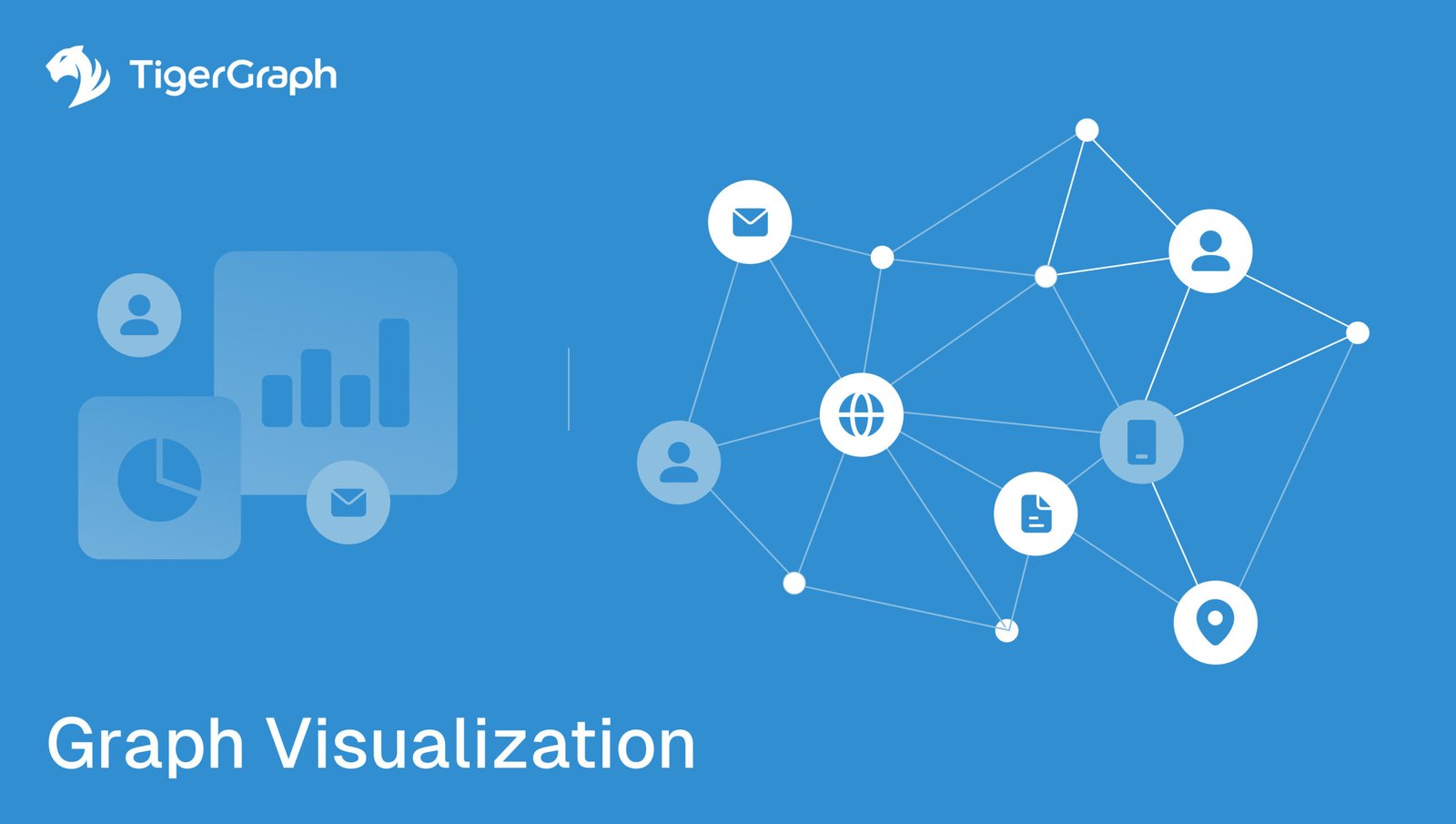
At its core, graph visualization is about seeing connections. Instead of staring at endless rows in a spreadsheet or bar charts in a database visualization dashboard, you’re looking at a living network of nodes (your entities) and edges (the relationships between them). It’s less about isolated data points and more about how those points interact.

Think of it this way: spreadsheets can tell you what happened, but they rarely show you why. A good graph visualizer flips that around.

Suddenly, you can trace how fraud rings evolve across dozens of accounts, how suppliers are tied together across continents, or how a patient’s journey weaves through different treatments and providers. Executives exploring connected data often rely on a graph viewer to navigate nodes and edges intuitively, complementing the power of advanced graph visualization tools.

Traditional visualization tools summarize. They give you the totals, the averages, the one-dimensional views. But graph visualization software adds depth. It uncovers the story hidden between the lines—why certain customers churn, why a supply chain bottleneck keeps repeating, or why an insider threat quietly emerges even when all the KPIs look fine.

This is what makes graph visualization so powerful: it doesn’t just show you data, it shows you context. And in executive decision-making, context is everything.

Why Graph Visualization Matters for Enterprises

Executives need clarity, not more charts. Most dashboards demonstrate disconnected KPIs, forcing executives to hunt for patterns that never quite emerge.

Graph visualization changes this by focusing on the relationships behind the metrics. It gives leaders the ability to see how data points influence each other, which is where real business insight lives.

Consider how much of enterprise value is locked up in connections: customers linked to multiple accounts, suppliers tied to shared logistics hubs, or employees connected through informal networks that affect productivity. These aren’t “nice to know” details—they’re the levers that drive growth, compliance, and resilience. A strong graph database visualization tool puts those levers in plain sight.

The benefits ripple across the organization:
• Reveals hidden patterns: Complex risks, like collusion in fraud networks or insider trading rings, often hide behind ordinary transactions. These tools expose these by highlighting unusual clusters or connections.
• Accelerates clarity: Interactive graph visualization helps executives can move beyond static charts to dynamic exploration. They can ask “what if?” in real time and see the answers instantly.
• Breaks down silos: Finance, compliance, and operations can all view the same relationship graph, rather than relying on fragmented reports that do not align.
• Scales with the enterprise: Whether you’re looking at millions or billions of relationships, large graph visualization platforms ensure decision-makers don’t lose sight of the bigger picture.

It is a definite advantage in an environment where speed and context determine who wins.

Key Use Cases for Graph Visualization

The most valuable insights hide in connections between entities. Graph visualization tools make those connections impossible to miss. Here’s how enterprises are already putting them to work:

  1. Fraud Detection

Fraud doesn’t happen in isolation. It hides in webs of mule accounts, on shared devices, and in suspicious transactions that are spread across institutions. A traditional visualization might catch some of these as a single outlier transaction, but miss the larger web. With graph database visualization tools, investigators can see the bigger picture:

This results in stronger compliance, less loss, and the ability to stay a step ahead of increasingly sophisticated fraudsters.

  1. Cybersecurity

Cyberattacks succeed by exploiting complexity. Hackers don’t walk in through the front door—they move laterally, hopping between accounts, devices, and cloud services in ways that overwhelm traditional monitoring systems. Graph visualization helps security teams keep pace by mapping the relationships attackers rely on.

For executives, this means fewer blind spots, faster recovery, and a security posture built for today’s hyperconnected risk landscape.

  1. Customer 360 and Experience

Executives know “customer centricity” is a competitive mandate. Yet customer data is scattered across CRMs, marketing platforms, support systems, and payment processors. A knowledge graph visualization tool stitches these silos together, creating a complete customer view. With this connected perspective, leaders can:

Instead of guessing what a customer might do next, enterprises can see the journey unfolding, because it’s mapped out in the graph.

  1. Healthcare and Life Sciences

Effective healthcare hinges on understanding patient relationships. But patients move across hospitals, specialists, labs, and pharmacies, leaving fragments of data with each. And these bits and pieces rarely match up. 

Traditional visualization tools struggle to connect these dots. This leaves clinicians and administrators with blind spots that affect both care and compliance. Graph database tools close this gap by weaving those fragments into a unified picture.

The payoff is significant: better patient care, faster research breakthroughs, and reduced compliance risk—all powered by the ability to visualize connections that matter.

  1. Supply Chain and Operations

Supply chains are famously interconnected, and they’re also famously fragile. A single missed shipment can cascade into multimillion-dollar losses, creating ripple effects across production, sales, and customer satisfaction.

Enterprises can map suppliers, logistics hubs, and distributors as one connected system by deploying this software. This allows leaders to:

The result is a supply chain that’s not only visible, but resilient, and able to withstand shocks and keep business moving even when the unexpected occurs.

TigerGraph’s Advantage in Graph Visualization

For enterprises, it’s not enough to see connections. You need to explore them at scale, in real time, and with confidence that your insights are accurate. And this is where TigerGraph stands apart.

For executives, this means visualization acts as a decision-making engine, instead of just another reporting layer. TigerGraph gives leaders the clarity to move quickly, the confidence to act on connected intelligence, and the scalability to future-proof their business.

Conclusion

Context is the true differentiator in our age of data abundance. Connected intelligence empowers executives to act with clarity. And advanced visualization tools help enterprises move from static reporting to dynamic discovery, unlocking a competitive edge where others see only noise.

Enterprises that invest in graph visualization software for business gain both speed and context when making critical decisions.

Leaders are under pressure to deliver growth and resilience. The ability to see relationships at scale is a definite advantage. 

Enterprises that move beyond static dashboards to embrace connected intelligence will be the ones to adapt fastest, out-innovate competitors, and meet rising stakeholder expectations. In today’s connected economy, context = survival.

Discover more at TigerGraph.com.

Graph Algorithms: The Secret Engine Behind Faster, Smarter Business Growth  

Every enterprise has tons of data, but most struggle to use it in ways that drive strategy. Graph algorithms are the hidden engines that bring those dots to life, revealing how people, accounts, devices, or products interact. Instead of isolated records, they uncover the relationships and pathways that matter most—from PageRank to community detection—surfacing insights traditional analytics miss and translating them into faster fraud detection, efficient operations, and higher ROI.

Expanded: What Are Graph Algorithms?

A graph algorithm is a packaged set of instructions designed to analyze a network of data, known as a graph. In a graph, the data points are called nodes (such as customers, accounts, or suppliers) and the connections between them are called edges (such as transactions, contracts, or device usage). By studying how nodes are connected, these algorithms help answer complex business questions that would be invisible in flat data tables.

For example:

Unlike traditional analytics, which excel at summarizing rows of data, graph algorithms specialize in patterns of interaction. They highlight central hubs that play outsized roles, detect anomalies that don’t fit normal behavior, and uncover hidden communities that standard dashboards can’t show.

Comparison at a glance:

Traditional AnalyticsGraph Algorithms
Focuses on isolated rowsFocuses on relationships and paths
Performs well only on one table at a timeConnects across multiple data sources
Provides reactive alertsProactively detects evolving patterns
Struggles to scale with multi-table tasksBuilt for deep, multi-hop analysis on billions of records

By making connections the centerpiece of analysis, enterprises have the ability to move beyond “what happened” and start asking “why it happened” and “what will happen next”—often easiest to communicate via a graph visualization. 

Enterprise Value of Graph Algorithms

When enterprises apply graph algorithms to their data, they unlock value far beyond what rows and tables can deliver. There’s a shift from isolated records to connected intelligence that creates measurable impact in multiple areas of business.

In a global logistics network, the routes, warehouses, and vehicles create an interconnected system. Any delays are felt across the chain. 

So, identifying the most efficient routes, reducing delivery times, and cutting costs is essential. What once took weeks of manual planning can be solved in seconds, keeping supply chains resilient even under stress. This is why graph algorithms for supply chain optimization are becoming a board-level priority.

Fraud detection is one of the most powerful applications of graph algorithms. In banking, PageRank and betweenness centrality identify high-risk nodes—mule accounts, collusive merchants, or devices quietly connecting fraud rings. With TigerGraph, customers have reported a 20% improvement in fraud detection accuracy and 300% faster investigations by using these graph features. Instead of chasing anomalies in isolation, risk teams dismantle entire fraud networks as they form. Many top banks are already using graph algorithms for fraud detection at scale.

In retail and consumer services, community detection graph algorithms uncover clusters of customers with shared behaviors, purchases, or interests. These communities represent opportunities—for cross-selling, upselling, and loyalty-building programs. 

By targeting clusters rather than individuals, businesses market more effectively and achieve higher ROI. Graph algorithms for customer community detection are transforming segmentation strategies.

Beyond detection, graph algorithms fuel innovation. Influence-spread models simulate information, behaviors, or products movement through a network. Marketing teams can predict which customers are most likely to drive adoption of a new product, while strategists can anticipate how trends will spread across industries. This transforms planning away from reactive guesswork and toward proactive foresight.

The question for companies is, “How can graph algorithms transform business strategy and ROI?”

For finance leaders, graph algorithms with income and expenses data unify cash flow, spending patterns, and counterparties into a single connected view. That means treasury can trace multi-hop exposure to vendors or affiliates, FP&A can understand variance drivers across entities, and controllers can spot circular flows that hint at fraud or leakage. Pairing journals with payments, contracts, and cost centers enables graph algorithms with income and expenses analysis to reduce forecast error, accelerate close cycles, and improve working-capital decisions. This is one of the most practical answers to what are the types of graph algorithms used in business—a long-tail application with measurable results.

The enterprise value of graph algorithms spans efficiency, fraud prevention, customer engagement, innovation, and financial strategy. It directly links data science to business outcomes.

From Risk to ROI of Graph Algorithms

The true measure of graph algorithms isn’t in abstract models, but in the return they deliver across industries. When enterprises shift from siloed data to connected analysis, the impact shows up on the bottom line.

Fraud and money laundering don’t happen in isolation—they happen in networks. By applying graph algorithms like PageRank, centrality, and community detection, banks can unify fragmented KYC, fraud, and AML data into a single connected view. This doesn’t just reduce alert noise; it produces explainable alerts with full lineage that regulators can follow hop by hop. With TigerGraph, top banks have reported 20% higher fraud detection rates, 300% faster investigations, and more than $100M in annual fraud savings. That combination of speed, accuracy, and auditability is why graph data algorithms are becoming a cornerstone of financial crime prevention strategies.

Every machine on a factory floor depends on others, from sensors and parts to maintenance schedules. Flat monitoring systems treat each machine independently, making it hard to see cascading risks. 

Graph-based algorithms connect dependencies, predicting failures earlier and reducing costly downtime. By modeling a manufacturing floor as a graph, enterprises can spot which components are most central, anticipate weak points, and optimize repairs before breakdowns ripple across production lines.

Customer relationships are essential when considering networks. Community detection graph algorithms cluster shoppers based on hidden affinities. It captures the items they browse, the channels they use, and the timing of their purchases. 

Retailers can use these insights to design loyalty programs, recommend products, or identify segments with untapped cross-sell potential. Instead of treating every customer as an individual row in a CRM, retailers see how groups influence one another, and they can market with far greater precision. This is one of the clearest graph algorithm examples in day-to-day operations.

Patient care is another domain where connections matter. Graph algorithms help providers do many things, including analyze treatment pathways, identify at-risk populations, and streamline referrals across networks of physicians and hospitals. By modeling these relationships, healthcare organizations can reduce redundant tests, improve outcomes, and better allocate resources—all while ensuring compliance and auditability.

Across industries, the pattern calls for moving from isolated data points to connected intelligence, because it  drives measurable ROI. Whether it’s reducing fraud losses, cutting downtime, increasing sales, or improving patient care, graph algorithms give enterprises the ability to translate complex connections into tangible results.

TigerGraph’s Advantage with Graph Algorithms

Not every platform can operationalize graph algorithms at enterprise scale. TigerGraph’s graph algorithms have three key advantages. First, performance at scale. Many tools work for demos or small datasets but collapse under the weight of billions of records or thousands of simultaneous users. TigerGraph was built specifically for this challenge, combining performance, scale, and explainability in one platform.

Second: in-database analytics. TigerGraph’s graph algorithms also run directly in the graph database, the same environment used for general querying, pattern matching, and graph updates. So there’s no need to move the data to a separate environment for algorithms. At the same time, TigerGraph’s support for active replicas and workload management allow you to run algorithms on one copy of the data while doing other queries on another copy.

And third, user customization. TigerGraph’s algorithms are written in the GSQL query language. Users can easily modify them in minutes to best meet their own needs.

TigerGraph ingests ~50 million daily events and still delivers sub-millisecond responses on targeted multi-hop patterns. That means fraud detection, supply chain optimization, and compliance checks run in real time—even on constantly updating data streams. And speed matters for a bank monitoring transactions across multiple regions or a manufacturer processing millions of sensor readings.

TigerGraph comes with a library of optimized graph analytics algorithms—including PageRank, shortest path, community detection, and centrality—ready to apply to real-world problems. Because they are engineered for parallel execution, these enterprise graph algorithms can handle workloads that overwhelm legacy systems. Instead of running overnight jobs, analysts run queries that return in a few seconds or even milliseconds.

In regulated industries, speed alone isn’t enough. Every detection must be explainable. TigerGraph outputs regulator-ready evidence paths that show who was connected, when, and how. This level of transparency turns compliance reviews from defensive explanations into proactive demonstrations of control. For banks subject to AML and fraud regulations, that’s a competitive edge.

TigerGraph is more than an investigation tool—it’s a feature engine for machine learning. Collusion and proximity features, such as shared device clusters or time-bounded fan-in/fan-out, are generated directly from the graph. These can be streamed into ML pipelines to strengthen fraud models, recommendation systems, or predictive maintenance solutions. For example, consider an account that suddenly receives 50 small transfers from 50 different senders in 30 minutes. Each transfer looks harmless in isolation, but the fan-in pattern immediately signals mule activity. The reverse, fan-out, highlights layering when one account disperses funds widely in a burst. TigerGraph computes and surfaces these patterns automatically.

This approach also supports visualization needs: for decision-makers, a clear graph algorithm can show how a fraud ring forms around mule accounts or how communities of customers cluster together.

Together, these capabilities—speed, scale, explainability, and ML integration—make TigerGraph the platform of choice for enterprises that want to turn graph algorithms into measurable ROI.

Recommendations for Executives When Evaluating Graph Algorithms

For senior leaders evaluating the role of graph algorithms in their enterprise, the key isn’t whether the technology works—it’s whether it aligns with business outcomes. The following questions can help frame the conversation at the boardroom level:

  1. Can my current tools see relationships, or just rows?
    Most analytics environments still operate at the table or dashboard level. They summarize transactions, but they rarely connect the people, accounts, devices, or suppliers behind them. Ask whether your systems can analyze the relationships that actually drive fraud, efficiency, and growth.
  2. How quickly can my team trace a network?
    Fraud, supply chain disruptions, and outages unfold in real time. If your analysts are waiting hours or days for batch jobs, you’re reacting after the damage is done. With TigerGraph, sub-millisecond query performance on multi-hop paths ensures answers come as fast as the questions are asked.
  3. Do my fraud and compliance tools provide evidence, or just alerts?
    An alert is a starting point, not an outcome. Regulators, auditors, and executives all demand defensible narratives. Explainable graph algorithms for regulatory compliance generate regulator-ready paths that show not only what was flagged, but why. This is the difference between scrambling to justify actions and demonstrating control with confidence.
  4. Am I enriching models with graph-native features?
    Machine learning models are only as good as (and limited by) the features they’re trained on. Graph algorithms produce features—such as community membership, centrality, or time-bounded fan-in/fan-out—that flat data can’t. These features drive higher accuracy, lower false positives, and more stable models over time.
  5. Can my infrastructure scale with my business?
    Growth means more customers, more transactions, more devices, and more risk. TigerGraph’s architecture is designed for high levels of parallelism and throughput, ensuring analytics scale as fast as your business.

By framing the conversation around these five questions, executives can separate experimentation from operational readiness. The goal isn’t just to adopt graph algorithms—it’s to operationalize them in a way that reduces risk, creates efficiency, and drives measurable ROI.

Conclusion

Graph algorithms are no longer niche tools reserved for data scientists—they are becoming strategic assets that directly influence growth, resilience, and compliance. By analyzing connections rather than isolated records, they reveal patterns of fraud, operational inefficiencies, and customer opportunities that traditional analytics never surface.

With TigerGraph, enterprises gain the ability to operationalize these algorithms at true scale. The platform ingests ~50 million events daily, delivers sub-millisecond responses on targeted multi-hop traversals, and provides regulator-ready evidence paths that stand up to scrutiny. Customers are already seeing the impact: 20% higher fraud detection rates, 300% faster investigations, and over $100M in annual fraud savings. These aren’t theoretical benefits—they’re measurable outcomes reported by top-50 banks and global enterprises.

For executives, the takeaway is clear: graph algorithms are not simply technical capabilities. They are instruments of strategy. They strengthen compliance, accelerate operations, and open new paths to revenue and innovation.

The enterprises that succeed in the coming decade will be those that harness connected intelligence, not just raw data. With TigerGraph, the technology is here, the outcomes are proven, and the opportunity is ready to be realized.

Discover how TigerGraph’s graph algorithms can transform your enterprise strategy at TigerGraph.com.