Why Connected Risk Is the Next Banking Imperative
Banking leaders recognize that risks do not operate in silos. A fraudster opening accounts in one channel may launder funds through another. A compliance gap in one business line may expose systemic weaknesses across the enterprise. Cyber intrusions can spread through third-party vendors.
Traditional tools are designed to monitor these issues separately: fraud teams chase anomalies, AML teams chase matches, and cyber teams chase alerts. The result is fragmented investigations, duplicated costs, and blind spots that allow risk to spread.
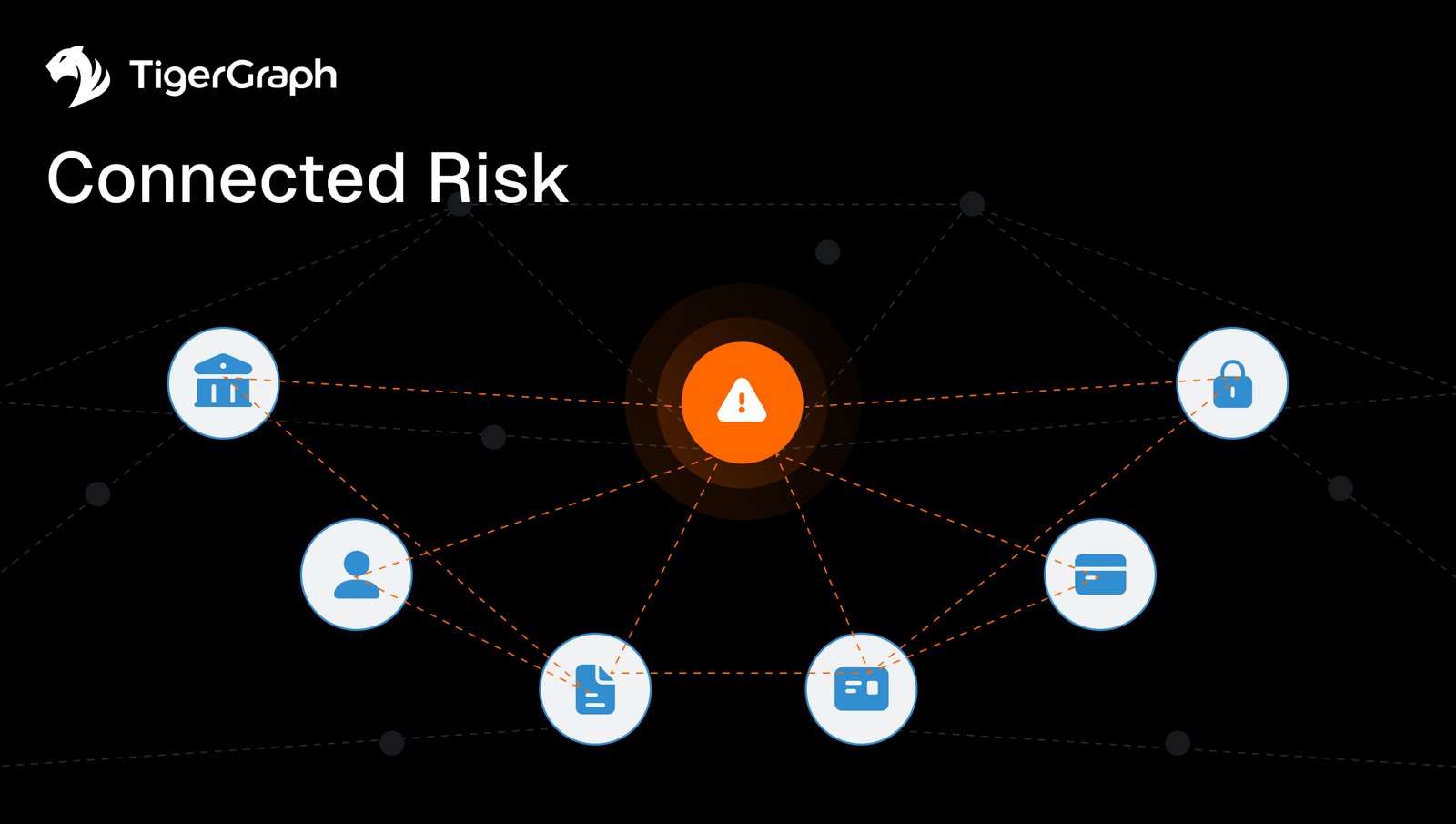
This is why connected risk in banking has become a board-level conversation. Executives and regulators alike recognize that risk today is networked, dynamic, and fast-moving. To manage it, institutions require systems that connect the dots across customers, transactions, devices, vendors, and counterparties.
Graph databases are the only technology purpose-built to model those relationships in real time. They transform static alerts into connected investigations, providing context that improves accuracy, reduces costs, and strengthens compliance.
The Cost of Fragmented Risk Management
Disconnected systems do not simply slow investigations; they create measurable financial exposure.
• Compliance fines. AML enforcement regularly exceeds hundreds of millions of dollars per action, with recent penalties surpassing $2B. Most failures result not from lack of data, but from lack of context: institutions could not connect suspicious activity across silos.
• Operational inefficiency. Investigators spend hours reconciling mismatched alerts, with up to 90% dismissed as false positives after manual review (Forrester TEI). That wasted effort represents both labor costs and missed opportunities to detect real risk.
• Fraud losses. Rules-based fraud systems plateau at approximately 65% detection accuracy, leaving billions exposed. Mule networks and synthetic IDs thrive in the gaps between siloed systems.
• Reputational damage. Customers expect rapid onboarding and seamless transactions. False positives frustrate legitimate users, while missed fraud generates headlines that erode trust.
Executive Takeaway: Fragmented systems create fragmented results — more fines, more losses, and more reputational risk.
Connected Risk in Banking in Practice: Unified Fraud and Identity Management
Connected risk analysis shifts the focus from monitoring anomalies in isolation to understanding how risks propagate across the network.
A graph database entity resolution platform builds this connected picture by:
• Unifying identities. Duplicate or inconsistent records collapse into a single contextual profile.
• Mapping relationships. Customers, accounts, devices, and merchants are linked in multi-hop networks that reveal fraud rings and collusive structures.
• Preserving lineage. Every alert is connected to a full path of supporting evidence — who, what, when, and how — that regulators and auditors can follow.
Instead of asking, “Is this transaction unusual?” banks can ask, “How does this entity connect to others, and what does that mean for risk?”
Real-World Examples of Connected Risk
- Global bank (connected transactional fraud). Processing more than 50M transactions per day across a 30TB dataset, this institution struggled with false positives and duplicated alerts across lines of business. With graph-powered fraud detection, they generated more than 30 contextual features (shortest paths, device reuse, hidden ownership overlaps). The outcome: fewer false positives, higher fraud detection precision, and $50M in annual savings — while safeguarding 60M households.
• Nubank (fraud networks and compliance). Facing $1.8M in monthly scam losses and recall rates as low as 28%, Nubank integrated graph features such as PageRank fraud detection, community detection, and device proximity. The bank significantly improved recall, reduced false positives, and prevented millions in monthly losses — without adding headcount.
These examples extend beyond fraud. They demonstrate the broader principle of contextual risk management. When institutions treat identity, fraud, AML, and compliance as connected, they uncover systemic vulnerabilities that siloed tools cannot.
Why Graph Is the Foundation for Connected Risk
Graph-powered connected risk analysis delivers four capabilities that legacy tools cannot:
- Accuracy through context. False positives decrease as graph separates genuine anomalies from fraudulent collusion.
- Fraud detection at scale. Synthetic identities and mule accounts are exposed when graph maps shared devices, IPs, and merchants.
- Regulator-ready transparency. Path-level lineage explains precisely why an alert was generated, satisfying AML/KYC requirements.
- Enterprise scalability. TigerGraph processes millions of daily events with sub-millisecond multi-hop queries and supports thousands of concurrent users — critical for banks operating at global scale.
Executive Takeaway: Connected risk is not only a better investigation method. It is a resilience strategy that reduces losses, avoids fines, and protects reputation.
Building the CFO Business Case for Graph-Powered Risk Management
CFOs evaluating connected risk initiatives should focus on three quantifiable outcomes:
• Fraud cost savings. Tens of millions annually in reduced fraud losses.
• Compliance ROI. Lower fines and remediation costs through regulator-ready evidence.
• Revenue protection. Fewer false positives, faster onboarding, and improved customer retention.
When framed in dollar terms — fraud savings, penalty avoidance, and revenue lift — the case for graph becomes a board-level priority.
TigerGraph’s Advantage in Connected Risk
TigerGraph provides unique strengths that align directly with CFO and CRO priorities:
• Performance. Sub-millisecond queries across billions of relationships.
• Concurrency. Thousands of simultaneous queries supporting fraud, AML, and KYC teams without bottlenecks.
• Graph feature factory. Continuous generation of graph-native features (centrality, PageRank, fan-in/fan-out, community detection) for ML pipelines.
• Audit-ready lineage. Regulator-traceable paths showing which entities and connections triggered an alert.
• Proven ROI. Independent Forrester TEI analysis reported 229% ROI over three years with a payback period under six months.
For banks, this means connected risk analysis with graph databases is not theoretical — it is operational and enterprise-proven.
Conclusion
Risk in banking is no longer siloed. Fraud, AML, cyber, and compliance issues overlap and propagate through shared infrastructure. Legacy systems that monitor them separately leave banks exposed to losses, penalties, and reputational damage. For executives, connected risk is not just an IT shift, but a strategy for financial crime risk management that safeguards revenue, reduces penalties, and strengthens resilience.
Connected risk analysis with graph databases provides the context, scalability, and transparency required for this resilience. It unifies identities, reveals networks, reduces false positives, and generates regulator-ready evidence — all while delivering measurable ROI.
Explore how TigerGraph enables connected risk in banking at enterprise scale. Read the Forrester TEI study or launch a TigerGraph Cloud instance to see connected risk analysis in action.
Frequently Asked Questions
What does “connected risk” mean in modern banking?
Connected risk refers to how different types of risk—fraud, AML, cyber, and compliance—are intertwined across systems, customers, and transactions. Instead of treating each issue separately, connected risk analysis uses graph databases to map relationships among people, accounts, devices, and vendors. This approach allows banks to see how one event (like a fraudulent account) links to others, enabling faster, more accurate detection and response.
Why are traditional risk management systems no longer enough?
Legacy systems monitor data in silos. Fraud detection tools, AML systems, and cybersecurity platforms often operate independently, leading to duplicate alerts and missed connections. Because modern financial crime spreads through shared infrastructure and third parties, disconnected tools can’t “see the whole network.” Graph analytics solves this by connecting data points into a single contextual view, reducing false positives and preventing hidden risk propagation.
How does graph analytics improve compliance and fraud investigations?
Graph analytics models the relationships among entities—customers, accounts, merchants, and transactions—in real time. Investigators can trace how suspicious behavior flows through a network, uncover hidden mule accounts, and demonstrate audit-ready lineage to regulators. This transparency strengthens AML/KYC programs and allows banks to satisfy compliance requirements with clear, evidence-based insights.
What measurable results have banks achieved using connected risk analysis?
Banks implementing graph-powered risk analysis report major financial and operational benefits. For example, one global bank reduced false positives and saved over $50 million annually, while Nubank increased fraud recall from 28% to over 90% without adding staff. These outcomes prove that connected risk management not only improves accuracy but also delivers direct ROI through cost savings, compliance efficiency, and revenue protection.
How can CFOs justify investment in connected risk technology?
Executives can build a business case around three core outcomes: fraud loss reduction, compliance cost savings, and customer retention. Graph-based connected risk systems deliver quantifiable ROI—Forrester’s TEI study showed a 229% return within three years and payback in under six months. For CFOs and CROs, connected risk is not just a technology upgrade; it’s a financial strategy that safeguards earnings and reputation.
Why Detecting Fraud Rings and Collusion Requires a Graph-First Approach
Fraud today isn’t a single stolen card or a suspicious wire. It’s organized, adaptive, sprawling, and hard to spot. Networks of mule accounts, synthetic identities, complicit merchants, and cross-border facilitators work together in carefully orchestrated rings. By the time a traditional detection system flags a suspicious transaction, the money has already crossed jurisdictions and vanished.
For top banks, this represents a financial loss as well as reputational damage, regulatory exposure, and a drain on analysts.
These professionals spend too much time chasing false positives while the real fraudsters slip through. And it’s all because flat models can’t keep up.
Flat Models Can’t Keep Up
Most banks still rely on flat, tabular models for fraud detection. These models treat each transaction, account, or merchant as an isolated row in a database, disconnected from the broader web of activity around it. This row-by-row logic is efficient for simple anomaly detection—catching a sudden spike in transaction size, an unexpected geolocation, or a login from a flagged IP.
But fraud has outgrown these models.
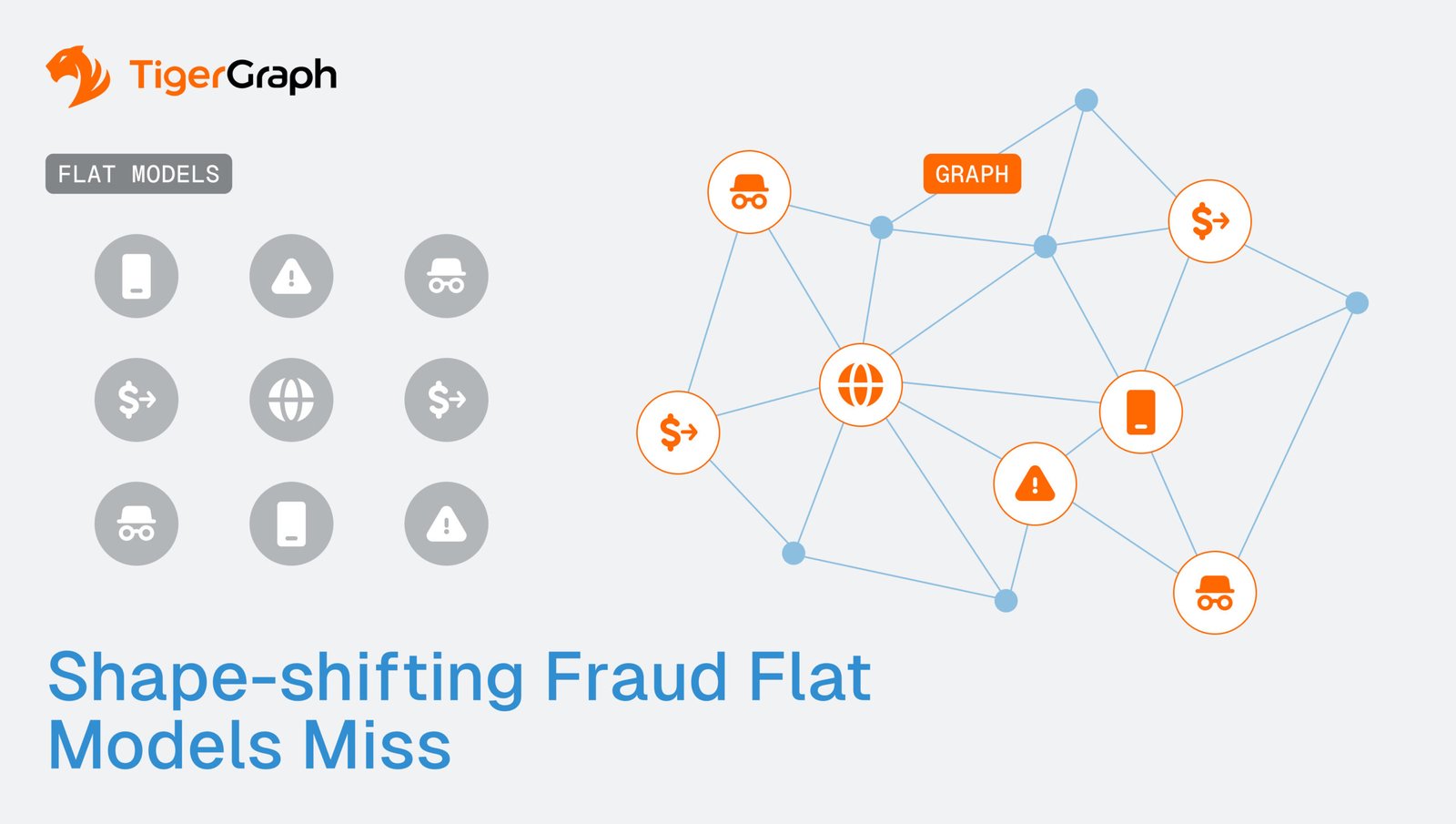
Organized rings thrive in the hidden patterns across individual data points. Flat models can’t easily connect the dots across multiple accounts, channels, or time periods. They struggle when fraud is collective, coordinated, and designed to look normal in isolation.
That’s why today’s most damaging schemes slip past detection until it’s too late. Consider:
- Dozens of mule accounts funneling money to a central hub. Flat models see a set of small, ordinary accounts. A graph model instantly reveals the hub-and-spoke structure connecting them, as this is the hallmark of a mule network.
- Merchants quietly cooperating with buyers. One-off transactions look normal in isolation. A graph view shows the unusually dense connections between certain merchants and a cluster of suspicious buyers, surfacing collusion.
- Synthetic identities built from stolen data. Flat models let fake identities pass KFC screening because each identity checks out on its own. Graph exposes the overlap: multiple “unique” customers tied to the same phone number, device, or address.
- Funds layered through ten intermediaries. Tabular systems log ten ordinary transfers. A graph traversal uncovers the entire chain, showing how money was laundered across accounts and jurisdictions.
Flat models reduce fraud to scattered anomalies. Graph connects the dots, exposing the network
Fraud Rings in Motion
The most dangerous thing about modern fraud is its ability to mutate. Shut down one set of accounts, and new ones appear within hours. Flag one pattern, and fraudsters rapidly switch tactics, moving money through new intermediaries, testing different transaction types, or shifting to another merchant channel.
This isn’t random improvisation. It’s coordinated adaptation.
Fraud rings operate more like living systems than isolated events. They monitor banks’ defenses, adjust in real time, and use redundancy so that no single takedown cripples the network. The result is fraud that doesn’t just scale, but actively learns how to survive.
Static detection methods leave banks permanently one step behind because they:
- Treat each incident as a reset. Once a flagged account is closed, flat systems don’t preserve the history of relationships or tactics used.
- Miss the ripple effects. When fraudsters pivot, related accounts, merchants, or synthetic IDs often resurface elsewhere, but without network visibility, those links remain hidden.
- Overwhelm analysts. Each mutation generates new alerts that look different on the surface but are variations of the same underlying scheme. Analysts are left chasing symptoms instead of addressing the system.
To stop fraud that moves and adapts like this, banks need detection models that recognize patterns as they shift, not just when they first appear. That means understanding how people, accounts, merchants, and devices are connected, and how those connections evolve over time.
Why Graph Fills the Gap
If fraud mutates like a living system, it’s not enough to have the most recent data. Many tabular systems can deliver real-time updates, but they still treat each transaction as an isolated event. What’s missing is the ability to see how patterns evolve.
That’s exactly what graph delivers. Unlike flat models, a graph-based model connects every account, transaction, merchant, or device into a living, queryable map. It captures what happened, and it shows how those relationships change over time and what that reveals about the fraudsters’ intent. By analyzing those evolving patterns, investigators gain foresight into coordinated activity that would stay hidden in tables.
With TigerGraph’s real-time scalable graph, fraud teams can:
- Detect collusion and multi-hop patterns: Spot when hundreds of accounts share devices, IPs, or merchants, even as fraudsters switch identities.
- Expose hidden facilitators: Surface the merchants or service providers that consistently reappear in different fraud schemes, even after old accounts are shut down.
- Track mutations in real time: See how fraud rings adapt, with models that evolve along with the behavior, not weeks later, but as transactions stream in.
- Operate at enterprise scale: TigerGraph supports 1B+ transactions per day and runs queries in 80 milliseconds, giving fraud teams actionable answers before losses escalate.
This gives banks a fraud model that evolves as quickly as the fraud itself—one that turns mutation from an advantage for criminals into an opportunity for earlier, more decisive intervention.
Real Results at Leading Banks
When top banks apply graph to fraud detection, the impact is tangible and measurable:
- $100M+ in annual fraud losses prevented. By detecting mule networks earlier, banks have been able to stop money before it disappears across accounts and jurisdictions.
- Operational efficiency gains. Fraud SVPs and operations teams report faster triage cycles, with analysts spending less time on false positives and more time pursuing confirmed threats.
- Enterprise-grade compliance. Graph models built on TigerGraph support FinCEN, AML, and KYC requirements, giving risk leaders confidence that their detection systems align with regulatory expectations and auditability standards.
- Proven scale and performance. TigerGraph powers fraud workloads handling 1B+ transactions per day, with queries returning in as little as 80 milliseconds, making real-time detection and intervention a reality for Tier-1 banks.
There are fewer misses, fewer wasted investigations, and more fraud stopped in motion.
With fraud evolving faster than flat models ever can, graph gives banks the structural visibility and real-time performance to keep pace. And TigerGraph transforms fraud prevention into a dynamic, network-first capability that sees fraud for what it is: a shape-shifting, relational problem.
Reach out for more info on how to use graph to outpace fraud rings, and you can experience graph analytics in minutes—launch your free TigerGraph instance at tgcloud.io.
How Graph Databases Power Fraud Detection in Banking
Bank fraud today is neither obvious nor simplistic. It doesn’t announce itself; rather, it hides in plain sight. It’s buried in the fine print of millions of legitimate transactions, weaving through accounts, devices, and merchants at a speed legacy systems can’t match.
The scams are bigger, smarter, and more connected than ever, with funds hopping across jurisdictions in seconds and vanishing before the first alert is raised.
At a top-tier bank, a single fraud ring might span hundreds of mule accounts, dozens of merchant relationships, and a web of synthetic identities stitched together from stolen data. Traditional tools chase suspicious transactions one at a time, missing the multi-hop connections, coordinated timing, and hidden facilitators that turn small scams into multimillion-dollar losses. And when they do raise a flag, they often drown investigators in false positives, wasting time while real threats slip through.
Graph technology changes that. By mapping and analyzing every relationship in real time, across billions of data points, banks can see the entire network behind the fraud, not just the symptoms. It’s the difference between reacting after the loss and stopping it cold.
The Graph Advantage in Fraud Detection
In a graph database, each account, device, merchant, or transaction is a node, and the connections between them are edges. That structure allows banks to see the bigger picture and the hidden risks, in ways traditional systems can’t.
Graph analytics can surface patterns that flat data models simply can’t touch:
- Circular money flows designed to launder funds undetected – By tracing transactions over multiple hops and time intervals, graph algorithms can identify when money leaves an account only to return through a different route, often via a chain of intermediaries. These loops are a hallmark of laundering schemes like layering and integration, which rule-based systems often miss without direct links.
- Merchant clusters that consistently appear in high-risk transactions – Community detection can reveal when multiple merchants are indirectly connected through shared customers, devices, or payment processors. This clustering often signals collusion, such as shell merchants inflating transactions to launder funds or process stolen card payments.
- Synthetic identity networks linked through shared attributes – Fraudsters often create fake identities by combining real and fabricated data — for example, using a valid Social Security number with a different name and address. Graph-based entity resolution can link these accounts by identifying shared IP addresses, devices, contact information, or behavioral patterns, exposing networks that would otherwise appear unrelated.
- Shortest paths from a “legit” account to a known fraud node – Even accounts that appear clean can be just a few degrees of separation from high-risk entities. Graph traversal can calculate the minimum number of hops between nodes, revealing hidden proximity to mule accounts, sanctioned entities, or confirmed fraudsters — often before a direct transaction takes place.
And because TigerGraph uses index-free adjacency and parallel traversal, it can detect these patterns across billions of transactions per day in 10s of milliseconds – fast enough to block fraud attempts without slowing down legitimate transactions.
Real-World Results: Tier-1 Banks in Action
When fraud detection is treated as a connected-data problem, the difference is immediate and measurable. Investigators gain context in seconds instead of hours. High-risk transactions are intercepted before they settle. And detection models become sharper with every query.
In the Consumer Banking division of a Fortune 100 bank, fraud prevention was already running on machine learning, but it wasn’t catching enough. By integrating TigerGraph into its fraud pipeline, the bank began feeding graph-based features into its existing ML models.
Those features revealed connections and risk patterns that transaction-level analysis simply couldn’t see, driving a significant jump in fraud prediction accuracy. The result was faster intervention, fewer false negatives, and millions in losses prevented before they could touch customer accounts.
Another global bank faced a persistent problem: coordinated fraud rings that evaded traditional detection rules. By deploying TigerGraph’s advanced algorithms across consumer accounts, credit cards, and online transactions, analysts could trace relationship patterns at scale, surfacing networks of linked merchants, mule accounts, and synthetic identities.
Investigators could dismantle entire fraud rings in days, not months, while reducing false positives that had previously clogged the queue.
These are not bolt-on tools or isolated wins. They are examples of what happens when fraud detection shifts from chasing single events to mapping and dismantling entire networks.
Why Fraud Teams at Top Banks Choose Graph
With TigerGraph, fraud teams detect anomalies, and they understand the story behind them. That means:
- Exposing fraud rings before they fully form using algorithms like Louvain to detect tightly knit communities, PageRank to pinpoint high-influence accounts, and proximity search to flag suspicious closeness to known bad actors.
• Tracking fraud as it evolves, not just after the fact, with temporal graphs that reveal when sleeper accounts suddenly activate or when laundering patterns stretch over months.
• Cutting investigation time in half with visual graph views that show investigators why an alert fired, not just that it did.
• Feeding models intelligence they’ve never had before by supplying AI/ML pipelines with rich, connected-data features that boost recall, slash false positives, and make risk scoring explainable to compliance teams.
Unlike batch-based detection systems, TigerGraph delivers these capabilities at the point of transaction, where milliseconds decide whether fraud is stopped or settled.
What This Means for Fraud Leaders
For senior fraud executives, the shift to graph is both a strategic and operational upgrade.
- SVP of Fraud: Gain real-time visibility into evolving fraud networks, cutting both losses and compliance risk.
- Director of Fraud Network Strategies: Build scalable, hybrid detection pipelines that blend graph analytics with AI/ML for multi-layer scoring.
- Fraud Operations Managers: Slash investigation time with context-rich alerts that point directly to the “why” behind a flagged transaction.
- AI/ML Leads: Generate highly accurate, explainable features from connected entity and transaction data, and feed them into existing models without rebuilding from scratch.
Fraud networks are getting faster, more complex, and more adaptive — but they’re still no match for graph. The world’s top banks, including JP Morgan and Nubank, have shown that when detection shifts from chasing isolated events to mapping the entire network, prevention becomes faster, smarter, and far more scalable than anything possible with flat data models.
With TigerGraph, every transaction, device, and account becomes part of a living network you can analyze in milliseconds. That means stopping coordinated fraud before it settles, protecting customers, and safeguarding revenue, all in real time.
TigerGraph doesn’t just connect the dots. It gives you the full picture before the damage is done. If your fraud prevention strategy still thinks in straight lines, it’s time to see how connected data can rewrite the odds in your favor. Reach out and let’s talk about how your team can dismantle entire networks before they strike.
And start building your fraud detection with TigerGraph’s fully managed cloud. Try it free at tgcloud.io.