Contact Us

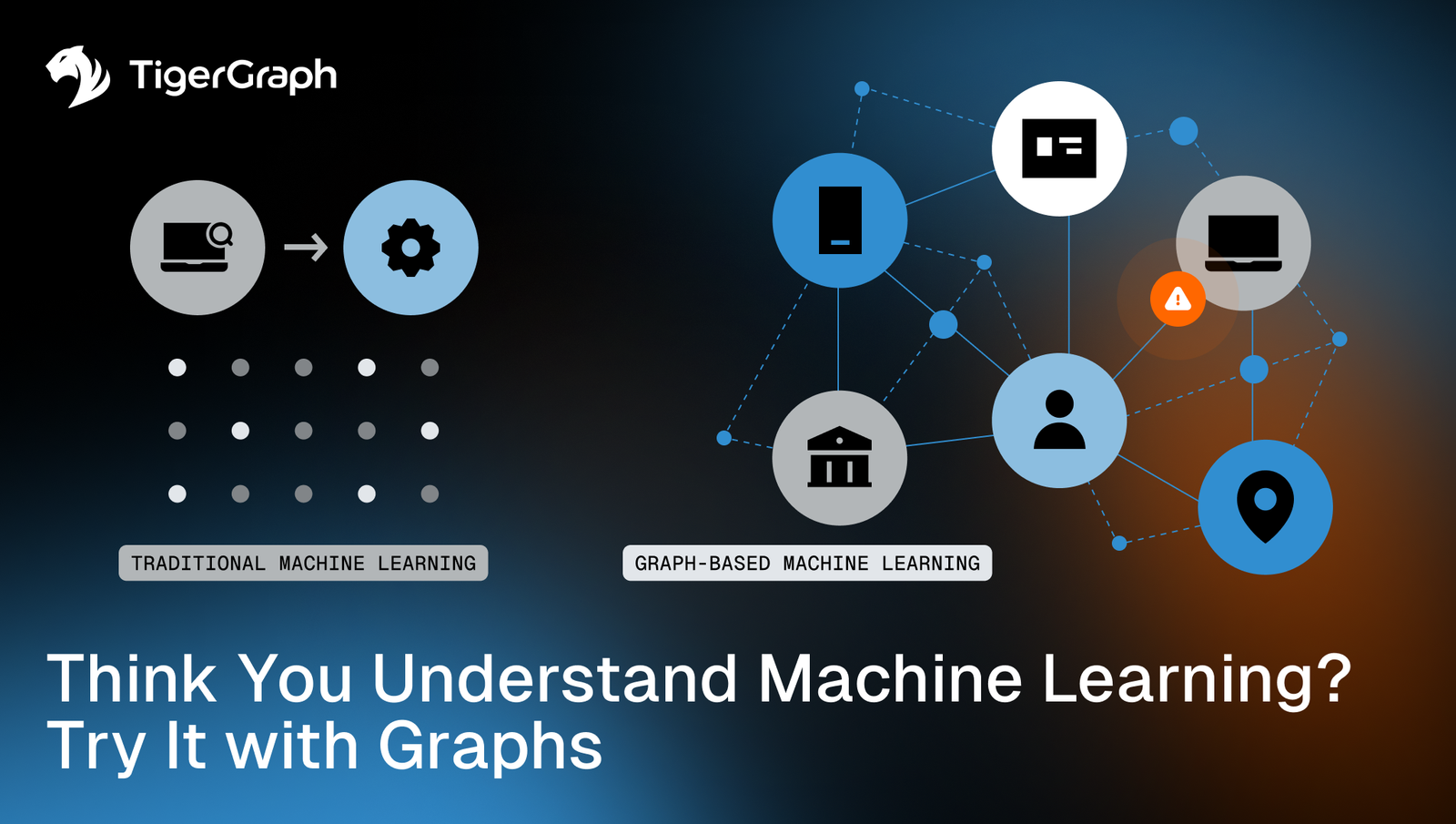
Think You Understand Machine Learning? Try it with Graphs

Most enterprise teams believe they are already doing machine learning well. They have models, feature pipelines, training data, and evaluation metrics. But there is a harder question. Are those models learning from relationships or just rows?

Most machine learning pipelines are built on tabular assumptions, with each record treated as independent. Features are engineered from attributes, and models are trained to predict outcomes based on isolated rows. That framework works for many problems, but it breaks down when outcomes depend on relationships.

When structure matters, independence becomes an illusion.

Graph-enhanced machine learning introduces relational context directly into predictive models. Instead of learning only from attributes, models learn from how entities connect. That shift changes what models are able to see.

Key Takeaways

The Limits of Flat Feature Engineering

Traditional machine learning workflows typically follow a familiar pattern.

  1. Extract attribute
  2. Engineer features
  3. Train a model
  4. Score predictions

This works well when entities behave independently, but many real systems do not.

A transaction does not exist in isolation and an account’s risk depends on other accounts it touches. If feature engineering ignores relational context, predictive models miss structural signals. Accuracy may still appear acceptable, but structural intelligence remains absent. 

This is where graph feature engineering comes in.

Graph Feature Engineering

Graph analysis changes how features are constructed. Instead of describing entities solely by attributes, graph methods compute metrics that capture their positions within a network. Examples include:

These features quantify structural roles. An entity’s position inside a network becomes predictive signal.

For example, two accounts may share identical transaction attributes. One may sit within a dense cluster of fraudulent activity while the other does not. Flat features treat them as identical but graph features reveal the difference.

Even with these improvements, graph feature engineering still relies on manually defined metrics. Embeddings take the next step by allowing models to learn structural representations directly from the network.

Embeddings: Learning Structural Similarity

Graph embeddings extend this idea. Instead of manually crafting every structural metric, embeddings encode nodes into vector representations based on their neighborhood.

Entities that occupy similar structural positions map to nearby points in vector space. Two entities may appear unrelated when viewed through attributes alone, but if they participate in similar connection patterns, embeddings reveal the similarity.

This allows models to learn structural roles automatically rather than relying entirely on handcrafted features. Similarity becomes relational rather than purely attribute-based.

Embeddings capture structural similarity. Graph neural networks extend this concept by allowing models to learn directly from the flow of information across the network.

Graph Neural Networks

Graph neural networks take relational learning further.

Traditional neural networks evaluate each training example independently. Graph neural networks aggregate information from neighboring nodes during training. Each node’s representation evolves based on the surrounding structure.

Instead of analyzing isolated records, the model learns patterns across the network itself.

In one fraud detection experiment, graph-enhanced models outperformed traditional approaches such as gradient boosting because they incorporated relational context directly into prediction. The model is no longer asking whether a transaction appears unusual. It evaluates how that transaction fits within a broader network of activity.

When relational context becomes part of model training, predictive systems begin to capture patterns that flat models cannot represent.

Why Structure Changes Outcomes

When predictive models incorporate relationships, they detect signals that flat models cannot.

Examples include:

These signals are not visible from isolated records. They emerge from structure. And the same principle applies across multiple domains:

In these environments, relationships drive outcomes and predictive models must reflect that structure.

Entity resolution illustrates how structural intelligence changes outcomes in practice.

Entity Resolution Illustrates Identity as a Network

Entity resolution provides another example of why relational context matters.

At first glance, identity resolution appears straightforward. Systems attempt to match records based on attributes such as name, address, email, or phone number. However, identity data quickly becomes ambiguous.

Traditional resolution systems rely on similarity thresholds. If attributes match above a certain score, records merge. If they fall below the threshold, they remain separate. This approach is fragile. Identity is not simply an attribute, it is a network.

Graph-based entity resolution evaluates relationships between records rather than relying only on string similarity. Shared neighbors, transaction patterns, device connections, and behavioral signals provide stronger evidence of identity than isolated attributes.

Structural validation reduces both false merges and missed matches. Accurate identity resolution strengthens downstream analytics across fraud detection, compliance monitoring, and customer intelligence.

Entity resolution is only one example of how relational intelligence improves machine learning systems. The same structural context can strengthen predictive models across a wide range of enterprise applications.

Introducing Relational Intelligence to ML Programs

Many organizations already have strong machine learning programs. The next step is introducing relational intelligence into those models.

Graph technologies allow teams to incorporate structural context alongside traditional features, improving predictive accuracy in domains where relationships drive outcomes.

Contact or connect with TigerGraph to learn how graph-enhanced machine learning can strengthen fraud detection, identity resolution, and risk analytics across connected data environments.

Frequently Asked Questions

1. What is Graph-Enhanced Machine Learning and How Does it Improve Model Accuracy?

Graph-enhanced machine learning incorporates relationships between entities into model training, improving accuracy by capturing patterns that isolated data cannot reveal.

2. Why do Traditional Machine Learning Models Miss Critical Patterns in Connected Data?

Traditional models miss critical patterns because they treat data as independent rows, ignoring the relationships that drive outcomes in real-world systems.

3. How do Graph-Based Features Improve Predictive Performance in Fraud and Risk Models?

Graph-based features improve performance by capturing connectivity, influence, and proximity—revealing hidden patterns like coordinated activity and shared infrastructure.

4. What is The Role Of Relational Data in Modern Machine Learning Systems?

Relational data provides context about how entities interact, enabling models to understand structure, dependencies, and network-driven behavior.

5. How can Organizations Integrate Graph Intelligence into Existing Machine Learning Pipelines?

Organizations can integrate graph intelligence by enriching features with network metrics, using graph embeddings, and incorporating relational context into model training.

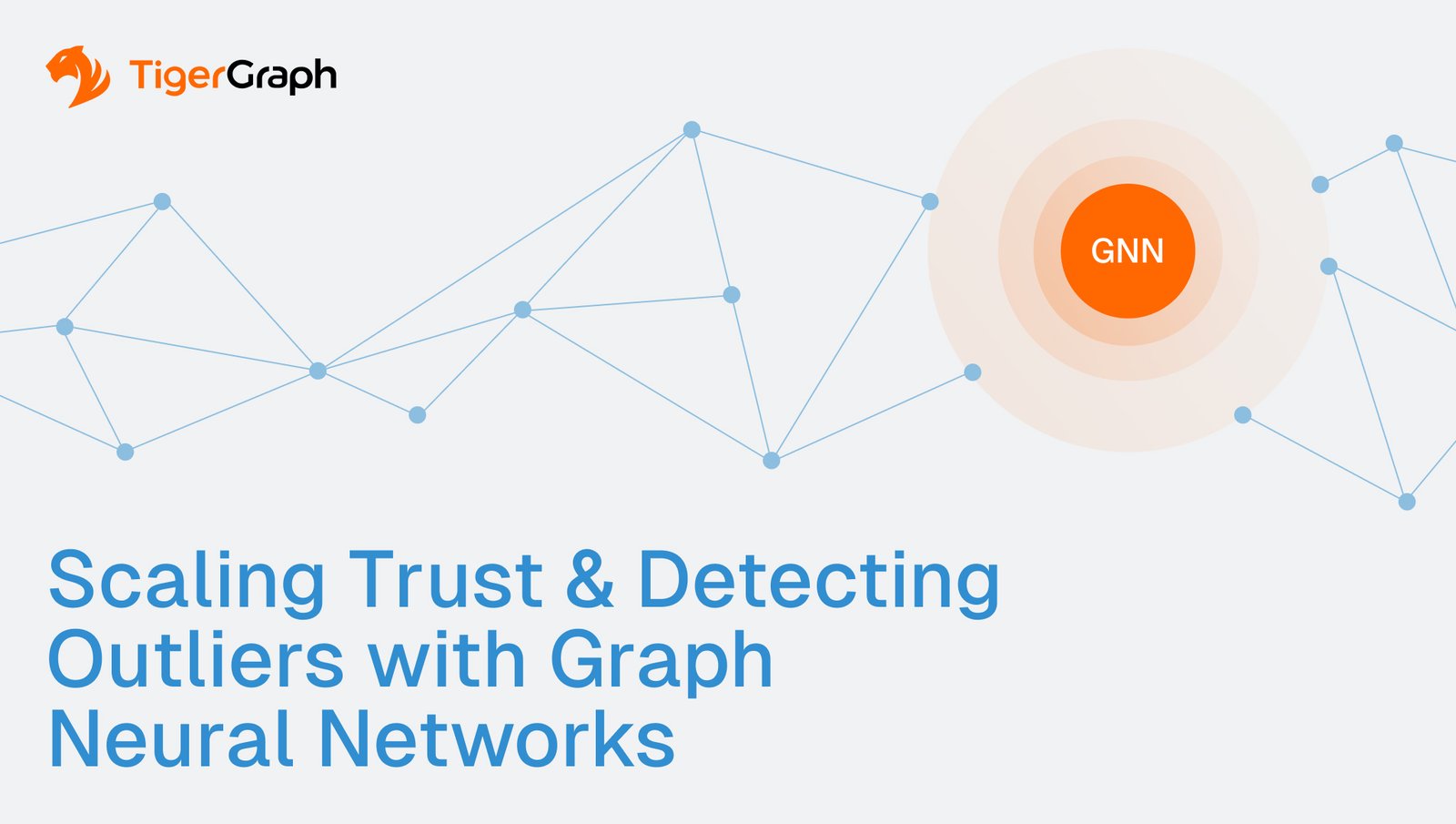
Scaling Trust & Detecting Outliers with Graph Neural Networks

Our world is increasingly fueled by AI-driven decision-making, so trustworthy data is non-negotiable. 

When algorithms determine who gets a loan, who passes a fraud screening, or which transactions are flagged for investigation, organizations must trust that these decisions are not only accurate but also explainable and fair. Traditional machine learning models often fall short of this standard, especially when the data is complex and highly interconnected. That’s where Graph Neural Networks (GNNs) come in—and where TigerGraph is leading the charge.

Neural networks have a reputation for being “black boxes” that don’t explain their predictions, but GNNs provide a path to explanatory models. Because they learn from relationships, not just attributes, their predictions can be traced back through the network of connections that influenced them. When combined with tools like attention layers or graph-based query inspection, this makes it possible to understand not just what a model predicted, but why—a critical step for building trust in AI systems.

Why Traditional Models Aren’t Enough

Most machine learning models analyze tabular data—discrete slices of information, such as income, age, or transaction history. And they make predictions based on these isolated features, but real-world behaviors don’t happen in isolation. They unfold in networks of relationships between accounts, devices, suppliers, and more.

Without properly modeling these relationships, organizations risk:

Graph-powered analytics solve these challenges by making connections first-class citizens in the data model. In TigerGraph, this is optimized at scale with distributed processing, ensuring that even multi-hop paths across billions of nodes are traversed in real time. The relationships are treated as primary, queryable objects within the database, not just implied links. 

This means edges (connections) are directly accessible and traversable, enabling seamless multi-hop analysis that would otherwise require complex joins in traditional models. GNNs extend this power even further by learning from the structure of the graph itself—not just attributes, but the relationships between them.

What Graph Features and GNNs Bring to the Table

Graph-enhanced ML represents a significant leap forward in machine learning, as it learns not only from attributes but also from relationships. In first generation graph-enhanced learning, graph features such as PageRank and betweenness centrality are added to the training data, resulting in better accuracy and explainability, with proven results for use cases like financial fraud detection.. These graph features provide deeper visibility into network behavior:

These features allow models to predict fraudulent behavior not just from isolated attributes, but from understanding influence and connectivity within the network. This is crucial for identifying hidden relationships and breaking fraud chains before they escalate. 

TigerGraph-trained GNNs are the next generation of ML, going even deeper:

Understanding the Difference: Anomalies vs. Outliers

An outlier is a single data point that deviates from the norm (e.g., a single unusually large transaction). In contrast, an anomaly is a deviation within the structure or group behavior that is fundamentally different from the norm (e.g., a network of accounts interacting in non-standard ways). In other words, an outlier is an unusual outcome that may or may not have an unusual cause, whereas an anomaly is an event that is not explainable by ordinary behavior.

TigerGraph’s Hybrid Graph + Vector Search is purpose-built to identify both:

This dual-layered approach enables a more granular and more explanation-based detection method that identifies both isolated irregularities and deeper structural fraud.

Why Traditional Databases Struggle with Relationships

Traditional databases like relational (SQL) and NoSQL systems are not designed to treat relationships as first-class citizens. In SQL, relationships are represented through foreign keys and require expensive joins to navigate connections. For example, understanding how a single account is linked to multiple fraudulent transactions across banks can require joining several tables, which dramatically slows down query speed.

NoSQL databases, like MongoDB or Cassandra, are optimized for document storage but treat relationships as secondary, often requiring manual stitching or external processing to understand multi-hop paths. This is why they struggle with real-time, multi-layered fraud detection or complex supply chain mapping.

TigerGraph is different: its graph-native storage makes edges (connections) primary objects. This allows for instant traversal across multiple hops, even at massive scale. In TigerGraph, relationships are direct, queryable, and optimized for real-time analysis—making anomaly detection faster and more efficient.

Making GNNs Work at Scale

Many platforms talk about GNNs—but TigerGraph makes them enterprise-ready. Unlike traditional graph databases, TigerGraph is purpose-built to scale with parallel traversal across billions of nodes. Here’s why:

And importantly, TigerGraph isn’t just “handling” graphs—it’s purpose-built to amplify graph-native intelligence. Its algorithmic computation (as opposed to just in-graph traversal) means that heavy analytics, like PageRank and community detection, execute in real time—no pre-computation required, delivering what our customers recognize as real-time, massively scalable, graph-powered machine learning.

Building More Trustworthy AI

Deploying GNNs on TigerGraph is about building AI systems people can trust, offering explainability, fairness, and adaptability.

In a world where AI-driven decisions impact real lives, scaling trust is crucial. GNNs, powered by TigerGraph, make it possible.

Ready to scale trust in your AI models? Learn how our ML Workbench and graph-native infrastructure can help you uncover deeper insights and make smarter, fairer decisions faster.

Unleashing AI’s Potential: Why Graph Databases are the Secret Weapon

Artificial intelligence is rapidly transforming industries, but its biggest challenge remains: understanding relationships within data at scale. Traditional databases fall short, but graph databases, especially TigerGraph, bridge this gap, unlocking AI’s full potential 

Graph Databases: The Foundation for Smarter AI

Traditional databases often struggle to represent and analyze the complex connections that exist in real-world data. Graph databases, on the other hand, are designed to excel at this. They model data as nodes (entities) and edges (relationships), allowing AI algorithms to navigate and understand the interconnected nature of information.

Why Graphs are Essential for AI Training and Inferencing:

TigerGraph: Supercharging AI with Graph Power

TigerGraph stands out as a leader in the graph database space, offering unique capabilities that empower AI development:

The Future of AI is Graph-Powered

As AI continues to advance, graph databases will become indispensable for driving deeper intelligence and more accurate predictions. By providing a foundation for understanding complex relationships, graph databases like TigerGraph empower AI to reason, learn and scale like never before. Whether you’re building a fraud detection system, a recommendation engine, or an agentic AI platform, graph databases are the key to unlocking the true potential of your AI initiatives.