Contact Us

How Knowledge Graphs Reveal Meaning Hidden in Enterprise Data

Traditional analytics systems focus on isolated data points, but context gives information meaning. From customer insight to fraud detection, every decision depends on understanding relationships across systems. That’s why knowledge graph use cases are transforming enterprise data strategy. They connect people, processes, and events to reveal insights hidden in plain sight.

Knowledge graphs unify scattered data into structured intelligence. They allow teams to find answers and also the reasoning behind the answers. In fast-moving industries, that difference determines whether a company reacts or anticipates.

What Is a Knowledge Graph?

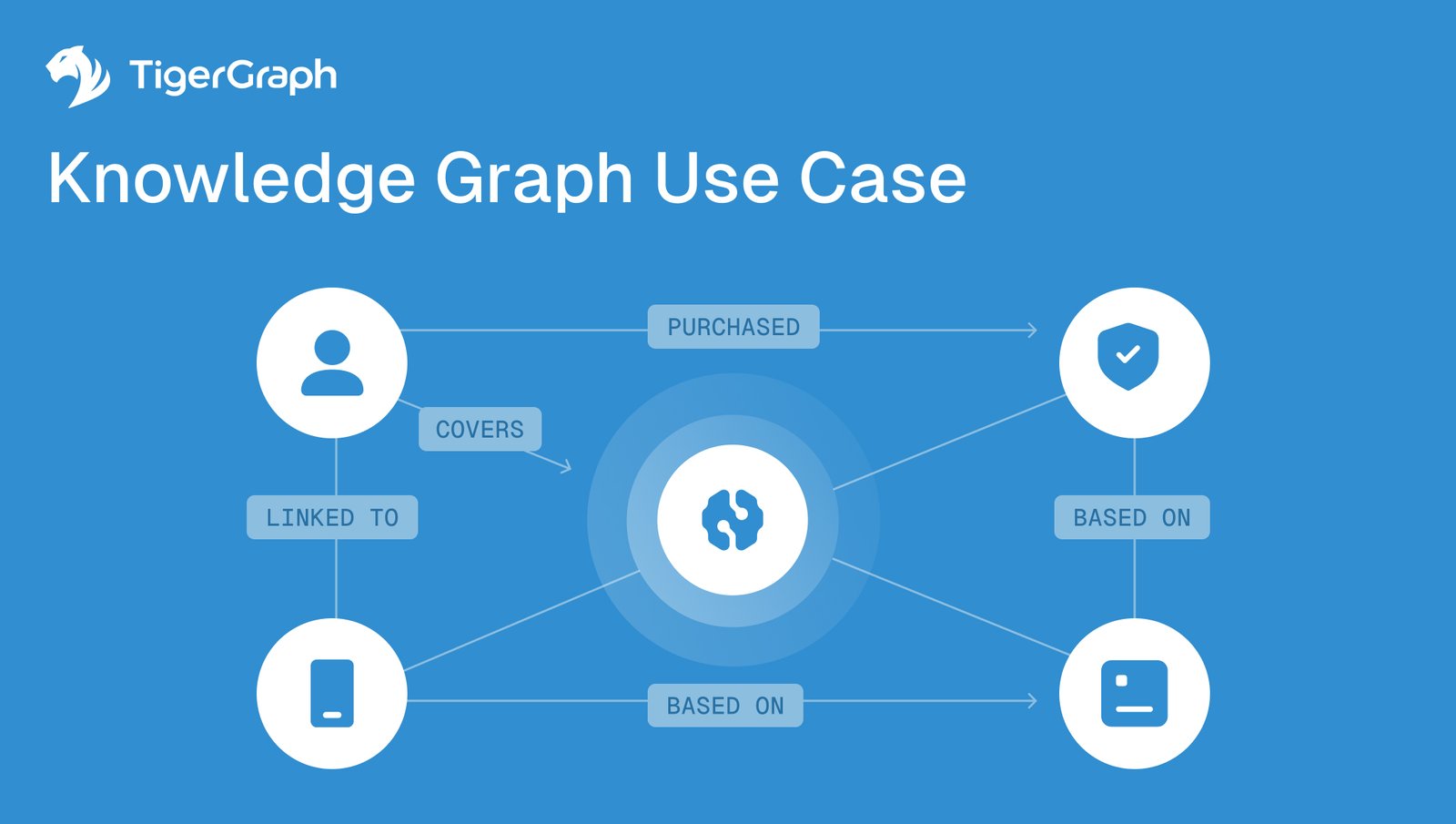
A knowledge graph represents data as entities and relationships, creating a network of connected meaning. Each node corresponds to a concept, such as a product, customer, or event—while edges describe how those entities relate.

This connected structure mirrors how humans think about information. It links data from across sources, forming a shared framework that both people and machines can query intuitively.

A knowledge graph example might map how customers engage with products, marketing, and support systems to create a unified view of interactions that were once siloed. In practice, this makes it possible to ask business-ready questions like, “Which customers are most likely to respond to an upsell campaign?” or “Which suppliers connect to our highest-risk regions?”—and get immediate, explainable answers.

Knowledge graphs organize data the way the world actually works—through connections.

Why Knowledge Graphs Matter for Modern Enterprises

Organizations rely on knowledge to operate efficiently, yet traditional databases treat facts as separate pieces. A knowledge graph bridges those gaps, connecting data into a coherent whole.

This integration produces measurable benefits—faster analytics, higher data quality, and shared understanding across business units. It shortens time-to-insight for data scientists and builds confidence for decision-makers. Each can see that recommendations are rooted in verified context.

That’s why knowledge graph applications are gaining traction in financial services, healthcare, telecom, retail, and government. Wherever complexity and change intersect, graphs reveal what matters most.

When relationships drive value, graphs deliver insight that scales.

Knowledge Graph Use Cases Across Industries

The versatility of knowledge graphs allows them to serve almost any data-rich domain. Below are the most impactful enterprise knowledge graph use cases, spanning both business and AI contexts.

Finance and Financial Crime Detection

In financial services, connected data saves time, cuts losses, and ensures compliance. A knowledge graph connects accounts, transactions, and identities to expose hidden relationships that flat databases miss. Fraud detection models use these links to identify suspicious clusters and uncover multi-hop money flows.

Banks use knowledge graphs to trace beneficial ownership, strengthen AML and KYC processes, and visualize how entities interact over time. The result: fewer false positives, faster investigations, and improved auditability for regulators.

Customer Experience and Personalization

Customer data lives across marketing systems, CRMs, and e-commerce platforms. A customer knowledge graph unifies these silos—connecting preferences, interactions, and purchase history into one dynamic profile.

This enables hyper-personalized recommendations, more relevant product suggestions, and real-time segmentation. Retailers and service providers can track evolving customer behavior while preserving explainability and compliance.

Healthcare and Life Sciences

Knowledge graphs link clinical records, genomics, and outcomes in healthcare. Hospitals use them to correlate treatments and conditions, improving care quality and supporting precision medicine.

Pharma and research organizations rely on knowledge graph examples for drug discovery—mapping compounds, side effects, and protein interactions. This approach accelerates research, reduces redundancy, and enables explainable AI for clinical validation.

Supply Chain and Manufacturing

Modern supply chains demand visibility across global ecosystems. A supply chain knowledge graph connects suppliers, logistics routes, materials, and risk indicators in real time.

Manufacturers identify bottlenecks, predict disruptions, and assess supplier reliability by modeling dependencies. Equipment and maintenance graphs power predictive maintenance, reduce downtime and optimize production.

Retail and Commerce

Retailers use knowledge graph applications to merge product catalogs, customer data, reviews, and supply-chain metrics. With connected data, they can dynamically adjust pricing, predict inventory needs, and enhance cross-sell performance.

When an e-commerce platform integrates graph analytics, every product and customer interaction adds intelligence—driving conversions while reducing returns and waste.

Telecom and Network Operations

Telecommunications networks contain billions of interconnected devices. A telecom knowledge graph maps relationships between users, routers, and infrastructure. It makes real-time monitoring and predictive insights possible.

With these connections visible, operators can detect failures before customers notice, optimize routing, and proactively balance network loads. This directly translates into higher uptime and improved customer satisfaction.

Cybersecurity and Threat Intelligence

In cybersecurity, knowledge graphs model access patterns, credentials, and data flows across an enterprise. Security teams can see relationships between compromised accounts, shared devices, or privileged users, identifying lateral movement before breaches occur.

Context-rich detection replaces siloed alerts with a holistic view of threat networks. This is essential for zero-trust environments.

Public Sector and Government

Government agencies and NGOs use enterprise knowledge graphs to connect policy data, public records, and citizen services. By breaking down departmental silos, knowledge graphs reveal how policies interact, improve response coordination, and ensure transparent decision-making.

Knowledge graphs turn bureaucracy into connected intelligence.

Knowledge Graphs for AI and RAG Workflows

Knowledge graphs are also essential for retrieval-augmented generation (RAG) and GraphRAG systems that feed large language models (LLMs). They act as a source of truth, providing verified, structured data to ground AI reasoning.

In enterprise AI, this means fewer hallucinations, faster responses, and explainable outcomes. For agentic AI systems, knowledge graphs act as dynamic memory. They allow models to reason, adapt, and learn continuously.

And when relationships become visible, decisions become smarter.

How Knowledge Graphs Improve Business Performance

The business value of a knowledge graph stems from its ability to clarify relationships at scale. Compared with conventional systems, the difference is dramatic.

ChallengeTraditional Data SystemsKnowledge Graph Approach
Data IntegrationManual joins and rigid ETL pipelinesSeamless connections among entities
AdaptabilityFrequent schema redesignsFlexible models that evolve with new data
Query SpeedDegrades as relationships multiplyMaintains near-linear performance
TransparencyHidden logic in code or joinsDirectly traceable relationships

This transparency enables analysts to explain results, auditors to verify logic, and executives to act with confidence. By translating complexity into clarity, a knowledge graph becomes both a technical and strategic asset.

Knowledge Graphs and Artificial Intelligence

In advanced analytics and machine learning, context determines accuracy. Knowledge graphs enrich AI models with structured relationships, grounding predictions in verified context rather than coincidence.

When paired with LLMs or agentic AI, knowledge graphs are a memory layer that evolves with new data. They help systems reason, verify, and explain—capabilities critical for enterprise-grade intelligence.

Teams deploying knowledge graph RAG use cases report higher model reliability, fewer hallucinations, and faster retrieval speeds. In essence, graphs give AI something it has always lacked: situational awareness.

Business Benefits of Knowledge Graph Adoption

Once organizations implement knowledge graphs, they see measurable improvements across the enterprise, including:

A knowledge graph turns data management from reactive maintenance to proactive intelligence.

Enterprise Case Study: Connected Data in Action

For example, consider a global insurer seeking to consolidate data across policy, claims, and underwriting divisions. Implementing a knowledge graph could produce a unified model linking people, locations, coverages, and events.

Analysts would be able to visualize dependencies in real time, simulate “what-if” risk scenarios, and pinpoint potential losses before they occur. Report turnaround could drop from days to minutes, while compliance audits become easier to manage.

This connected approach illustrates how knowledge graphs improve efficiency and can even change how an organization thinks about risk itself.

Where TigerGraph Fits in Delivering a Scalable foundation for Knowledge Graphs

TigerGraph provides a high-performance, scalable foundation for knowledge graph applications in complex, data-intensive industries. Its native parallel architecture supports billions of relationships with sub-second query response, making it ideal for real-time analytics and reasoning.

As a graph database provider, TigerGraph powers enterprise knowledge graphs for finance, healthcare, manufacturing, and telecom—helping teams uncover relationships, strengthen AI pipelines, and act with data-driven confidence.

Summary

Knowledge graphs redefine how enterprises understand their world. They connect facts, context, and logic into a single, navigable network, accelerating insight while ensuring transparency.

From knowledge graph examples in healthcare to enterprise use cases in finance, organizations are discovering that the best decisions come from connected understanding.

Ready to move beyond disconnected data? The path forward is clear. Reach out to explore how TigerGraph can help you build the connected intelligence foundation that tomorrow’s enterprises demand.

The Power of Graph Relationships: Turning Isolated Data into Connected Insights

Enterprises do not suffer from a lack of data, but they do suffer from data silos and a lack of connection. Context is lost. Adding relationships to the data solves this problem.

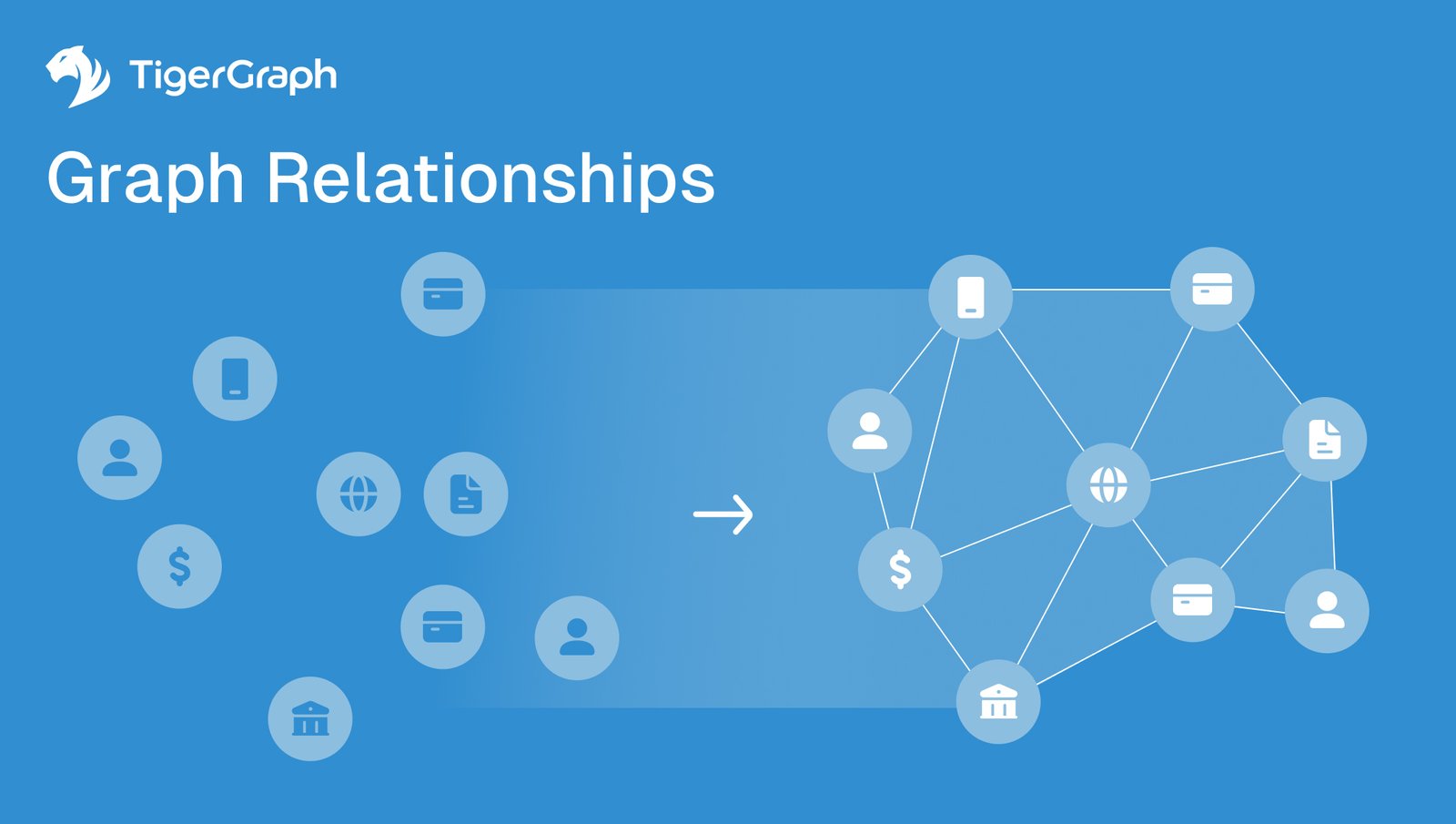
Graph relationships map how people, accounts, devices, suppliers, and policies interact.  And when you model these links in a relationship graph, also called a connection graph, dashboards inform strategic decisions: fraud is traced across hops, supply chains show true dependencies, and operations move from guesswork to clarity. This is the foundation for resilient analytics, stronger models, and regulator-ready explanations.

What Are Graph Relationships?

Relationships in graphs are the edges that connect entities (nodes) and define how they interact: customer—account, account—device, supplier—shipment, data—decision. Capturing these links in a relationship graph, or sometimes called a connection graph, preserves context that tables oversimplify and flatten 

Types of relationships in graphs include transactional (money movement), ownership (control), dependency (what breaks if X fails), and lineage (how an output was produced). There are other types that capture temporal connections that change over time and proximity edges that show closeness.

When leaders can see these relationships clearly, they unlock faster analysis, better predictions, and explainable outcomes. Executives can point to named edges with timestamps and sources. This ability turns abstract analytics into operational intelligence.

Why Graphing Relationships Improves Decisions

Most organizations operate with fragmented data, but graphing relationships pulls those fragments together. The value becomes clear in five dimensions:

In short, graph relationships reduce noise, improve defensibility, and open new paths for growth.

A Taxonomy of Types of Graphical Relationships (with Examples)

Not all relationships in a graph serve the same purpose. To make connected intelligence operational, enterprises benefit from standardizing the types of relationships they track. By naming, defining, and cataloging these edges, teams ensure consistency across analytics, machine learning, and compliance workflows.

The most common categories include:

By establishing a taxonomy like this, organizations reduce duplication of effort, align semantics across teams, and create reusable analytics components. The result is faster time-to-insight, more consistent reporting, and defensible outputs that regulators and executives alike can trust.

Real-World Use Cases for a Relationship Graph

Fraud & AML

Fraudsters build networks, not single anomalies. Analysts trace rings via graph relationship paths: shared devices, IPs, merchants, mule clusters. Investigators pivot on paths, exporting timestamped chains for SARs. Models ingest features computed from these relationships: proximity to risk, communities, and time-bounded fan-in/fan-out.

Example: A fraud analyst reviews accounts that look clean individually. The relationship graph shows they all connect to the same IP and funnel funds into a common mule hub. Instead of chasing 200 isolated alerts, the team identifies and dismantles an entire ring.

Supply Chain & Operations

Enterprises are increasingly judged on resilience. A relationship graph maps multi-tier suppliers, contracts, and logistics. Leaders can identify graph relationship types that create bottlenecks or cascading failures. When disruptions hit, they answer “What if supplier X fails?” with a concrete multi-hop impact path.

Example: A manufacturer loses a Tier-2 supplier in Asia. A connection graph reveals that five factories, three shipping lanes, and dozens of retailers are affected downstream. The team quickly re-routes to mitigate losses.

Customer 360 & Growth

Customers are more than rows in a CRM—they’re connected ecosystems. By graphing relationships, banks see households, affiliates, and shared devices. Retailers discover cross-sell paths through these relationships: ownership + behavior + channel. Segmentation becomes explainable.

Example: A bank realizes that small-business credit card owners are also linked to consumer households. The relationship graph shows cross-use of devices and addresses, as well as the potential for bundled offers that improve retention.

Data Lineage & Governance

For compliance, lineage is everything. Types of relationships in graphs connect dataset→feature→model→decision. When asked which relationship is shown in the graph?, teams provide lineage, timestamps, and approvals.

Example: A regulator questions why a fraud model flagged a transaction. The relationship graph exports the full path—data source, engineered feature, model, score—eliminating ambiguity and reinforcing trust.

Traditional Models vs. a Relationship Graph (What Changes)

DimensionTraditional TablesRelationship Graph
ContextFlattened by joinsPreserved via edges & paths
Speed to InsightSlow joins, brittleSub-millisecond traversal on targeted patterns
ScalabilityDegrades with complexityBuilt for deep, multi-hop analysis
ExplainabilityManual stitchingPath-level lineage on demand
ML FeaturesLimited, row-boundRich: proximity, communities, fan-in/fan-out

The bottom line is that graph relationships compress time-to-answer and raise confidence in every decision.

TigerGraph’s Advantage for Graph Relationships

Not all platforms can operationalize graph relationships at scale. TigerGraph turns them into enterprise-grade outcomes:

Implementation Guide: From Silos to a Relationship Graph

Measuring Success (What Execs Should Track)

Quick Answers on Graph Relationships

Conclusion

Graph relationships are more than lines between dots—they’re the structure that makes data useful. By modeling relationships and operationalizing them, enterprises break silos, surface risk earlier, and turn context into competitive advantage.

With TigerGraph, you get sub-millisecond traversal, streaming scale, and path-level explainability—capabilities already delivering exceptional detection lift, significantly faster investigations, and many millions in savings for fraud/AML programs. Those same strengths apply broadly wherever connection graphs drive outcomes.

Context isn’t optional. Build your graphs deliberately. Name your edges, govern semantics, and put paths in front of analysts and models. That’s how you convert data into connected intelligence—at enterprise scale, with measurable ROI. Want to see this in action? Reach out to learn more!

Frequently Asked Questions

What are graph relationships and why are they important?

Graph relationships are the connections (or edges) that link entities like people, accounts, devices, suppliers, or datasets in a network. They define how these entities interact—such as customer → account, supplier → factory, or dataset → model. They are important because they preserve context that traditional tables flatten or lose, allowing enterprises to trace dependencies, detect risk, and make faster, more explainable decisions. With graph relationships, insights move from isolated data points to connected intelligence.

How do graph relationships improve decision-making and analytics?

Graph relationships reveal how everything is connected, turning fragmented data into a unified view of operations, risk, and opportunity.
By modeling relationships, organizations gain:

What are the main types of graph relationships used in enterprise data?

The most common graph relationship types include:

How does TigerGraph enhance the power of graph relationships?

TigerGraph operationalizes graph relationships at enterprise scale and sub-millisecond speed.
Its key advantages include:

What are practical use cases for relationship graphs in business?

Relationship graphs power many real-world applications: