Products
TigerGraph Savanna
TIGERGRAPH DB
Community Edition
AI & Graph Intelligence
Agentic Ai
GraphRAG
Hybrid Graph + Vector Search
Graph Data Science Library
Languages and Tools
Solution Kits
GSQL Query Language
openCypher Query Language
GraphStudio
Insights
Connectors
Compare Editions
Solutions
Solutions
Solutions Overview
Increase revenue
Product Marketing
Customer 360
Entity Resolution
Recommendation Engine
Manage risk
Fraud Detection and Protection
Cybersecurity Threat Detection
Anti-Money Laundering (AML)
Risk Assessment and Monitoring
Improve operations
Supply Chain Analysis
Network Optimization
Energy Management System
By industry
Advertising, Media, Entertainment
Financial Services
Healthcare & Life Sciences
Foundational
AI & Machine Learning
Time Series Analysis
Geospatial Analysis
Developers
Download
TigerGraph DB
TigerGraph Docker Image
GSQL Client
Developers
Documentation
Developer Hub
Ecosystem
Community Forum
Resources
Blog
TigerGraph Blog
Resources
Demos
Webinars & Events
Videos & Podcasts
Benchmarks
Reports & Whitepapers
Datasheets
Glossary
Pricing
Services
Services and Support
TigerGraph University
Training & Certifications
TigerGraph Support
Documentation
Production Guidelines
Company
Company
Company Overview
Leadership
Legal Terms
Patents
Security and Compliance
Careers
Join Us
Open Positions
Customers
Ford
Intuit
Jaguar Land Rover
Xbox
JP Morgan Chase
Read more success stories
Press Room
News and Press Releases
Awards
Partners
Partner Benefits
TigerGraph Partners
Contact Us
Products
TigerGraph Savanna
TIGERGRAPH DB
Community Edition
AI & Graph Intelligence
Agentic Ai
GraphRAG
Hybrid Graph + Vector Search
Graph Data Science Library
Languages and Tools
Solution Kits
GSQL Query Language
openCypher Query Language
GraphStudio
Insights
Connectors
Compare Editions
Solutions
Solutions
Solutions Overview
Increase revenue
Product Marketing
Customer 360
Entity Resolution
Recommendation Engine
Manage risk
Fraud Detection and Protection
Cybersecurity Threat Detection
Anti-Money Laundering (AML)
Risk Assessment and Monitoring
Improve operations
Supply Chain Analysis
Network Optimization
Energy Management System
By industry
Advertising, Media, Entertainment
Financial Services
Healthcare & Life Sciences
Foundational
AI & Machine Learning
Time Series Analysis
Geospatial Analysis
Developers
Download
TigerGraph DB
TigerGraph Docker Image
GSQL Client
Developers
Documentation
Developer Hub
Ecosystem
Community Forum
Resources
Blog
TigerGraph Blog
Resources
Demos
Webinars & Events
Videos & Podcasts
Benchmarks
Reports & Whitepapers
Datasheets
Glossary
Pricing
Services
Services and Support
TigerGraph University
Training & Certifications
TigerGraph Support
Documentation
Production Guidelines
Company
Company
Company Overview
Leadership
Legal Terms
Patents
Security and Compliance
Careers
Join Us
Open Positions
Customers
Ford
Intuit
Jaguar Land Rover
Xbox
JP Morgan Chase
Read more success stories
Press Room
News and Press Releases
Awards
Partners
Partner Benefits
TigerGraph Partners
Contact Us
#Identity graph in banking
Discover our blog
Categories
All Categories
About TigerGraph
Benchmark
Business
Community
Compliance
Customer 360
Cybersecurity
Data Science
Developers
Digital Twin
eCommerce
Engineers
Entity Resolution
Finance
Fraud / Anti-Money Laundering
GQL
Graph + AI
Graph Algorithms
Graph Databases
GSQL
Healthcare
KYC risk assessment
Machine Learning / AI
Risk and Fraud Analytics
Supply Chain
TigerGraph
TigerGraph Cloud
Results
Entity Resolution, Fraud / Anti-Money Laundering, KYC risk assessment
Wed 1 Oct 2025
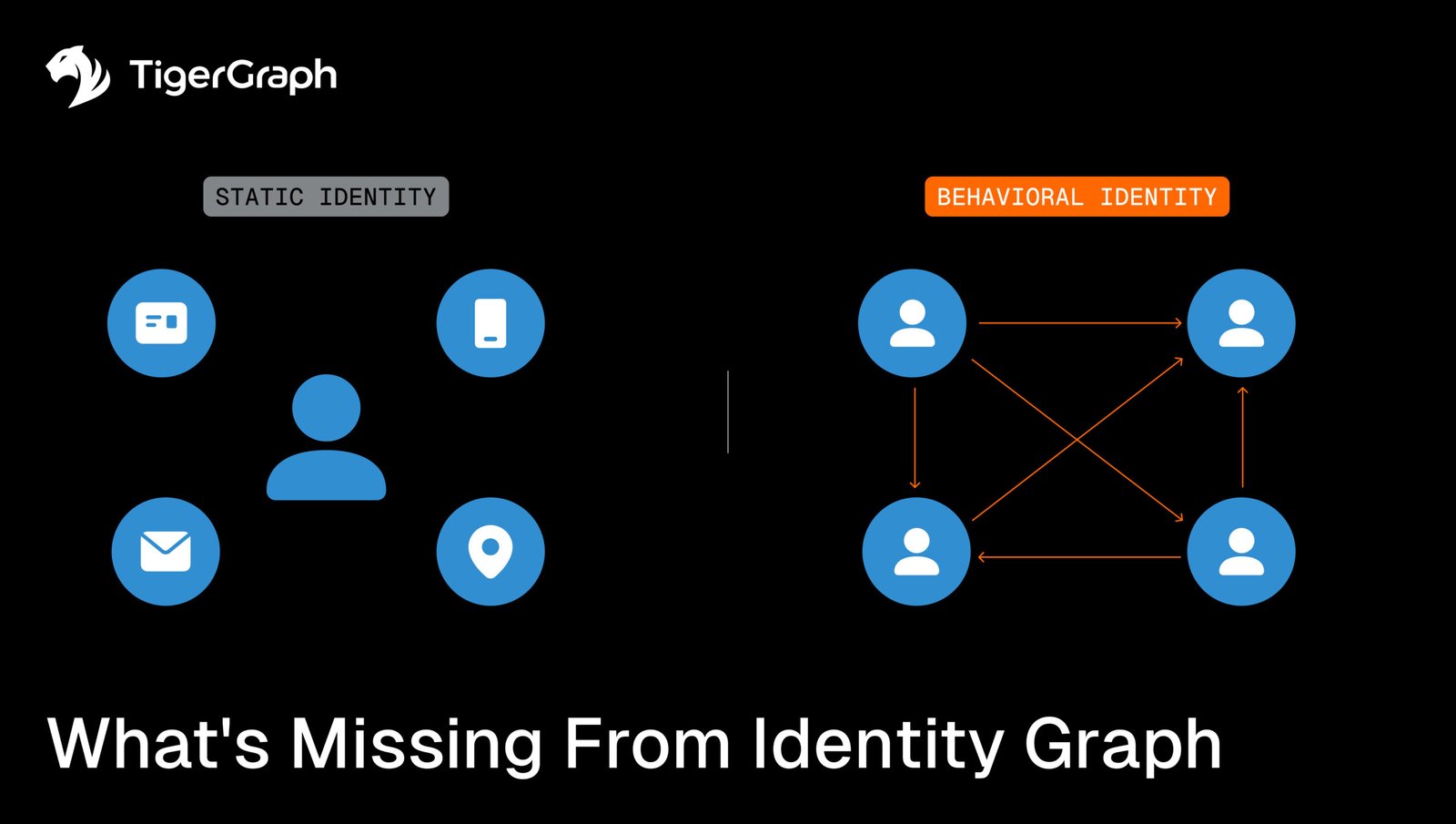
What’s Missing from Your Identity Graph? Behavior.
Discover