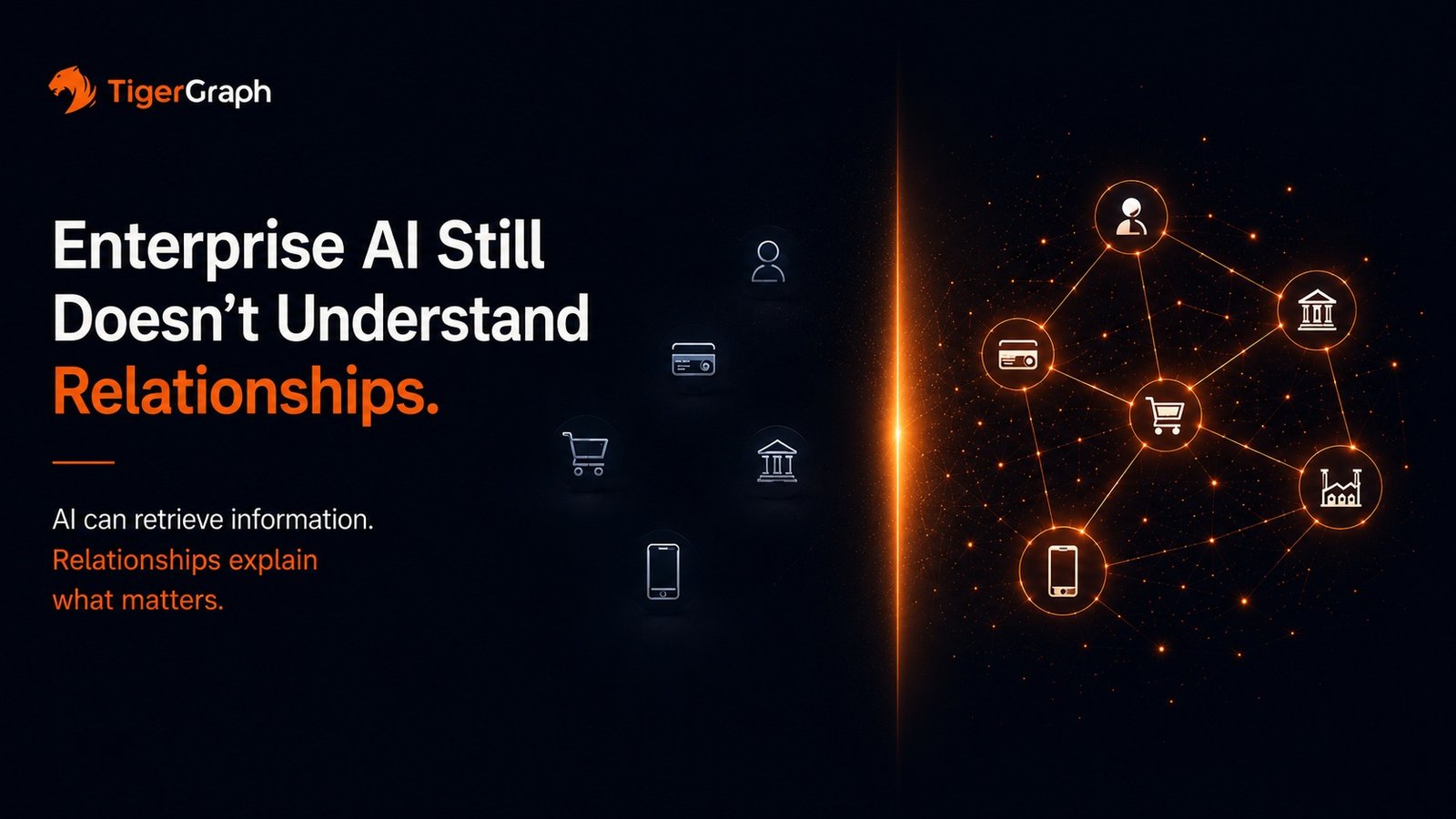
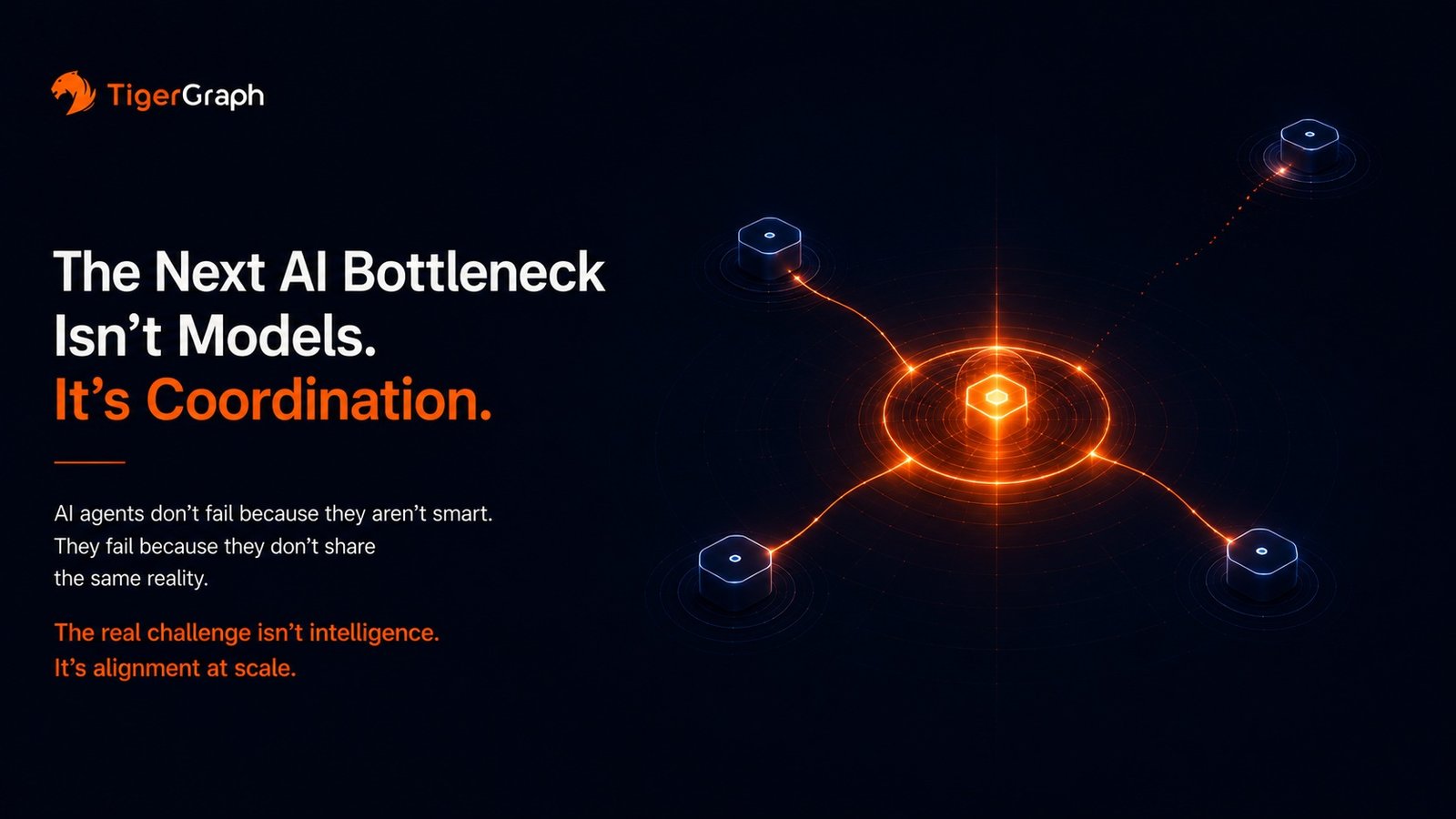
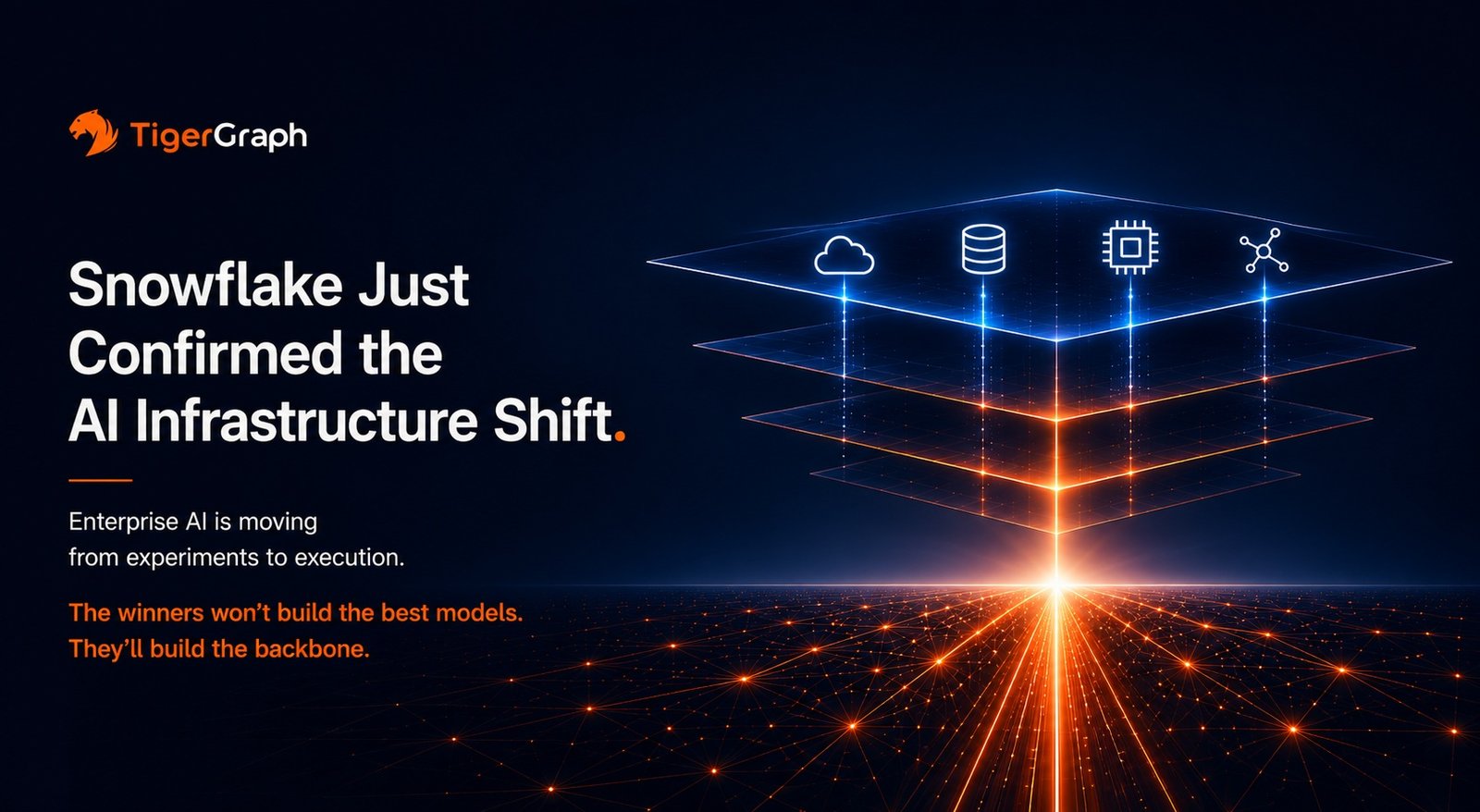
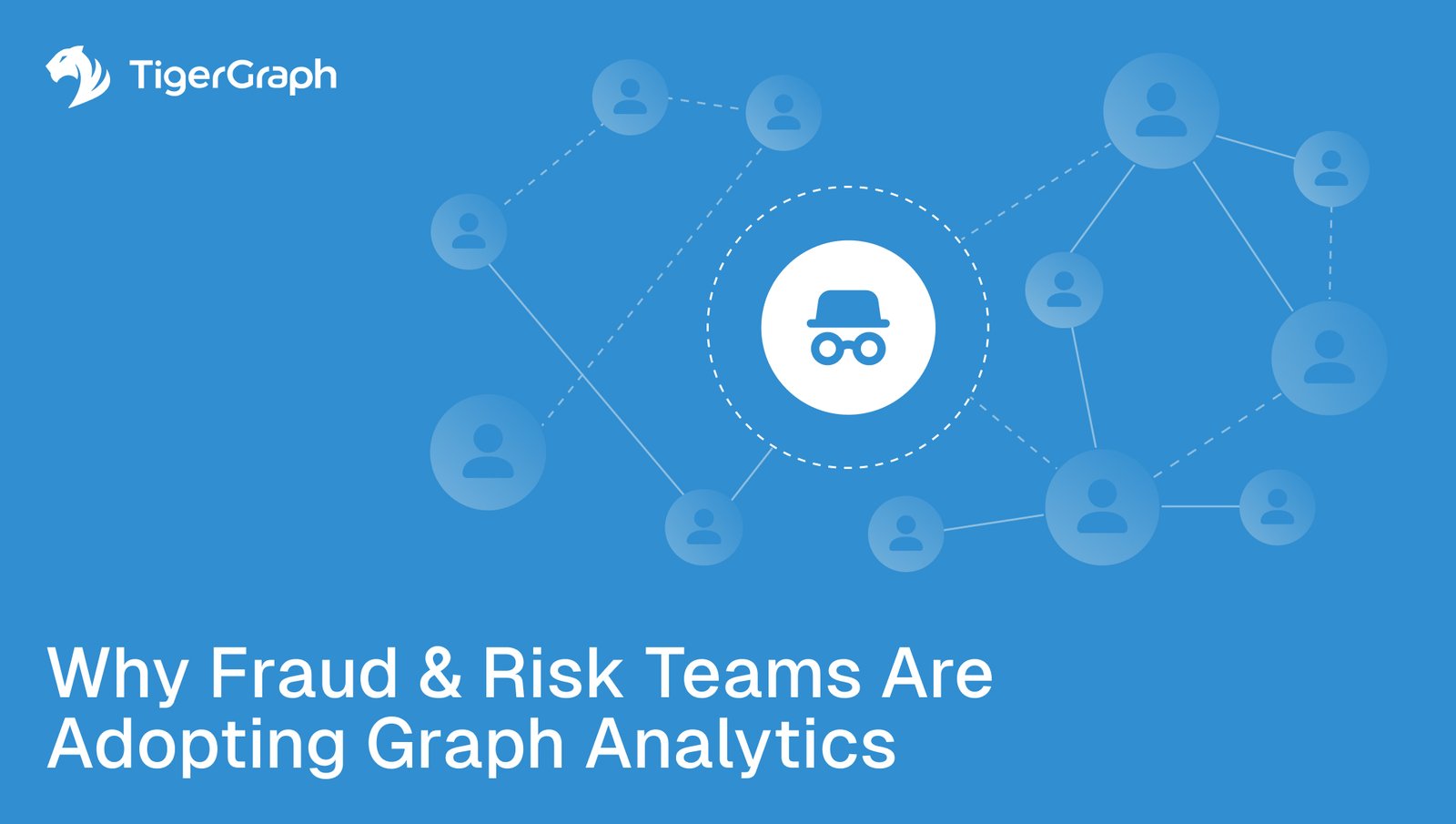
Enterprise AI Still Doesn’t Understand Relationships
AI systems have become very good at retrieving information. They can summarize documents, generate answers, classify content, write code, search across large knowledge bases, and reason through complex instructions with remarkable speed. That progress is real.
But as enterprises move AI closer to production decision-making, a harder problem is becoming visible. AI can retrieve information. It still struggles to understand how the enterprise actually works. That distinction matters because enterprises are not collections of isolated records. They are networks of customers, accounts, devices, identities, transactions, organizations, behaviors, dependencies, and trust relationships.
Most important business decisions do not come from one record or one document. They come from understanding how things connect over time. That is where many current AI architectures remain incomplete. They can retrieve relevant information. They can assemble context. They can generate fluent answers. But retrieval is not the same as understanding. And in operational environments, that gap becomes increasingly difficult to ignore.
Enterprises Do Not Operate as Isolated Records
A large part of the AI stack still treats enterprise context as something that can be assembled at query time. Retrieve the closest documents. Pull the most relevant records. Pass the context into the model. Generate an answer. For many informational tasks, that works well.
But production systems are different. A fraud investigation is not just a set of transactions. A risk decision is not just an account record. An identity decision is not just a customer profile. A cybersecurity event is not just an alert. The meaning comes from how those signals relate to one another.
Who is connected to whom. Which device appears across multiple accounts. Which behavior changed over time. Which transaction is connected to which merchant, organization, identity, location, or prior decision. That is the structure underneath operational reality. And it is relational.
This is why enterprise AI often performs well in controlled tasks but becomes harder to trust in production environments. The system may retrieve useful information, but it may not preserve the relationships that make that information meaningful. That is not a small limitation.
It is an infrastructure problem.
Retrieval Finds Information. Relationships Explain Meaning.
The modern AI stack has made retrieval central to how systems reason. That is understandable. Enterprises have enormous amounts of information, and AI systems need a way to find what matters.
But retrieval has limits. Retrieval can find proximity. It can surface similar documents. It can identify relevant fragments. It can reduce the amount of information passed into a model.
What it does not automatically do is preserve the connected structure of the enterprise. That structure matters.
A transaction by itself rarely explains fraud. A network often does. An account by itself rarely explains risk. Relationships often do. A document by itself rarely explains identity. Connected behavior over time often does. This is the difference between retrieving information and understanding the relationships underneath it. For enterprise AI, that difference becomes critical.
Because once AI systems begin participating in operational decisions, organizations need more than plausible answers. They need reasoning that is grounded in how the business actually operates. They need context that persists across workflows. They need decisions that can be explained. They need systems that can understand not only what information is relevant, but why it matters in relation to everything else.
That is where relationship intelligence becomes foundational.
The Most Important Enterprise Problems Are Relationship Problems
Many of the highest-value AI use cases in the enterprise are not isolated data problems. They are relationship problems.
Fraud detection is a relationship problem. Fraud rarely appears as a single obvious transaction. It emerges through connected behaviors across identities, devices, accounts, merchants, channels, and time.
Anti-money laundering is a relationship problem. Suspicious activity often becomes visible only when transactions, counterparties, accounts, entities, and patterns are connected.
Identity resolution is a relationship problem. A customer, device, household, business, account, and behavioral history may each exist in separate systems, but the decision depends on understanding how they connect.
Cybersecurity is a relationship problem. Threats rarely exist as isolated alerts. They move through systems, privileges, users, devices, and access patterns. Operational risk is a relationship problem. Risk propagates across dependencies, workflows, organizations, vendors, and decisions.
These are precisely the environments where AI is becoming more important. They are also the environments where isolated retrieval is least sufficient. Because the important question is rarely, “What information is similar to this?” The better question is, “How is this connected to everything else we know?” That is the question most enterprises need AI to answer in production.
Agentic AI Makes the Relationship Problem More Important
This problem becomes even more important as organizations move toward agentic AI.
A single AI assistant answering a question is one thing. A network of AI systems retrieving information, making recommendations, escalating issues, updating workflows, and triggering actions across an enterprise is something very different. In that environment, relational grounding becomes essential.
If autonomous systems operate without a durable understanding of entity relationships, they begin making decisions from partial views of reality. One system may evaluate a transaction. Another may assess an identity. Another may review a customer profile. Another may trigger an action. Each step may look reasonable on its own.
But if those systems do not share an understanding of how the underlying entities connect, the enterprise loses coherence. The problem is not that the AI is incapable of reasoning. The problem is that the reasoning is not grounded in the connected structure of the business. That is where risk enters.
An AI system can sound confident while missing the relationship that changes the meaning of the decision. It can retrieve the right document while missing the network around the entity.
It can summarize the record while failing to see the pattern. That is why relationship intelligence is not a technical enhancement at the edge of the architecture. It is becoming part of the foundation.
Vectors Are Powerful. They Are Not Enough.
Vector search has become an important part of modern AI infrastructure. It is powerful for similarity. It helps systems find relevant content. It makes large knowledge bases more accessible. It plays an important role in retrieval-augmented generation and enterprise search.
But similarity is not the same as relationship understanding. Two documents can be semantically similar without explaining how entities connect. Two transactions can look similar without belonging to the same fraud ring. Two customer records can appear separate while representing the same person, household, or business relationship. Two alerts can look unrelated until the underlying device, account, credential, or behavior pattern connects them.
This is where relationship intelligence changes the system. It gives AI a way to reason over connected reality rather than isolated fragments. Not because graphs replace vectors. Not because relationships replace models. Because enterprise AI needs both. Vectors help retrieve relevant information.
Relationships help explain how that information fits into the operational structure of the enterprise. That combination becomes increasingly important as AI systems move from answering questions to supporting decisions.
TigerGraph Preserves the Structure AI Needs
This is where TigerGraph operates differently. TigerGraph is built to preserve relationships structurally, at enterprise scale, in real time. That matters because the context does not need to be reconstructed from scratch every time an AI system reasons. The relationships are already part of the operational foundation.
Entities remain connected. Decision paths become easier to trace. Multi-hop context becomes accessible. Patterns across accounts, devices, transactions, identities, and behaviors can be evaluated as part of the system itself.
That changes how AI behaves. The system is no longer reasoning only over temporary fragments assembled at query time. It can reason over the connected structure of the enterprise. For fraud, that means seeing the network behind the transaction. For identity, it means understanding the relationships behind the profile. For risk, it means evaluating how signals propagate across entities and time. For operational AI, it means preserving context as decisions move across workflows.
This is the infrastructure layer many enterprises will need as AI becomes more autonomous, more persistent, and more deeply embedded in production environments. The value is not simply that the data is connected. The value is that the system can preserve connected understanding while AI operates. That is the difference between information retrieval and operational intelligence.
The Future Enterprise Stack Will Include a Relationship Layer
The first phase of enterprise AI focused heavily on models. The next phase is becoming more architectural. Enterprises will still need powerful models. They will still need retrieval. They will still need orchestration, governance, and security.
But those layers will not be enough on their own. As AI moves into operational environments, enterprises will increasingly need a relationship layer: infrastructure that preserves how entities, behaviors, decisions, and risks connect in real time. That layer will be especially important in high-stakes environments where decisions must remain explainable, auditable, and defensible.
Because in those environments, the question is not simply whether AI can produce an answer. The question is whether the system can understand the context behind the answer. That context is rarely flat. It is connected.
The future of enterprise AI will not be defined only by systems that retrieve more information. It will be defined by systems that understand how information relates. That is the next infrastructure shift. The first generation of enterprise AI connected models to data. The next generation will connect AI to relationships. Because in production environments, isolated information is rarely enough.
What matters is whether the system understands how everything connects.
The Next AI Bottleneck Isn’t Models. It’s Coordination.
For the last several years, most of the AI conversation has focused on intelligence. Better models. Larger context windows. More capable agents. Faster reasoning. More autonomous systems. That focus made sense. The model layer improved dramatically, and the industry saw what was possible when language systems became powerful enough to summarize, generate, retrieve, reason, and act.
But as enterprises move AI from experiments into production, a different issue is starting to appear. The problem is no longer whether AI can perform a task. The problem is whether AI systems can remain coordinated as they operate across real enterprise environments. That is a much harder problem. And it is becoming one of the most important infrastructure questions in AI.
The industry is entering its agentic era. Every major platform is now racing toward AI agents, autonomous workflows, AI coworkers, orchestration systems, and persistent automation. The ambition is clear: AI systems that do not simply answer questions, but participate in workflows, make recommendations, escalate issues, trigger actions, and operate continuously across the enterprise.
That vision is powerful.
It is also exposing a gap that many organizations are only beginning to understand. Intelligence does not automatically create coordination. A model can reason well inside a single interaction. An agent can retrieve useful information for a specific task. A workflow can automate a narrow process. But enterprises do not run on isolated interactions. They run on connected systems, shared context, institutional memory, policies, approvals, risk signals, identities, and decisions that accumulate over time.
When AI systems begin operating across those environments, coordination becomes the real test.
Agentic AI Changes the Infrastructure Problem
The current AI stack was largely built around a familiar pattern. Retrieve information. Assemble context. Generate output. Move to the next step. That pattern works well for many informational tasks. It is much harder to use safely across operational systems.
In a production environment, one AI system may retrieve context from customer data. Another may evaluate risk. Another may recommend an action. Another may update a workflow. Another may trigger a downstream decision. Each step may look reasonable on its own. The problem is whether the system as a whole is operating from the same understanding of reality. That is where coordination begins to matter.
As AI systems scale, context fragments quickly. Different agents retrieve different information. Workflows operate on different assumptions. Entity understanding drifts. Operational memory becomes inconsistent. Decision paths become harder to reproduce. Nothing necessarily breaks all at once. The system simply becomes harder to trust.
That is the issue many organizations will face as agentic AI moves from demos into production environments. A single agent may be useful. A network of AI systems operating across disconnected enterprise context is a different architectural challenge entirely.
The more responsibility AI receives, the more important coordination becomes. A fragmented chatbot is inconvenient. A fragmented fraud workflow is expensive. A fragmented financial crime investigation process creates institutional risk. A fragmented risk system can make decisions that are difficult to explain, audit, or defend.
That is why the next bottleneck in enterprise AI is not model intelligence alone. It is coordination.
Orchestration Is Not the Same as Coordination
A lot of the market uses orchestration and coordination as if they mean the same thing. They do not. Orchestration moves tasks between systems. Coordination preserves understanding across systems. That distinction is becoming critical. An orchestration layer can route a task from one agent to another. It can sequence actions. It can call tools. It can automate handoffs. But routing tasks is not the same as maintaining shared operational context.
The harder question is whether every system involved in the workflow understands the same customer, the same account, the same device, the same risk profile, the same history, and the same decision state. That is where many current architectures are still fragile. They can move work. They cannot always preserve meaning.
This matters because enterprise decisions are rarely isolated. A decision made in one workflow often changes the meaning of another. A risk signal in one environment may alter the interpretation of a transaction somewhere else. An identity signal may connect accounts that previously appeared unrelated. A fraud pattern may become visible only when behaviors are connected across time, channels, and entities.
If AI systems cannot preserve that connected context, they begin operating from partial views. Partial views produce partial decisions. And partial decisions become dangerous when they are automated.
Shared Context Becomes an Infrastructure Requirement
In consumer AI, the main goal is often interaction. Did the system answer the question? Did it generate useful content? Did it help the user complete a task? In enterprise AI, the bar is higher. The system must remain coherent across workflows, teams, policies, and decisions. It must preserve context across time. It must be explainable when something goes wrong. It must support governance, auditability, and institutional trust.
That is why shared context is becoming an infrastructure requirement. It is not a nice-to-have feature. It is what allows AI systems to operate reliably in complex environments. Consider fraud detection. A suspicious transaction rarely tells the full story. The important signal may come from a shared device, a linked identity, a repeated behavioral pattern, a merchant relationship, a mule account, or a sequence of actions that only becomes meaningful when viewed as a network.
The same is true in financial crime, cybersecurity, customer risk, and operational intelligence. The important question is rarely, “What does this isolated event mean?” The better question is, “How does this event connect to everything else we know?” That is where coordination depends on relationships.
Relationships preserve continuity. They help systems understand how entities, behaviors, and decisions connect over time. They make context durable instead of temporary. Without that layer, AI systems are forced to reconstruct understanding repeatedly at query time. They retrieve fragments, assemble context, generate outputs, and pass those outputs into another workflow that may reconstruct the world differently.
That is not a stable foundation for operational AI.
AI Systems Need a Shared View of Reality
The most important failure mode in agentic AI may not look like failure at first. The systems will still respond. The agents will still act. The workflows will still run. But over time, they may stop operating from the same reality.
One agent may interpret a customer as low risk. Another may flag related behavior as suspicious. Another may approve a workflow without understanding the prior risk signal. Another may escalate a case without seeing the full entity network. Individually, each step can appear logical. Collectively, the system begins to drift. That is the coordination problem.
It is subtle. It compounds. And it becomes more difficult to detect as AI systems become more autonomous. This is why enterprises cannot treat agentic AI as a simple extension of chat interfaces or workflow automation. Agentic systems require an infrastructure layer that keeps decisions, context, entities, and relationships aligned. Not just routed. Aligned.
That is the difference between automation and operational intelligence.
Relationship Intelligence is the Coordination Layer
This is where relationship intelligence becomes foundational. Not because graphs replace models. Because relationships help AI systems maintain operational understanding as they scale.
Most enterprise environments already contain the signals AI needs. The problem is that those signals are distributed across systems that were not designed to reason together. Customer data lives in one place. Transaction data lives in another. Identity signals live somewhere else. Device intelligence, behavioral history, account relationships, and risk decisions may all be managed separately.
AI can retrieve pieces of that information. But retrieval alone does not guarantee coordination.
TigerGraph approaches the problem from the relationship layer. By preserving connected operational context structurally, TigerGraph allows AI systems to reason across live enterprise relationships instead of rebuilding temporary approximations of context every time a workflow runs. That changes the behavior of the system.
Entities remain connected. Context remains durable. Reasoning paths become easier to trace. Decisions can be evaluated in relation to the network around them. AI systems can operate from a shared view of how customers, accounts, devices, transactions, behaviors, and risks connect.
That is what coordination requires. Not more isolated intelligence. Shared operational understanding.
The Next AI Race Will Be About Alignment at Scale
The next phase of enterprise AI will not be defined simply by smarter agents. Smarter agents will matter. Better models will matter. Better tools will matter. But they will not be enough.
The harder problem will be whether those systems can remain aligned as they operate across fragmented enterprise environments. Can they preserve context? Can they coordinate decisions? Can they understand the relationships underneath the workflow? Can they remain explainable when decisions move across systems and time? Can they support trust in production? That is where the infrastructure race is moving.
Agentic AI will increase the need for coordination, not reduce it. The more autonomous systems become, the more important shared context becomes. The more decisions AI touches, the more important it becomes to preserve the relationships that give those decisions meaning.
The industry spent the first phase of AI asking whether systems could become intelligent. The next phase will ask whether intelligence can remain coordinated. Because in production environments, intelligence that cannot stay aligned eventually becomes another source of operational risk.
The future of enterprise AI will not be defined by agents that act independently. It will be defined by systems that understand how everything connects and remain coordinated as they scale.
Snowflake Just Confirmed the AI Infrastructure Shift
For the last several years, most of the AI conversation centered on the model. Which company had the largest model. Which system generated the best answers. Which platform produced the most impressive demos. That phase of the market created enormous momentum. It also shaped how many organizations thought about enterprise AI. The assumption was that as models improved, enterprise systems would naturally become more intelligent too.
But production environments are beginning to expose a different reality. The problem is no longer whether AI can generate convincing outputs. In many cases, it clearly can. The problem is whether enterprises can operate AI reliably once those systems become part of live workflows, customer decisions, risk environments, and institutional processes. That is a much harder challenge. And it is why Snowflake’s recent earnings mattered beyond the numbers themselves.
The market was not simply rewarding growth. It was rewarding infrastructure positioning. Increasingly, investors and operators alike are recognizing that enterprise AI is moving out of the experimentation phase and into the operational phase. That changes what matters. The first phase of AI rewarded model innovation. The next phase will reward the infrastructure required to run AI coherently at enterprise scale. Those are not the same thing.
AI Systems Are Starting to Encounter Operational Reality
In controlled environments, modern AI systems can appear remarkably capable. They summarize documents. Generate code. Answer questions. Retrieve information. Produce sophisticated reasoning. But enterprises do not operate in controlled environments. They operate across fragmented systems built over years — sometimes decades — where customer records, identity systems, transaction data, policies, workflows, and risk signals rarely exist in one place at one time. This is where the conversation around AI infrastructure starts becoming more serious.
Because once AI moves into production systems, the challenge shifts from generating intelligence to maintaining coherence. A customer interaction affects a fraud workflow. A fraud workflow affects a compliance decision. A compliance decision affects downstream operational systems. The reasoning chain does not stay inside a single prompt. It moves across environments, teams, systems, and time. Most organizations are only beginning to encounter how difficult that becomes operationally. Especially once multiple AI systems begin interacting with the same underlying workflows.
One system retrieves information. Another evaluates risk. Another updates state. Another triggers action somewhere else. The outputs may still look intelligent individually. But preserving shared understanding across the system becomes dramatically harder. That is the infrastructure problem now emerging underneath enterprise AI.
Retrieval Alone Does Not Preserve Understanding
A large part of the current AI stack still treats context as something temporary. Retrieve information. Assemble context. Generate an answer. That works surprisingly well for many informational tasks. Operational systems are different. In production environments, understanding rarely comes from isolated pieces of information alone. It comes from how events, behaviors, identities, accounts, devices, and decisions relate to one another over time. Fraud works that way. Risk works that way. Identity works that way. Trust works that way too.
This is where many organizations begin discovering the limitations of retrieval-centric architectures. Retrieval can surface relevant information. It does not necessarily preserve operational continuity. And continuity matters once AI systems begin participating in real decisions. A fraud investigation is not just a collection of transactions. A cybersecurity event is not just a sequence of alerts. A customer relationship is not just a collection of records.
The meaning emerges from the relationships between them. That distinction becomes increasingly important as organizations move from informational AI into operational AI. Because operational systems require something stronger than plausible reasoning. They require durable understanding.
The Market Is Starting to Shift Toward Infrastructure
This is the larger signal underneath the recent surge in AI infrastructure spending. The market is beginning to understand that enterprise AI is not just a model problem. It is an architectural problem. How do systems maintain context across fragmented environments? How do autonomous workflows coordinate decisions consistently? How do organizations preserve explainability once AI systems become persistent across production workflows? How do enterprises maintain trust when reasoning moves across multiple systems and operational states? These are infrastructure questions. And they become more important as AI systems move closer to production decision-making.
This is especially true in industries where decisions must remain explainable long after they are made. Financial services. Insurance. Healthcare. Cybersecurity. Government. In these environments, a system that produces convincing answers without preserving traceability eventually becomes difficult to trust operationally. That is one of the biggest shifts happening underneath enterprise AI right now. The conversation is slowly moving away from: “Can the model generate intelligence?” Toward: “Can the system preserve understanding as intelligence scales?”
Those are fundamentally different requirements.
Why Relationship Intelligence Matters
One of the reasons this transition matters so much is that enterprise systems are inherently relational. Fraud rarely appears as a single isolated event. It emerges across connected behaviors, identities, devices, accounts, and networks. The same is true for risk. The same is true for trust. Even basic operational decisions often depend on understanding how entities connect over time. This is where relationship intelligence becomes strategically important. Not because relationships are supplementary context. Because relationships often provide the structure underneath operational reality itself. That distinction changes how AI systems behave in production environments.
Most systems today reconstruct context dynamically at query time. TigerGraph approaches the problem differently. TigerGraph preserves connected operational context structurally so AI systems can reason against live enterprise relationships instead of rebuilding temporary approximations of context every time the system operates. That difference becomes increasingly important as organizations move toward persistent AI systems operating across fraud environments, customer workflows, compliance systems, operational intelligence platforms, and autonomous decision architectures. Because eventually enterprises discover that scaling AI is not simply about connecting models to more data. It is about preserving connected understanding while the system operates continuously in the real world.
The Infrastructure Race Is Already Underway
Snowflake did not create this shift. The company validated where the market is heading. AI is becoming operational infrastructure. And operational infrastructure has very different requirements than experimental AI systems do. The companies that succeed in the next phase of the market will not necessarily be the companies with the most impressive demos. Increasingly, they will be the companies capable of maintaining coherence, traceability, and connected understanding as AI systems scale across fragmented enterprise environments. That is where the infrastructure race is moving now.
The first phase of enterprise AI focused on connecting models to information. The next phase will focus on whether systems can preserve understanding across relationships, workflows, decisions, and time. Because in production environments, isolated information is rarely enough. What matters is whether the system understands how everything connects.
Why Fraud & Risk Teams Are Adopting Graph Analytics
Fraud isn’t just a data problem—it’s a relationship problem. This new reality is something industry leaders are quickly coming to terms with as the scale and sophistication of fraud outpaces the capabilities of traditional detection tools. Today’s fraud isn’t confined to a single account, transaction, or user profile—it’s distributed, coordinated, and adaptive.
This shift in the threat landscape leaves conventional fraud detection strategies in the dust. Rules-based systems and supervised models may catch simple patterns, but they struggle with complexity. Modern fraudsters exploit gaps between systems. They spin up synthetic identities that look legitimate on paper. They share devices, mimic behavioral norms, and hide in the noise—counting on siloed tools to miss the connections that matter.
That’s why fraud detection must evolve. It’s no longer enough to ask whether a single transaction looks suspicious. Teams need to ask what that transaction is connected to—and what those connections reveal. In other words, they need relationship intelligence.
Graph analytics makes that possible. By mapping and analyzing the relationships between people, devices, accounts, and behaviors in real-time, graph technology gives fraud and risk teams the context they’ve been missing, and the ability to act before threats escalate.
The Blind Spots in Traditional Detection
Most traditional fraud systems rely on either supervised learning—where models are trained on examples of past fraud—or rules-based logic, where specific conditions trigger alerts (like a large withdrawal or a login from a new location). These tools work well when fraud follows predictable patterns. But modern fraud doesn’t play by those rules.
Today’s attackers are more creative and coordinated. For example, synthetic identity fraud blends real and fake information to create new, seemingly legitimate accounts that slip past standard checks. Other schemes involve slow-drip tactics, where no single action looks suspicious, but together they form a clear fraud pattern—one that only becomes obvious when connections are analyzed over time. We also see cross-platform fraud, where bad actors move across apps, regions, or systems to stay under the radar. And then, there are bots and adversarial AI, which learn how detection systems work and adapt in real-time to avoid triggering alerts.
These traditional systems focus on individual events and ask, “Is this transaction unusual?” But that question alone is no longer enough. The better question is: “What is this transaction connected to—and what does that reveal?” Fraud hides in the relationships between events, entities, and behaviors.
Graph analytics is the best next step, as it makes it possible to model and analyze those relationships, revealing patterns that aren’t visible in isolated data points.
Graph Is Built to Model Fraud Like It Actually Works
Graph databases store data as nodes (entities) and edges (relationships), making them uniquely suited to capture the complexity of fraud in the real world.
Unlike traditional databases that flatten data into tables and rely on predefined JOIN paths, graph technology allows teams to follow the actual flow of activity—tracing how people, devices, accounts, transactions, and behaviors are linked. This makes it possible to ask more contextual, layered questions: “Has this user interacted—even indirectly—with a known fraud ring?” “Does this device appear in multiple high-risk transactions?” “Are these accounts part of a rapidly forming behavioral cluster?”
Most graph databases can reveal these connections, but many are optimized for offline analysis or visualization. They’re effective at surfacing patterns after the fact, but often lack the performance or flexibility needed to detect fraud as it’s happening—especially in environments with billions of relationships and constantly changing data.
That’s where TigerGraph takes things further. It’s built for deep, multi-hop analytics on live data streams, with architecture designed to support real-time operations, not just static queries. Teams can go beyond spotting isolated anomalies to tracking coordinated strategies in motion. They can model behavioral thresholds, detect cascading activity across accounts and devices, and reason through patterns that evolve over time—without the delays or bottlenecks that typically come with scale.
In short, while standard graph systems help map the shape of fraud, TigerGraph enables teams to respond to it—immediately, intelligently, and at enterprise scale.
From Alerts to Insight with Graph Technology
What makes graph analytics so transformative for fraud and risk teams isn’t just that it flags anomalies faster—it’s that it reveals the why behind them. It enables a shift from chasing alerts to reasoning over behaviors. A sudden spike in account creation might seem harmless—until graph analysis shows that all those accounts link back to the same compromised IP. A routine wire transfer may pass automated checks—until it’s revealed to be just a few hops away from a known shell entity. A login from a new device might be ignored—unless that device accessed 20 other accounts in the last 10 minutes.
This level of connected insight is critical as fraud becomes more adaptive, more distributed, and harder to spot through surface-level signals alone. Graph analysis allows teams to follow the full trail of interactions and identify emerging patterns before they escalate. It’s not just faster—it’s smarter. And it’s what allows teams to move from reacting to incidents to recognizing intent in motion.
Why the Shift Is Happening Now
Fraud and risk leaders are being asked to do more—and to do it faster—with less margin for error. They must stop fraud earlier in the cycle, reduce false positives that harm customer experience, meet rising regulatory demands for transparency, and handle an ever-expanding volume of data. That’s a tall order for legacy systems built around isolated events and batch-mode processing.
Graph analytics is meeting this moment, giving teams the scale, speed, and context to monitor relationships in real time and adapt to threats as they emerge. And with platforms like TigerGraph—purpose-built for deep, multi-entity analytics—teams can continuously scan for coordinated activity, model behavioral thresholds, and surface risk across systems and silos.
Because analysis happens inside the graph—not exported to external tools—TigerGraph delivers results that are explainable by design. Its in-graph computation engine supports real-time analytics while preserving the full context of each decision. Features like accumulators act as smart counters during a query, helping track behaviors such as how often a device is reused or how many accounts link to the same identity. This allows for more complex, stateful reasoning—essential for identifying coordinated fraud patterns as they develop.
This built-in context gives teams a clear view into how and why an alert was triggered. They can trace the path through related accounts, devices, or transactions that flagged the behavior—without relying on disconnected tools or opaque algorithms.
And because the output remains grounded in the graph’s structure, results are inherently auditable. That means teams can not only act with confidence but also explain and justify those decisions to internal stakeholders, regulators, or auditors. In a world where transparency is as important as accuracy, that kind of traceability is a strategic advantage.
The real impact isn’t just technical though, it’s strategic. Teams that adopt graph aren’t just upgrading infrastructure—they’re changing how they think. They’re asking better questions, connecting the dots faster, and building fraud defenses that evolve as quickly as the threats they face.
Fraud is no longer just an event to block. It’s a behavior to understand. And that shift—from detection to understanding is exactly why graph analytics redefines how modern enterprises fight fraud. Reach out to learn more about this today!