Why Connections Matter More Than Ever in Data Analytics
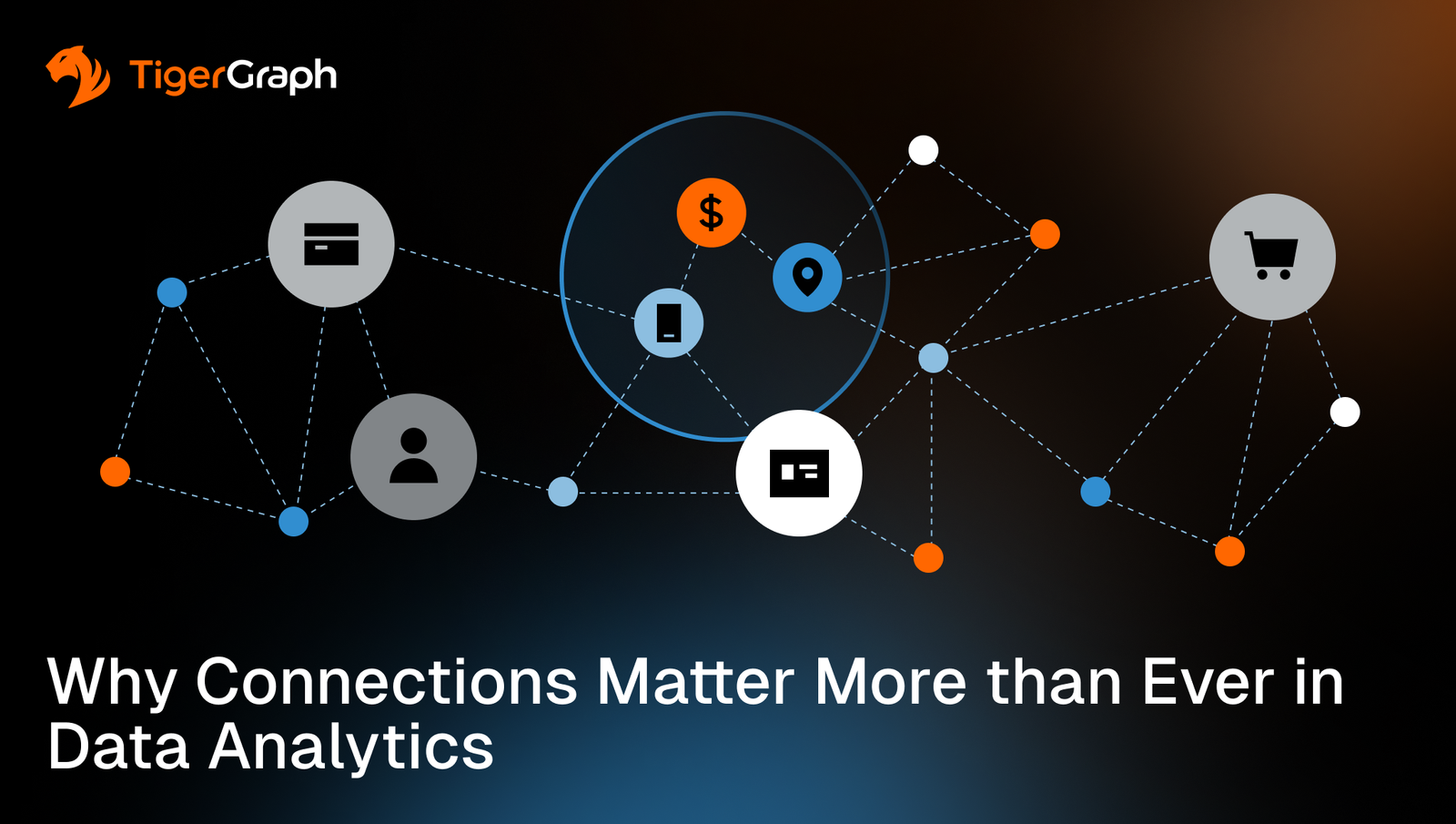
Enterprises have never had more data. They have also never been more surprised by what they missed. Volume is not the issue. It is visibility into how things connect.
As organizations grow, data spreads across systems. Customer data sits in one platform, risk signals in another and operations data somewhere else. Each team builds dashboards, tracks performance metrics and believes it has clarity. But most enterprise risk does not originate inside a single system. It spreads across them.
Key Takeaways
- Modern enterprise challenges are network problems, not isolated metric problems.
- Aggregated dashboards often hide structural dependencies.
- Risk and disruption spread through relationships across systems.
- Explicitly modeling connections enables deeper, multi-layer analysis.
- Structural awareness, not raw data volume, defines analytics maturity.
The Illusion of Analytical Maturity
For years, analytics maturity was measured by reporting capability.
- Could the organization produce dashboards?
- Could it filter by region, product, or time period?
- Could it track trends over quarters?
Those capabilities still matter, but today’s enterprise challenges are relational. They depend on how entities connect to one another.
- Fraud spans users, devices, accounts, and transactions.
- Supply chain disruption spans suppliers, logistics providers, financial exposure, and geography.
- Sanctions risk spans indirect ownership and cross-border relationships.
- Customer journey fragmentation spans channels, devices, referrals, and communities.
If those relationships are not modeled explicitly, dependencies remain hidden. A well-designed dashboard can summarize activity. It cannot expose the full structure beneath it.
Aggregation Masks Dependency
Traditional analytics tools often summarize data into aggregates. Aggregation compresses complexity. It helps measure performance.
It does not reveal how it spreads, which is commonly referred to as propagation.
When a supplier fails, the question is not only, “Which shipments are delayed?” It is also:
- Which downstream products depend on that supplier?
- Which regions depend on those products?
- Which customers are indirectly exposed?
Answering those questions requires tracing relationships across multiple layers.
In relational databases, analysts can attempt this through “joins,” which link tables together based on shared fields. This works for simple relationships. As chains grow deeper and less predictable, queries become harder to maintain, and pre-built views fail to capture new paths of exposure.
Graph modeling treats connections as core data rather than secondary details. Instead of storing suppliers, products, and customers in separate tables and linking them only when needed, a graph stores them as connected entities from the start. The relationships between them are recorded directly.
Because those connections are preserved, the system can follow chains of dependency without losing depth or context. That difference matters. It determines whether an organization sees only the immediate impact of an event or understands how that impact spreads through the broader system.
Structural Blind Spots Grow with Scale
As organizations grow, their systems become more interconnected. New vendors are added. New markets are entered. New products, channels, and integrations are introduced.
Each addition creates new points of dependency.
At first, these connections seem manageable. Over time, they form a web that is difficult to see clearly. Most of those links are never examined unless a disruption forces the organization to trace them manually.
This is where structural blind spots emerge.
When relationships are not modeled explicitly, hidden dependencies accumulate quietly. A supplier may serve multiple critical products. A single device may connect several high-risk accounts. An ownership chain may link indirectly to a sanctioned entity.
Without a way to explore these connections systematically, risk remains latent until it surfaces unexpectedly. Graph analytics addresses this by making connections directly searchable and measurable. Instead of asking only “How many?” or “How much?”, organizations can ask structural questions such as:
- Which entities are highly connected and influence many others?
- Which groups of entities are tightly linked and may share risk?
- What is the shortest chain of relationships between this supplier and that sanctioned entity?
- Which accounts behave similarly because they share devices, addresses, or transaction patterns?
To answer these questions, graph systems use structural analysis techniques. For example:
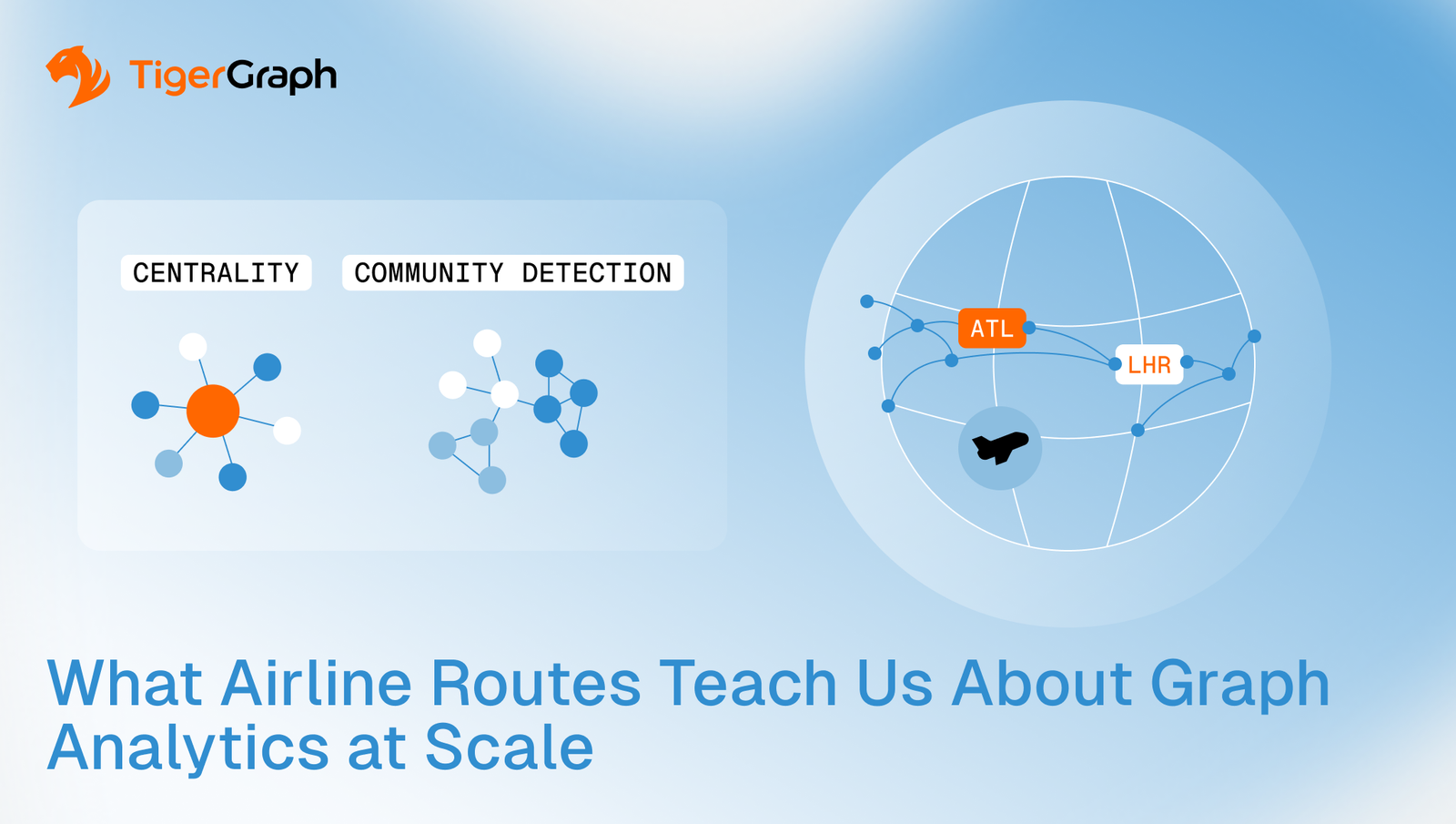
- Centrality measures identify entities that sit at important positions within a network.
- Community detection identifies clusters of closely connected entities.
- Shortest path analysis reveals indirect exposure across relationship chains.
- Similarity analysis highlights entities that behave alike across shared connections.
These methods focus on how influence, exposure, and behavior move through connected systems rather than simply counting records. That shift in perspective is critical.
It allows organizations to identify vulnerabilities before they spread and to understand systemic exposure before it becomes operational impact.
Cross-Domain Reality
The complexity described earlier is not confined to a single team or system. Modern enterprises operate as interconnected ecosystems.
- Customer analytics intersects with fraud detection.
- Supply chain risk intersects with financial reporting.
- Compliance intersects with vendor networks.
What appears as a customer issue may also be a risk issue. What appears as a supply disruption may also be a financial exposure. When each domain analyzes only its own slice of data, leadership sees partial views. Each team may be accurate within its boundary, yet the broader picture remains fragmented.
Graph-based modeling introduces a shared structural layer across domains. Entities such as customers, vendors, accounts, and products can be connected explicitly, even if they originate in different systems. This allows organizations to explore relationships without predefining every possible question in advance.
When a new risk signal appears, it can be traced across connected systems. Indirect effects can be evaluated without rebuilding the data model or creating new reporting pipelines.
That flexibility becomes increasingly important in fast-moving environments where new risks emerge faster than dashboards can be redesigned.
The Competitive Divide
This shift from isolated analysis to structural awareness creates a meaningful divide. Two companies can possess similar datasets and similar reporting tools. One treats data primarily as records to summarize and report. The other treats data as a network of relationships to examine and understand.
The difference affects more than analytics sophistication. It influences how quickly systemic risk is detected, how effectively resources are allocated, and how resilient operations remain under stress.
As digital systems become more interconnected, dependencies deepen. The cost of overlooking structural connections rises accordingly. Analytics maturity is no longer defined by how many dashboards an organization can produce or how much data it stores. It is defined by how well it understands the relationships within that data.
In a connected economy, organizations that analyze their connections gain a structural advantage over those that measure isolated metrics.
Building Analytics on Connected Structure
If modern risk is relational, analytics must reflect that reality.
TigerGraph provides a distributed graph platform designed to model entities and their relationships at enterprise scale. By storing connections explicitly, organizations can analyze layered dependencies, trace indirect exposure, and uncover structural risk that traditional aggregation may overlook.
As enterprise systems grow more interconnected, a connected analytical foundation becomes increasingly important.
Learn how TigerGraph supports relationship-aware analytics and deeper structural insight across your enterprise.
Frequently Asked Questions
1. Why are Connections More Important Than Data Volume in Modern Analytics?
Connections are more important because risk, influence, and disruption spread through relationships, not isolated data points—making structure critical to understanding outcomes.
2. How do Hidden Relationships Create Risk in Enterprise Systems?
Hidden relationships create risk by linking entities across systems, allowing issues like fraud, disruption, or exposure to propagate unnoticed until they impact operations.
3. What is The Limitation Of Aggregated Dashboards in Understanding System-Wide Risk?
Aggregated dashboards summarize data but fail to show how dependencies connect, making it difficult to identify how risk spreads across interconnected systems.
4. How does Modeling Relationships Improve Visibility Across Disconnected Data Systems?
Modeling relationships connects data across systems, enabling organizations to trace dependencies, uncover indirect exposure, and analyze multi-layer interactions.
5. What Defines True Analytics Maturity in Highly Connected Enterprise Environments?
True analytics maturity is defined by the ability to understand and analyze relationships within data, not just measure and report on isolated metrics.
What Airline Routes Teach Us About Graph Analytics at Scale
Airline networks offer one of the clearest real-world examples of how connectivity shapes performance and resilience.
When you look at a global flight map, you are not just seeing cities connected by lines. You are seeing a structure. Some airports handle a small number of routes. Others serve as major hubs, connecting dozens or even hundreds of destinations.
In graph terms, airports are called nodes. A node simply represents a point in the system. In this case, it is an airport. The routes between airports are called edges. An edge represents a connection between two nodes. The arrangement of those nodes and edges is known as the network’s topology. Topology describes the overall shape of the network and how its parts are connected.
That structure determines how the system behaves.
If a small regional airport shuts down, the impact may be limited. If a major hub like Atlanta or Heathrow experiences delays, the effects ripple across multiple routes and regions. Delays cascade along connected paths because flights, crews, and passengers are all interdependent.
The disruption does not spread randomly. It follows the network’s structure. Enterprise systems operate the same way.
Key Takeaways
- Network topology determines resilience and influence.
- Centrality measures structural importance, not just volume.
- Shortest-path analysis reveals reachability and exposure.
- Community detection surfaces hidden clusters.
- Graph analytics demonstrates its value under real-world scale and complexity.
Organizations often think of data as a collection of records. But at scale, performance, risk, and influence are determined by how entities connect. A failure in a central system can affect multiple applications. A compromised identity can open pathways across environments. A supply chain disruption can impact downstream partners.
The airline network makes this structural reality visible, and graph analytics makes it measurable. Several graph metrics help quantify how structure influences system behavior. One of the most important is centrality.
Centrality is Not the Same as Traffic
Some airports process massive passenger volumes. Others may handle fewer passengers but serve as essential bridges between otherwise disconnected regions. Structural importance is not identical to raw throughput.
Graph centrality algorithms quantify that distinction. Measures such as betweenness centrality identify nodes that sit on critical paths between clusters. When such a node fails, disruption cascades across the network.
In enterprise environments, the equivalent may be a clearing institution in financial services, a core API gateway in a digital platform, or a supplier in a manufacturing chain. These nodes may not generate the highest transaction counts, but they hold structural leverage.
Volume measures activity. Centrality measures influence. Understanding the difference changes how risk is evaluated. Influence is only one dimension of structural analysis. Graph algorithms also reveal how risk, information, or disruption travels through a network.
Shortest Path is About Exposure, Not Distance
In airline systems, the shortest path between two cities is determined by connectivity, not geography. A city may be geographically close but require multiple hops due to limited routes. Another may be farther away but reachable in a single direct flight.
In graph analysis, moving across these connected routes is called multi-hop traversal. A traversal simply means following edges from one node to another. Multi-hop traversal follows several connections in sequence to understand how two entities are linked across the network.
Graph algorithms compute these paths instantly.
In enterprise systems, shortest-path analysis reveals how quickly risk propagates. A compromised vendor may connect indirectly to a sensitive system through several intermediaries. A supply chain disruption may ripple across tiers in non-obvious ways.
Shortest path analysis transforms abstract exposure into measurable structural reach. It answers the question: how many steps separate risk from impact?
Connectivity patterns also reveal how entities naturally group together within a network.
Community Detection Reveals Natural Clusters
Airline networks naturally form regional clusters. Dense connections exist within geographic regions, while cross-regional routes connect clusters to each other. Graph community detection algorithms identify these groupings based purely on connectivity density.
The same principle applies to fraud rings, customer segments, vendor ecosystems, and infrastructure zones. Clusters emerge from structure rather than predefined categories.
When clusters are identified algorithmically, organizations gain visibility into how activity concentrates. Fraud clusters reveal coordinated schemes. Customer clusters reveal shared behavior. Infrastructure clusters reveal segmentation weaknesses.
Structure defines grouping. Once clusters and pathways are visible, the next question becomes how resilient the overall structure is to disruption.
Resilience is a Function of Topology
When a major hub closes due to weather or operational failure, delays cascade. Flights are rerouted. Some destinations become unreachable. The impact depends on the network’s topology.
Graph modeling allows the simulation of node or edge removal. Organizations can model the impact of removing a supplier, shutting down a data center, or isolating a financial intermediary.
Resilience is not a reporting metric. It is a structural property. Understanding topology transforms contingency planning from speculation into simulation.
Understanding structure is valuable. Maintaining that visibility at real-world scale is what determines whether graph analytics becomes operational.
Scale is the True Test
Airline networks operate at global scale with constant change. Thousands of nodes and tens of thousands of edges shift daily. Graph analytics must maintain performance under that density. Traversal, centrality computation, clustering, and simulation must remain efficient.
If graph can model global air traffic networks, it can model complex enterprise ecosystems. The lesson is not about aviation. It is about structural reasoning at scale.
When systems grow interconnected, tabular abstractions become insufficient. Structure governs behavior.
Applying Graph Analytics to Enterprise Systems
Airline networks demonstrate how structure shapes performance, risk, and resilience. Enterprise environments operate under the same principles. Systems, identities, transactions, suppliers, and services form interconnected networks whose behavior depends on topology.
Graph analytics allows organizations to analyze these structures directly rather than reconstructing relationships through repeated joins.
Connect with TigerGraph to explore how graph analytics can help model complex enterprise networks, uncover structural risk, and analyze connected systems at real-world scale.
Frequently Asked Questions
1. What do Graph Analytics Reveal About Risk and Influence in Complex Networks?
Graph analytics reveal how risk and influence spread by analyzing relationships between entities, identifying critical nodes, pathways, and clusters that drive system behavior.
2. Why are Traditional Data Models Ineffective for Analyzing Interconnected Systems?
Traditional data models are ineffective because they treat data as isolated records, while interconnected systems require analysis of relationships and structure to understand behavior.
3. How can You Identify the Most Critical Nodes in a Network Using Graph Analytics?
You can identify critical nodes using centrality algorithms, which measure how much influence a node has based on its position within the network.
4. What does Connectivity Tell You About Risk Exposure Across a Network?
Connectivity reveals how risk propagates by showing how entities are linked across multiple steps, exposing indirect relationships and hidden dependencies.
5. How do Graph Analytics Improve Decision-Making in Complex Enterprise Environments?
Graph analytics improve decision-making by enabling organizations to model relationships, simulate disruptions, and analyze system-wide impact in real time.
Graph Analytics for FinTech: Solving What Traditional Databases Can’t
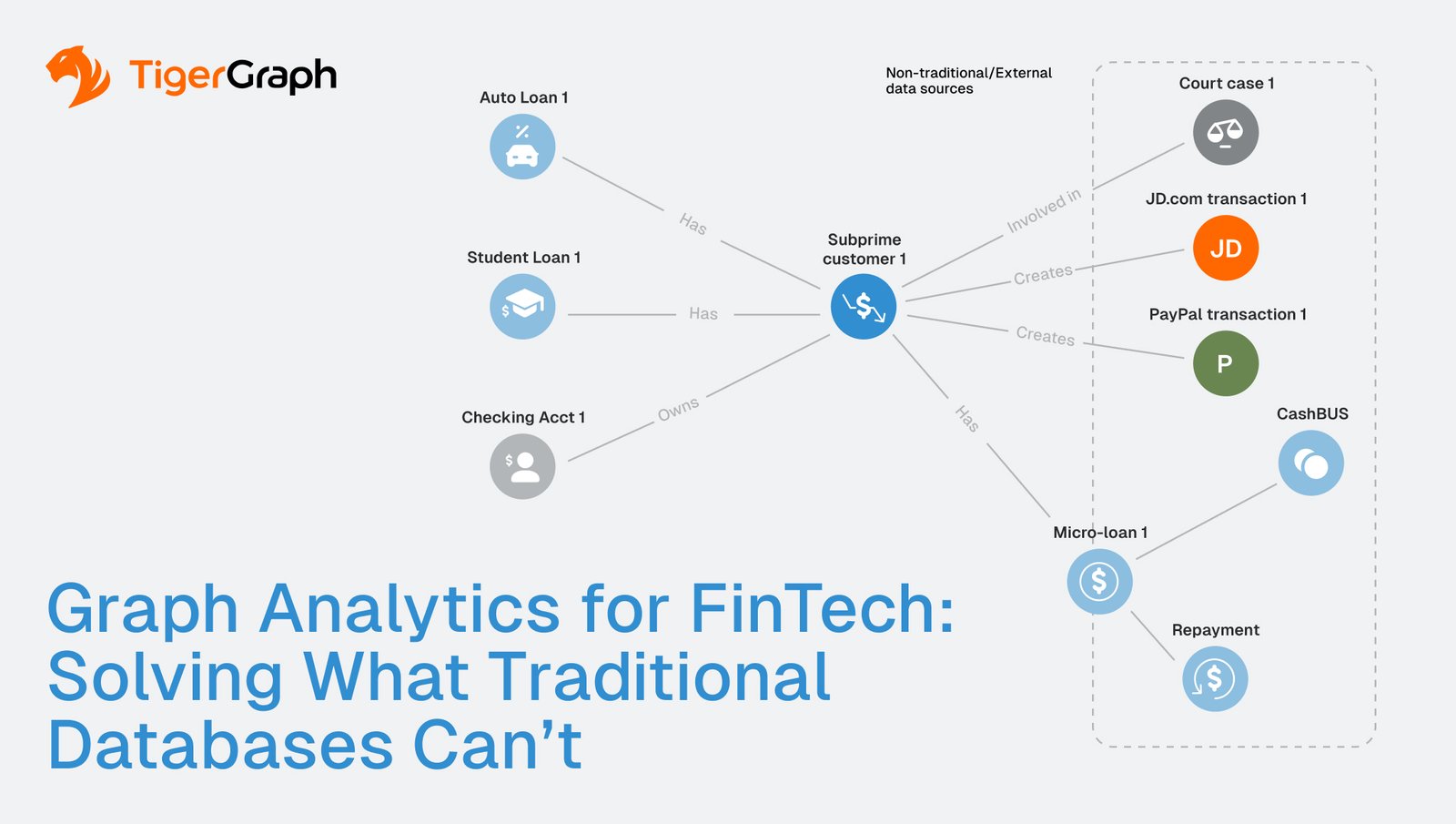
Financial services today operate in a world defined by complexity—of products, of regulations, and most importantly, of relationships. From fraud detection to risk management and portfolio modeling, financial institutions are not struggling with a lack of data; they’re struggling with context. Traditional relational databases flatten this context, reducing connected events to isolated rows and forcing teams to guess at what the data actually means.
That’s a costly limitation.
Graph analytics changes this dynamic by treating relationships as first-class data. It enables financial systems to reason through connections—between the many people, accounts, devices, transactions, and events—and all in real time. For FinTech organizations that need speed, scale, and trust in what their systems detect, recommend, or approve, graph-native infrastructure has become foundational.
The Core Challenges FinTech Can’t Solve in Rows
FinTech companies are constantly under pressure to deliver smarter, faster decisions—but the problems they face aren’t flat. From fraud detection to long-tail portfolio optimization, these challenges are inherently connectional. Traditional relational databases treat data as isolated rows, but financial interactions rarely exist in isolation.
Take fraud and anti-money laundering (AML), for instance. While different operational mandates govern them—fraud being an economic risk, AML a regulatory one—both are deeply connectional problems that graph analytics is uniquely equipped to address. Money doesn’t move in straight lines—it moves through intermediary accounts, shared devices, synthetic identities, and often in circular or layered transaction paths. By the time a traditional system flags an anomaly, the damage has already been done. Graph analytics, on the other hand, sees the pattern while it’s still unfolding.
Know Your Customer poses another major challenge. Customers often have multiple accounts, reuse devices, or share credentials across platforms. Without dynamically modeling these relationships, financial institutions risk either missing high-risk connections or mistaking legitimate activity for fraud. The same is true in portfolio risk management, where evaluating counterparty risk or asset exposure means understanding how holdings and investments connect—not just what they contain.
Even when FinTechs focus on growth and personalization, they face the same limitations. Building a true Customer 360 view or modeling a user journey requires linking signals, transactions, and behaviors across time and channels. When those connections are stored in flat rows and disjointed systems, key insights are lost or delayed.
These are not merely technical headaches. They are business-critical blind spots that aren’t rooted in a lack of data but in using the wrong structure to understand it.
How Graph Analytics Solves FinTech Problems
Graph analytics makes existing FinTech processes faster, and it unlocks entirely new ways to reason about data. It allows institutions to model risk, behavior, and opportunity as they actually exist—in complex, evolving networks.
TigerGraph’s Anti-Fraud Demo illustrates this. Instead of relying on isolated thresholds or static rules, it models suspicious activity as a dynamic network of transactions, accounts, devices, and behaviors. It reveals money-laundering patterns in real-time—such as circular flows and layering tactics like smurfing, where large sums are broken into smaller transactions and routed through multiple intermediaries to evade detection. This allows investigators to act before funds vanish, not after they’re gone.
In portfolio management, graph analytics helps firms run advanced simulations of how market events might cascade through investment networks. With probabilistic models and causal reasoning layered into the graph, TigerGraph supports what-if analysis that accounts for relationship strength, exposure chains, and multi-market interdependencies—something traditional models can’t do without heavy pre-processing and approximation.
Graph-based identity resolution links user records using behavioral signals, shared attributes, and transaction paths. This makes it easier to flag synthetic identities, catch coordinated behavior, or reconcile disparate records across systems—all in real time. Similarly, graph-powered customer journey modeling helps FinTechs surface the next-best action, cross-sell opportunity, or risk signal—based on where a customer is in their lifecycle and how similar users have behaved.
Unlike batch-based systems that depend on rigid joins and precomputed relationships, TigerGraph enables these insights to emerge dynamically from the data’s inherent structure. Relationships aren’t stitched together—they’re already there, ready to be explored.
Why TigerGraph Is Built for FinTech’s Realities
TigerGraph isn’t just another graph database. It’s a purpose-built graph analytics platform designed to handle real-time, enterprise-scale workloads—exactly the kind of workloads FinTech demands. In a space where speed, explainability, and regulatory readiness aren’t optional, TigerGraph delivers where others fall short.
Performance is foundational. TigerGraph supports sub-second queries even when analyzing billions of relationships. This means fraud detection, identity matching, and risk evaluation can happen as events unfold—not after the fact. The architecture is built for massively parallel processing, and the GSQL language empowers teams to write deep, multi-hop analytics queries without sacrificing speed or readability. It’s optimized for analytics, not just pattern matching.
Just as important is explainability. Whether for compliance, internal auditing, or customer transparency, every outcome generated within TigerGraph can be traced—down to the entities, relationships, and logic that informed it. When regulators or executives ask “why,” TigerGraph provides the answer in clear, auditable form.
Another core strength is real-time ingestion. Financial environments don’t wait for batch cycles. TigerGraph continuously integrates streaming data from APIs, logs, payment platforms, and transaction systems, keeping the graph model live, accurate, and contextually aware at all times.
And because FinTech infrastructures vary, TigerGraph is flexible in how it’s deployed. Whether on-prem, cloud-native, or hybrid, its distributed architecture scales horizontally without requiring costly reengineering.
For FinTech teams, this isn’t just about adopting a better database—it’s about unlocking a smarter, more agile way to reason through data at scale, in context, and in real time.
FinTech Is a Graph Problem—TigerGraph Makes It Solvable
The most valuable insights in FinTech live in the connections between accounts, transactions, entities, and behaviors. Traditional databases weren’t built for those connections, but graph analytics are.
TigerGraph delivers the speed, reasoning, and scalability FinTech demands. It empowers financial institutions to move from after-the-fact alerting to real-time reasoning, from reactive flagging to explainable intelligence, and from row-based limits to relationship-powered decisions.
FinTech is fundamentally a graph problem. TigerGraph makes it solvable, scalable, and explainable. Reach out to learn more today!
Optimize Supply Chain Resilience with Graph-Based Modeling
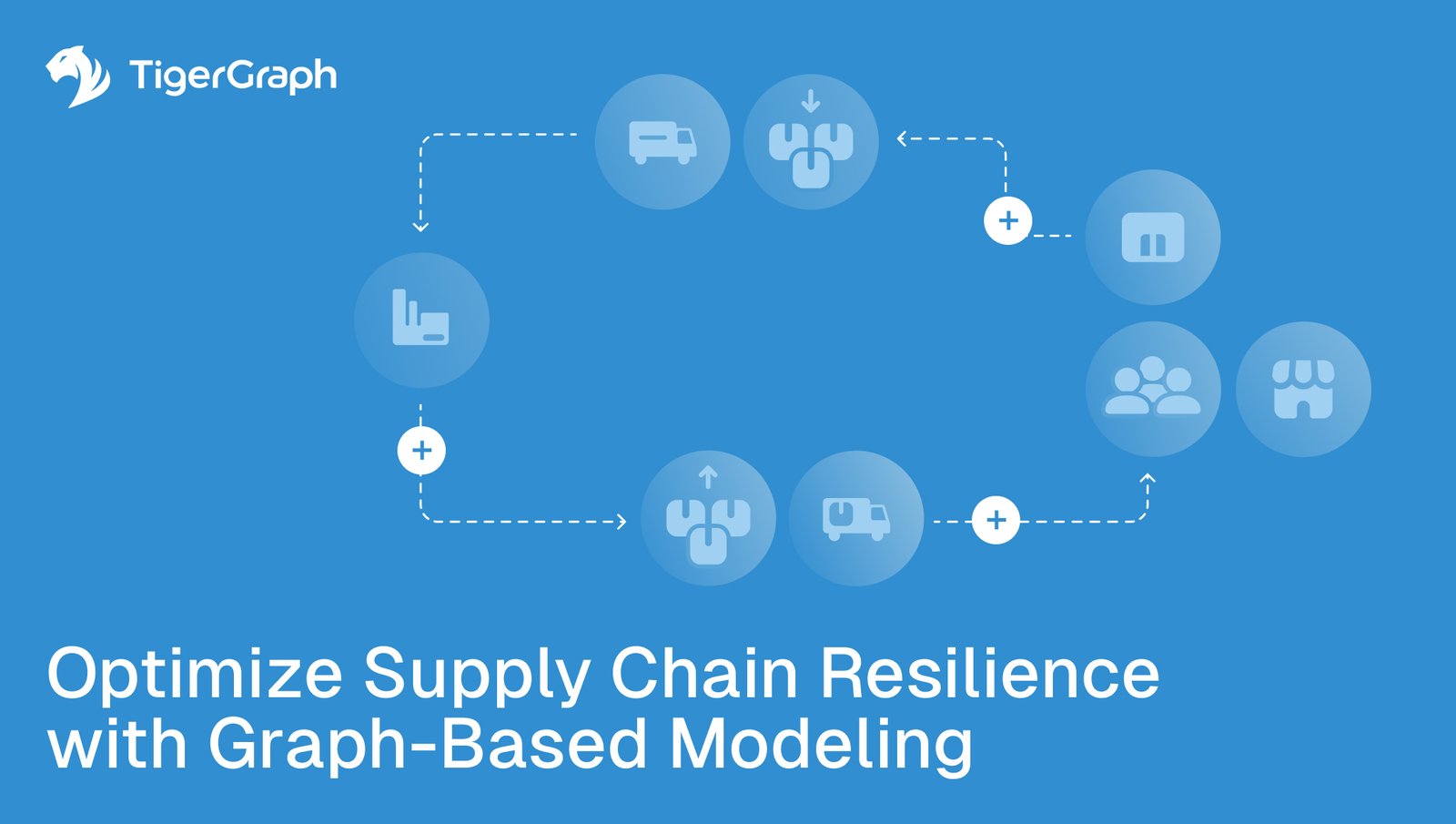
Today’s supply chains are living, breathing networks of suppliers, sub-suppliers, SKUs, contracts, routes, regulations, weather, and risk. Optimizing them used to be about tracking static flows, but now it’s about modeling cascading effects and acting fast when conditions change.
In practice, that means moving beyond descriptive data and static optimization models and building systems that think in connections. This is exactly where graph databases, specifically TigerGraph, change the game.
Why Traditional Systems Can’t Keep Pace
Legacy platforms have typically been built on relational databases or siloed analytics tools. They were designed to manage recordkeeping, scheduling, and inventory control. But when disruptions hit, these tools struggle. They weren’t built to reason across tiers of dependencies or simulate what-if scenarios at the speed of supply chain volatility.
This has become a huge problem when there’s a port closure, weather delay, or raw material shortage, because these aren’t isolated events—they’re chain reactions. Conventional systems can’t trace their full impact without time-consuming joins, exports, or offline models. This results in delays, blind spots, and plans that fall apart under pressure.
This isn’t about speed alone—it’s about structural limitations that calls for a different approach to data modeling and decision-making.
The Graph Model: Purpose-Built for Disruption
TigerGraph models the supply chain as it truly exists: a web of entities connected by dynamic, real-time relationships. A shipment isn’t just a row in a table—it’s connected to parts, suppliers, carriers, forecasts, weather events, and downstream delivery timelines. By creating a real-time digital twin of the supply chain, TigerGraph enables companies to see not just static records but living systems of interdependent actions and risks. And a supplier isn’t just a vendor ID—it’s embedded in a network of dependencies, sub-suppliers, regional constraints, and contractual terms.
With graph, supply chain teams don’t just see events—they understand cause and effect. They can instantly ask:
- What’s the upstream source of this delay?
- Which customers and production lines will be affected?
- What alternatives exist right now, given current routes, stock levels, and carrier availability?
And they can get answers in milliseconds—because TigerGraph runs these queries directly in the graph, using native parallel processing across billions of connections.
From Optimization to Real-Time Decisioning
Traditional system optimization – finding the mathematically optimal choices for a given set of conditions – doesn’t do the job when conditions change frequently, because even small changes in the conditions can trigger big changes in answers. TigerGraph doesn’t just find a single “best” answer. Instead, it powers dynamic decisioning—equipping teams to explore multiple options, simulate cascading effects, and make informed tradeoffs in real time.
A global automotive manufacturer recently used TigerGraph to manage not just components and routes, but layered pricing tiers, contractual constraints, and manufacturing rules. Their legacy tools couldn’t process the complexity. With TigerGraph, they reduced scenario analysis from three weeks to under an hour—and could evaluate multiple plans, not just one.
That speed doesn’t just save time. It unlocks new capabilities like stress-testing contingency plans, pressure-testing sourcing strategies, and adapting to supply shocks in real-time, as they unfold.
Traceability in Both Directions
In modern supply chain management, visibility isn’t just about knowing what happened—it’s about understanding why it happened and what’s likely to happen next. That level of reasoning requires more than static dashboards or siloed reports. It demands a system that can model causality and consequence as fluid, connected events.
TigerGraph enables this with true bidirectional reasoning—making it possible to trace both upstream to root causes and downstream to projected impacts in real time.
When a disruption occurs—whether it’s a delayed carrier route, a port shutdown, or a missing compliance certificate—TigerGraph can instantly map the effect across the network. It reveals which inbound materials are now bottlenecked, which production orders are at risk, and which customer deliveries may be missed as a result. Equally important, it identifies which alternative suppliers, warehouses, or transport modes could absorb the impact and how that decision affects the rest of the chain.
This isn’t a theoretical performance. TigerGraph is purpose-built for complex, high-stakes environments like supply chain logistics. Its native parallel traversal engine lets teams explore multi-hop relationships across billions of entities without delay—surfacing dependencies, vulnerabilities, and contingencies within milliseconds.
Unlike traditional systems that rely on pre-joined views or data exports, TigerGraph executes queries in-graph, where the data and logic coexist. That means you’re not just retrieving records—you’re actively reasoning across the live structure of your operations.
Because supply chains evolve constantly, TigerGraph also adapts in real-time. Streaming ingestion ensures the graph is continuously updated with the latest data—from shipping APIs, ERP systems, IoT devices, and demand signals. Whether a new carrier becomes available, a regulatory update takes effect, or an inventory transfer is initiated, that information becomes immediately actionable. And with dynamic schema evolution, the graph model adjusts without interruption. New nodes, new constraints, new data sources—integrated instantly, without downtime or reconfiguration.
Together, these capabilities form more than just a data layer. TigerGraph becomes an operational reasoning engine, giving supply chain teams the ability to run complex “what-if” scenarios, assess cascading impacts, and make decisions that are not just faster—but smarter.
While the cost savings are real—reducing stockouts, rerouting around disruption, eliminating manual firefighting—the deeper value is strategic. It’s about operating with agility in a world of uncertainty. With TigerGraph, organizations gain the power to see around corners, act with context, and shift from reactive execution to proactive control.
It’s not simply an upgrade to your tech stack. It’s a shift in how your supply chain thinks.
From Reactive to Resilient—At Enterprise Scale
Disruption is no longer the exception—it’s the operating condition. There are constant geopolitical shifts, extreme weather, supplier insolvency and regulatory swings, placing supply chains in a constant state of adjustment. What defines a resilient enterprise isn’t whether it can avoid disruption—but whether it can understand it in context and respond faster than the fallout.
TigerGraph delivers that resilience by transforming complexity into clarity. It empowers organizations to stop chasing symptoms and start anticipating impact—to simulate multiple response paths in real time and choose the one that preserves cost, service levels, and trust.
This isn’t about reacting faster. It’s about reasoning deeper—under pressure, at scale, and with confidence.
For supply chain leaders, it’s not enough to have data. You need a system that can think—in connections, in context, and in real time. That’s the graph advantage—and it’s exactly what TigerGraph was built to deliver. Reach out and we’ll show you how it’s done!
Why Fraud & Risk Teams Are Adopting Graph Analytics
Fraud isn’t just a data problem—it’s a relationship problem. This new reality is something industry leaders are quickly coming to terms with as the scale and sophistication of fraud outpaces the capabilities of traditional detection tools. Today’s fraud isn’t confined to a single account, transaction, or user profile—it’s distributed, coordinated, and adaptive.
This shift in the threat landscape leaves conventional fraud detection strategies in the dust. Rules-based systems and supervised models may catch simple patterns, but they struggle with complexity. Modern fraudsters exploit gaps between systems. They spin up synthetic identities that look legitimate on paper. They share devices, mimic behavioral norms, and hide in the noise—counting on siloed tools to miss the connections that matter.
That’s why fraud detection must evolve. It’s no longer enough to ask whether a single transaction looks suspicious. Teams need to ask what that transaction is connected to—and what those connections reveal. In other words, they need relationship intelligence.
Graph analytics makes that possible. By mapping and analyzing the relationships between people, devices, accounts, and behaviors in real-time, graph technology gives fraud and risk teams the context they’ve been missing, and the ability to act before threats escalate.
The Blind Spots in Traditional Detection
Most traditional fraud systems rely on either supervised learning—where models are trained on examples of past fraud—or rules-based logic, where specific conditions trigger alerts (like a large withdrawal or a login from a new location). These tools work well when fraud follows predictable patterns. But modern fraud doesn’t play by those rules.
Today’s attackers are more creative and coordinated. For example, synthetic identity fraud blends real and fake information to create new, seemingly legitimate accounts that slip past standard checks. Other schemes involve slow-drip tactics, where no single action looks suspicious, but together they form a clear fraud pattern—one that only becomes obvious when connections are analyzed over time. We also see cross-platform fraud, where bad actors move across apps, regions, or systems to stay under the radar. And then, there are bots and adversarial AI, which learn how detection systems work and adapt in real-time to avoid triggering alerts.
These traditional systems focus on individual events and ask, “Is this transaction unusual?” But that question alone is no longer enough. The better question is: “What is this transaction connected to—and what does that reveal?” Fraud hides in the relationships between events, entities, and behaviors.
Graph analytics is the best next step, as it makes it possible to model and analyze those relationships, revealing patterns that aren’t visible in isolated data points.
Graph Is Built to Model Fraud Like It Actually Works
Graph databases store data as nodes (entities) and edges (relationships), making them uniquely suited to capture the complexity of fraud in the real world.
Unlike traditional databases that flatten data into tables and rely on predefined JOIN paths, graph technology allows teams to follow the actual flow of activity—tracing how people, devices, accounts, transactions, and behaviors are linked. This makes it possible to ask more contextual, layered questions: “Has this user interacted—even indirectly—with a known fraud ring?” “Does this device appear in multiple high-risk transactions?” “Are these accounts part of a rapidly forming behavioral cluster?”
Most graph databases can reveal these connections, but many are optimized for offline analysis or visualization. They’re effective at surfacing patterns after the fact, but often lack the performance or flexibility needed to detect fraud as it’s happening—especially in environments with billions of relationships and constantly changing data.
That’s where TigerGraph takes things further. It’s built for deep, multi-hop analytics on live data streams, with architecture designed to support real-time operations, not just static queries. Teams can go beyond spotting isolated anomalies to tracking coordinated strategies in motion. They can model behavioral thresholds, detect cascading activity across accounts and devices, and reason through patterns that evolve over time—without the delays or bottlenecks that typically come with scale.
In short, while standard graph systems help map the shape of fraud, TigerGraph enables teams to respond to it—immediately, intelligently, and at enterprise scale.
From Alerts to Insight with Graph Technology
What makes graph analytics so transformative for fraud and risk teams isn’t just that it flags anomalies faster—it’s that it reveals the why behind them. It enables a shift from chasing alerts to reasoning over behaviors. A sudden spike in account creation might seem harmless—until graph analysis shows that all those accounts link back to the same compromised IP. A routine wire transfer may pass automated checks—until it’s revealed to be just a few hops away from a known shell entity. A login from a new device might be ignored—unless that device accessed 20 other accounts in the last 10 minutes.
This level of connected insight is critical as fraud becomes more adaptive, more distributed, and harder to spot through surface-level signals alone. Graph analysis allows teams to follow the full trail of interactions and identify emerging patterns before they escalate. It’s not just faster—it’s smarter. And it’s what allows teams to move from reacting to incidents to recognizing intent in motion.
Why the Shift Is Happening Now
Fraud and risk leaders are being asked to do more—and to do it faster—with less margin for error. They must stop fraud earlier in the cycle, reduce false positives that harm customer experience, meet rising regulatory demands for transparency, and handle an ever-expanding volume of data. That’s a tall order for legacy systems built around isolated events and batch-mode processing.
Graph analytics is meeting this moment, giving teams the scale, speed, and context to monitor relationships in real time and adapt to threats as they emerge. And with platforms like TigerGraph—purpose-built for deep, multi-entity analytics—teams can continuously scan for coordinated activity, model behavioral thresholds, and surface risk across systems and silos.
Because analysis happens inside the graph—not exported to external tools—TigerGraph delivers results that are explainable by design. Its in-graph computation engine supports real-time analytics while preserving the full context of each decision. Features like accumulators act as smart counters during a query, helping track behaviors such as how often a device is reused or how many accounts link to the same identity. This allows for more complex, stateful reasoning—essential for identifying coordinated fraud patterns as they develop.
This built-in context gives teams a clear view into how and why an alert was triggered. They can trace the path through related accounts, devices, or transactions that flagged the behavior—without relying on disconnected tools or opaque algorithms.
And because the output remains grounded in the graph’s structure, results are inherently auditable. That means teams can not only act with confidence but also explain and justify those decisions to internal stakeholders, regulators, or auditors. In a world where transparency is as important as accuracy, that kind of traceability is a strategic advantage.
The real impact isn’t just technical though, it’s strategic. Teams that adopt graph aren’t just upgrading infrastructure—they’re changing how they think. They’re asking better questions, connecting the dots faster, and building fraud defenses that evolve as quickly as the threats they face.
Fraud is no longer just an event to block. It’s a behavior to understand. And that shift—from detection to understanding is exactly why graph analytics redefines how modern enterprises fight fraud. Reach out to learn more about this today!