Contact Us

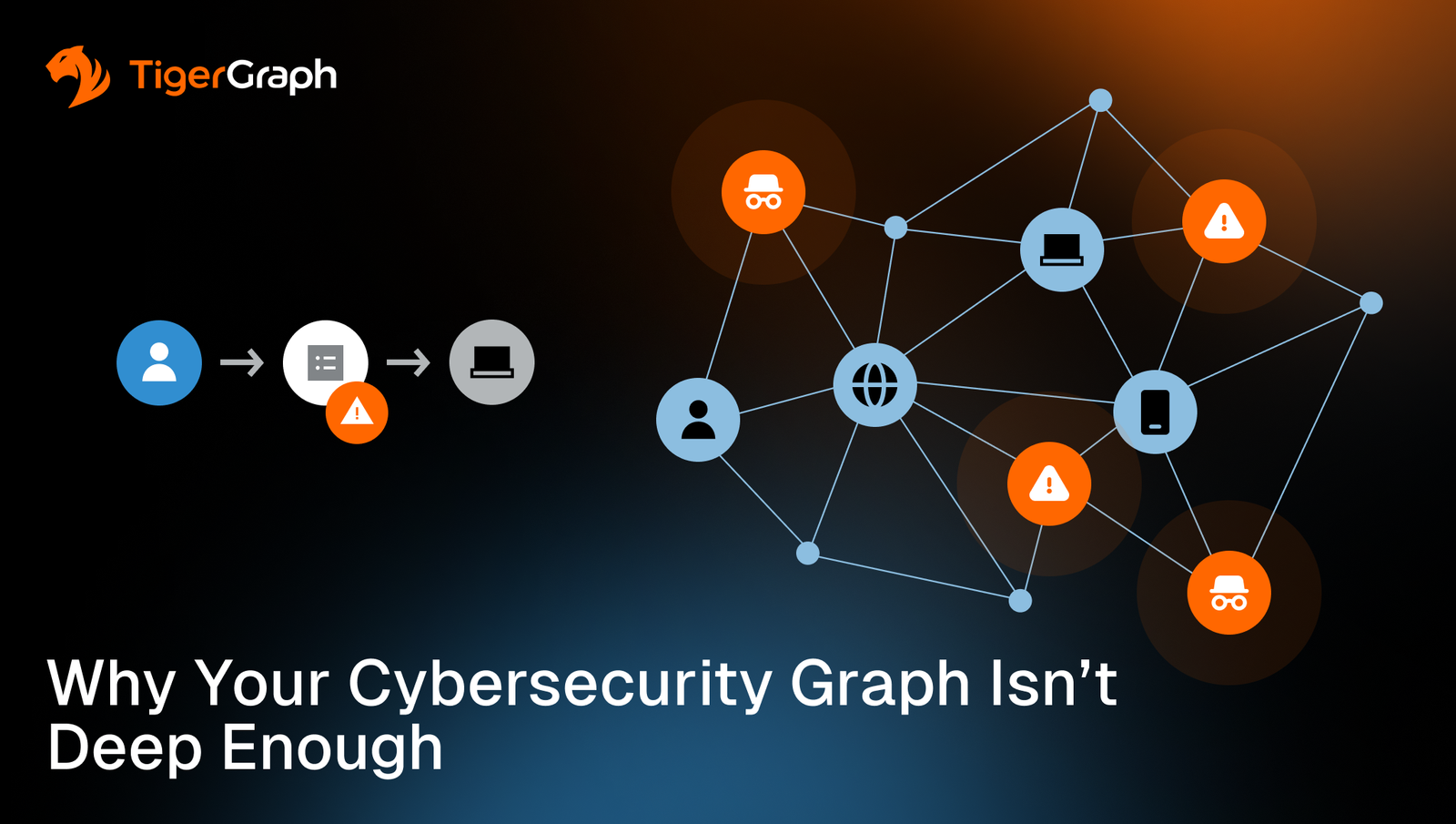
Why Your Cybersecurity Graph isn’t Deep Enough

Many organizations have introduced graph technology into their cybersecurity stack. They connect users to IP addresses, devices to sessions, and domains to authentication attempts. Compared to flat reporting tables, this represents real progress.

But connecting adjacent events is not the same as modeling attack structure.

Modern attacks are not isolated anomalies. They are coordinated, multi-step campaigns. Attackers probe credentials, reuse infrastructure, pivot between systems, escalate privileges, and test lateral pathways before triggering visible impact. Each step may appear benign when viewed alone. The risk emerges from the chain.

If your graph only captures surface-level relationships, you are detecting events. You are not detecting campaigns. Depth is the difference.

Key Takeaways

To understand what that depth actually looks like in practice, we need to examine how most cybersecurity graphs are structured today.

One Hop Detects Symptoms. Depth Detects Structure.

A typical shallow model connects a user to a login event and then to an IP address. When the IP appears suspicious, an alert fires. That workflow improves visibility over flat logs, but it remains event-centric.

Attackers rarely reuse infrastructure in isolation. They distribute activity across shared IP ranges, rotate credentials, move laterally between accounts, and test privilege boundaries gradually. What looks like several small irregularities may actually be a coordinated progression.

To reveal that progression, the graph must support something called “multi-hop traversal.” 

Multi-hop traversal means following a chain of connected relationships across more than one step. Instead of examining a single direct connection, analysts move from one element in the system to the next, and then to the next again, tracing how entities are indirectly linked across the environment.

In graph terms, each element in that chain is called a node. A node simply represents a thing in the system. It might be a user, a device, an IP address, a credential, or a server. The connections between them represent how those things interact.

For example, an analyst might begin with a compromised account, follow its connection to a device, then follow that device to other accounts, then follow those accounts to shared credentials, and from there into privileged systems or sensitive data stores. Each step is a “hop.” The sequence of hops reveals how access expands and risk spreads across the environment.

When that chain is visible, the campaign becomes visible. And without multi-hop traversal, that sequence often disappears into separate tables and time windows.

One of the clearest examples of this structural visibility appears in how attackers reuse infrastructure.

Infrastructure Reuse Is a Network Signature

Attackers rarely build everything from scratch for each intrusion. Reusing infrastructure is efficient, and a single command-and-control server can support multiple attacks. A compromised VPN endpoint can provide access to several accounts. A leaked credential set can be tested across many systems.

From the defender’s perspective, those events may appear unrelated at first. One account looks compromised. Then another. Then a third. Individually, each alert may seem minor. Together, they point to shared infrastructure.

When these shared elements are modeled in a graph, they become visible as common connection points. If several compromised accounts all connect back to the same server, device, or credential source, that shared component begins to stand out. It accumulates connections and becomes a structural focal point in the network.

That focal point is evidence of coordination.

Without structural modeling, each compromised account generates a separate investigation. Analysts respond to symptoms. With deeper graph modeling, those symptoms resolve into a single connected campaign. The insight does not come from a threshold being crossed, but from seeing the density of connection around shared infrastructure.

And infrastructure reuse is only the beginning. The more important shift occurs when we change how security events themselves are represented.

Event Modeling Changes the Question

Infrastructure reuse reveals coordination. But the deeper shift happens when security events themselves are modeled differently.

In many environments, events are stored as isolated records. A login happens, a privilege change occurs or a file is accessed. Regardless of what it is, each event lives in a log line.

Graph modeling connects those events to the entities involved. A login connects to a user and a device. A device connects to other accounts. A privilege escalation connects to systems and data stores. Once events are connected, the question changes.

Instead of asking, “Was this login unusual?” analysts can ask, “Where did this login lead?” Instead of asking whether an event crossed a threshold, they can trace how access expanded after it occurred.

The focus shifts from spotting anomalies to understanding movement. That shift depends on how the graph is structured, otherwise known as its schema.

Schema Depth Determines Security Depth

Graph technology alone does not create structural visibility. The design of the model determines what is possible. If a graph connects users only to login events and IP addresses, investigation stops there. The system mirrors the log format.

If the graph includes devices, network segments, applications, databases, privilege levels, and cross-account reuse, analysts can follow how access moves across layers. The depth of these data layers should reflect how attackers actually operate. But it must also remain usable. If queries are too slow or too complex, analysts will not rely on them.

When the graph is designed around real attack paths, and analysts can trace those paths quickly, the system stops behaving like a log viewer. It begins to behave like a map of your environment.

And when security teams can see that map, they can do more than respond to alerts. They can understand how access moves, where risk concentrates, and which systems are most exposed.

Tactical Alerts Versus Structural Resilience

Shallow graph models improve alert generation. They help security teams detect suspicious IP addresses or unusual login patterns more efficiently. Deep graph models answer different questions. They:

These insights inform containment strategy, network segmentation, and how access permissions should be structured across users and systems. 

Resilience depends on understanding how a compromise could move through the system. That requires structural depth. Which leads to the central distinction.

Structural Depth Mirrors Reality

Modern cybersecurity is not about defending a perimeter. It is about managing interconnected systems. The question is no longer whether an event looks suspicious. It is how far a compromise could travel.

A shallow graph reflects log relationships and a deep graph reflects system structure. Only one of those mirrors how attackers actually move.

Structural depth is not an enhancement. It is foundational to modern threat detection and containment. If your current graph cannot reconstruct a multi-step attack path quickly and clearly, it is not deep enough.

Contact TigerGraph

Modern attacks unfold across layered, interconnected systems. Detecting them requires more than surface-level relationships.

TigerGraph is built for deep relationship traversal at enterprise scale. It enables security teams to model infrastructure reuse, lateral movement, privilege escalation, and cross-account propagation as connected structures.

Contact TigerGraph to learn how structural depth can move your cybersecurity program from alerting to investigative insight.

Frequently Asked Questions

1. What Is Structural Threat Detection and Why Does it Outperform Traditional Event-Based Security?

Structural threat detection analyzes how activities connect across users, devices, and systems—revealing coordinated attack campaigns, not just isolated alerts.

2. How does Multi-Hop Analysis Expose Hidden Cyber Attack Paths That Traditional Tools Miss?

Multi-hop analysis traces relationships across multiple entities, uncovering lateral movement, credential reuse, and attack progression that single-event monitoring cannot detect.

3. Why do Modern Cyber Attacks Require Network-Level Visibility Instead of Isolated Alerting?

Because attackers operate as coordinated networks, not single events—network-level visibility exposes shared infrastructure, patterns, and pathways that signal active campaigns.

4. What Role does Graph Depth Play In Detecting Lateral Movement and Privilege Escalation?

Graph depth enables visibility across multiple layers of relationships, allowing teams to trace how access expands across accounts, systems, and sensitive data.

5. How can Cybersecurity Teams Move From Reactive Alerts to Proactive Threat Investigation?

By modeling relationships across the environment and analyzing connected activity, teams can identify attack paths early and prioritize high-risk structural vulnerabilities.

Fortify Your System with Agentic AI—Why the Time Is Now

Cybersecurity has entered a new phase—defined less by perimeter breaches and more by behavioral complexity. Today’s threats don’t simply knock at the front door; they move laterally, escalate privileges quietly, and blend into the background noise of legitimate activity. These are not just attacks but adaptive, intelligent campaigns that unfold across time, systems, and roles.

To confront this evolving threat landscape, enterprises need more than faster alerts or broader coverage—they need systems that can reason. That’s where Agentic AI comes in—autonomous systems designed not just to react, but to observe, decide, and act based on live context. Unlike traditional automation or rule-based tools, agentic systems continuously assess their environment and adjust behavior toward defined goals, even as conditions shift.

But autonomy without understanding is a liability. To be effective and trustworthy, these AI agents must be grounded in structured, contextual knowledge. This is where graph technology becomes foundational. Graphs don’t just store data—they represent relationships, model causality, and provide a connected view of how people, systems, and actions intersect. That’s precisely the kind of structure agentic AI needs to make informed, accountable decisions.

And this is where TigerGraph stands apart. While graph databases offer modeling flexibility, TigerGraph adds enterprise-ready performance: a distributed, graph-native architecture with parallel traversal, in-graph analytics, and real-time pattern recognition. TigerGraph doesn’t just help agents identify anomalies—it empowers them to interpret intent, trace escalation paths, and act responsibly, at scale.

Cybersecurity today isn’t a speed game. It’s a reasoning game. And in a world where threat actors are already using AI to breach defenses, the only viable response is AI that thinks ahead. The time to build that capability—responsibly and at scale—is now.

From Reactive Defenses to Responsible Autonomy

Cybersecurity tools are often reactive by design. They wait for something to go wrong, then trigger alerts—sometimes too late, often without context. In an environment where attacks evolve in real time and threat actors increasingly leverage AI themselves, that’s no longer good enough. Static rule sets and siloed event logs can’t anticipate intent or adapt to new threat vectors. Defenders need systems that can think ahead.

Agentic AI offers a fundamentally different approach. These AI systems can act independently toward defined goals—identifying threats, assessing risk, and taking action without requiring step-by-step human intervention.

But autonomy must be coupled with care. To operate effectively in sensitive domains like cybersecurity, these systems must be grounded in context, aligned with policy, and capable of explaining their decisions.

That’s why responsibility must be baked into autonomy. Agentic systems must be equipped to act—and do so with accountability, traceability, and trust. They need a knowledge framework that can encode organizational norms, recognize deviations, and adjust behavior in real time.

And that’s precisely where graph technology becomes indispensable.

Why Graph Is the Bedrock of Responsible Agentic AI

Agentic AI systems are only as effective as the context they operate within. For cybersecurity applications, that context is incredibly complex: users, devices, roles, privileges, time-based behaviors, geographic constraints, data flows, and more. It’s not just the data points that matter—it’s how they’re connected. That’s why graph technology is foundational.

Graph databases are uniquely suited to model relationships, causality, and proximity at scale. They allow AI agents to move beyond isolated signals and instead analyze how entities interact across systems, over time, and within organizational norms. For example:

Relational databases struggle with multi-hop, real-time reasoning, especially across high-volume, complex event streams. Graphs are optimized for it. Still, not all graph databases can handle the operational demands of cybersecurity.

TigerGraph takes graphs’ modeling strengths and delivers them at scale. Its real-time, in-graph computation enables agents to assess risk and simulate scenarios before acting. Agents can forecast potential breaches, test containment paths, and take preventative steps—all while keeping their logic transparent and explainable.

Graph technology enables contextual reasoning and TigerGraph operationalizes it—at scale, in real time, and with built-in explainability.

Taking Steps Toward a Graph-Powered Cyber Agent

Building agentic AI for cybersecurity isn’t a plug-and-play process—it’s an architectural evolution. Enterprises must move deliberately, laying down a technical foundation that enables autonomy without sacrificing oversight. That starts with the graph.

Here’s how to take the first practical steps toward implementing agentic AI systems powered by graph technology:

  1. Equip Agents with Situational Awareness

Most AI systems can detect isolated anomalies, but few can explain their meaning in context. A graph-native platform enables AI agents to understand their environment by traversing real-time access histories, user-device relationships, and privilege hierarchies. TigerGraph’s parallel traversal engine allows exploring these multi-hop patterns without slowing down, even as the graph grows.

  1. Build Transparent, Traceable Reasoning

In cybersecurity, every decision needs to be explainable to regulators, executives, and the team on the ground. Explainability isn’t a bolt-on—it’s part of the system’s DNA. TigerGraph supports in-graph analytics, so decision logic lives inside the graph itself, not buried in external tools or black-box models. This enables agents to reason visibly—and justify every action they take.

  1. Model Norms, Not Just Rules

Rules are rigid and easy for attackers to step around. Norms are more powerful: they represent patterns of behavior that define “normal” in your organization. A knowledge graph encodes these norms as dynamic patterns and relationships, learned from examples and updated over time. Agentic AI systems can then reason by analogy, asking: Is this behavior consistent with what trusted users typically do? If not, intervene.

  1. Enable Human-AI Feedback Loops

Agentic AI is not a replacement for human decision-makers—it’s a collaborator. Graph-based systems create visibility into how decisions are made and where intervention may be needed. With TigerGraph, teams can inspect, refine, and retrain agentic behaviors using live graph data, enabling agents to evolve responsibly, guided by data and domain expertise.

Together, these steps form the core of a modern cybersecurity posture—autonomous, adaptive, and aligned with enterprise values. Graph technology makes this architecture possible. TigerGraph makes it real.

A Glimpse into the Future: Cyber Agents in Action

Imagine this: A user logs in from a new location, accesses a sensitive system, and issues a script. Traditional tools raise three disjointed alerts. But a graph-powered agent sees a pattern:

It suspends the session, notifies security, and provides an explainable path of reasoning behind the decision.

This isn’t far-future speculation. With TigerGraph, this kind of agentic decision-making is technically achievable today. And it comes as we approach the tipping point, as attackers are already using AI to probe weaknesses. Cybercriminals aren’t just scaling—they’re evolving. And if your defenses are static, you’ve already lost the arms race.

Responsible agentic AI offers a way forward: proactive defense powered by situational reasoning, explainable intelligence that builds trust with regulators and boards, and scalable systems that evolve as fast as the threats they face.

Building it requires more than plugging in an LLM. It requires a foundation of structured, connected knowledge—graph-powered cognition that doesn’t just react, but understands.

Engineer Trust, Build Resilience

Cybersecurity today demands more than detection—it demands judgment. The only defense in a world of autonomous threats is autonomous intelligence engineered responsibly.

With TigerGraph, organizations don’t just respond to threats—they understand them. They don’t just analyze patterns—they explain them. And they don’t just react—they reason.

The future is agentic, and the time to shore up your systems is now. Reach out and we’ll help you get started!


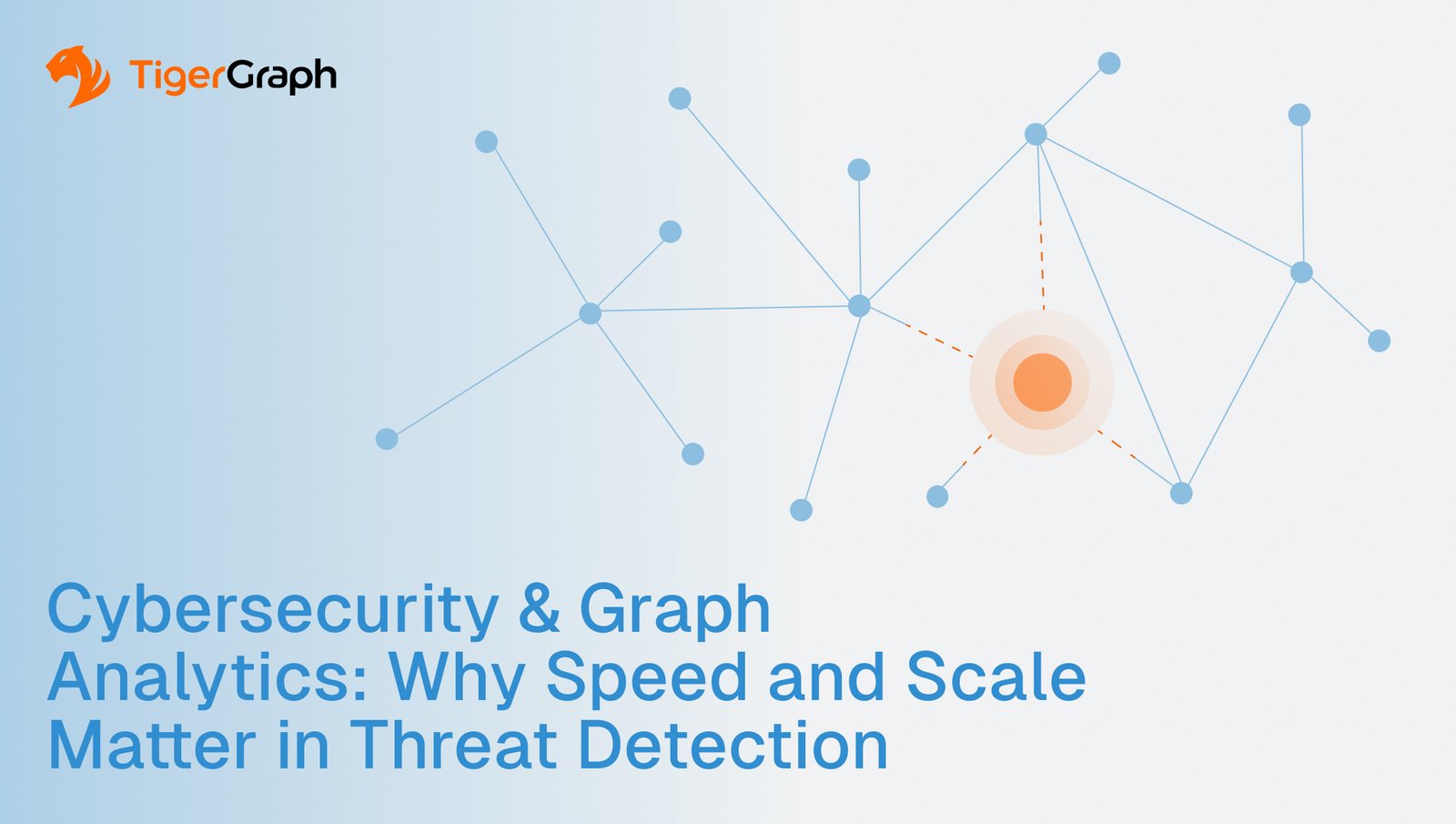
Cybersecurity & Graph Analytics: Why Speed and Scale Matter in Threat Detection

Modern cybersecurity threats don’t happen in isolation—they unfold as chains of behavior across users, devices, and systems. One login anomaly means little, but a sequence of events—unusual access, lateral movement, privilege escalation—can signal an active breach.

The challenge is that most cybersecurity tools weren’t built to follow those chains in real-time. To detect threats as they happen, organizations need more than faster alerts. They need connectional awareness—and that’s where graph analytics changes the game.

When Google acquired Wiz for $32 billion, part of the appeal was Wiz’s use of graph modeling to map cloud assets and their security posture. This underscores how critical graph-based cybersecurity has become—and why enterprises need graph-native infrastructure like TigerGraph at the core. 

The New Threat Landscape Is Connectional

Cyberattacks today don’t knock down the front door—they slip in through the side windows, one by one. These are no longer isolated incidents or simplistic hacks. Modern threats unfold as multi-stage, multi-vector campaigns that span users, devices, and systems—sometimes over hours, sometimes over weeks. And critically, they use credentials that appear legitimate, operating within what looks like normal behavior.

This new threat landscape is inherently connectional:

Traditional security information and event management (SIEM) tools and rule-based detection engines can’t keep up. They analyze flat event logs—treating each login attempt, network call, or API request as isolated points of data. But threats don’t behave that way. They unfold as patterns of relationships over time.

This is where most security systems fall short, because they can’t answer questions like:

These aren’t just technical questions—they’re graph questions. And they can’t be answered with tabular data models or basic log filtering. They require graph-native analytics that can traverse relationships in real-time, detect nuanced access patterns, and surface meaning from structural complexity.

TigerGraph excels here because it was built for exactly this kind of deep-link reasoning. With multi-hop traversal and in-graph computation, TigerGraph doesn’t just tell you what happened—it tells you how it happened, why it matters, and what’s likely next.

Why Speed Alone Isn’t Enough

It’s easy to assume that faster alerts equal better security. But in practice, speed without context leads to chaos. Security teams often find themselves overwhelmed by alert floods—pings triggered by raw thresholds or disjointed anomalies:

Each event might be harmless on its own. But without understanding how they relate, teams are left guessing which alerts matter—and which are just noise. And that’s the real challenge—most systems are built to move faster, but not to think smarter. They deliver volume, not clarity.

What security teams need isn’t just velocity—it’s situational awareness:

Graph analytics provides the missing layer of intelligence. It connects the dots, not just by proximity in time, but by relationship, behavior, and role. TigerGraph’s real-time graph engine goes beyond flagging anomalies—it evaluates intent, assesses risk, and identifies patterns of compromise even before they fully unfold.

And because it supports in-graph computation, parallel traversal, and streaming updates, TigerGraph doesn’t have to wait for an external system to process the data. It can reason as the attack happens, helping defenders act before damage is done.

Speed helps you react; graph-powered context helps you outsmart—and TigerGraph is purpose-built to excel in both.

How TigerGraph Powers Real-Time Threat Detection

TigerGraph is purpose-built for the kind of multi-hop reasoning that modern cybersecurity demands—tracking not just isolated events, but the relationships and sequences between them. Today’s threats are distributed, adaptive, and often hidden behind valid credentials. Detecting them requires more than rules and alerts. It requires an engine that can understand context, relationships, and intent.

TigerGraph enables this shift through a combination of core capabilities:

Parallel traversal allows security teams to follow chains of relationships across billions of entities—such as mapping a user’s access history, the devices they’ve used, and the systems those devices have touched. It doesn’t stop at a single hop. It explores complex patterns like lateral movement, escalation, and behavioral anomalies without slowing down as the graph grows.

Massively parallel processing with shared-value accumulators distributes workloads across many processors while tracking key results in real time. For example, as a query runs, processors can detect signals like elevated access or suspicious sequences of behavior and contribute them to a central view. This enables detection of sophisticated, coordinated attacks quickly and at scale.

In-graph computation means threat scoring, pattern recognition, and risk assessment happen directly within the graph engine—without exporting to another tool. This reduces latency and supports smarter, faster decision-making based on the most current data.

Real-time ingestion keeps the threat graph live and responsive by continuously incorporating streaming updates from logs, alerts, APIs, and sensors. Detection logic operates on fresh, dynamic data—not on a snapshot that’s already outdated.

The result is a smarter, more adaptive security posture—where detection systems reason through alerts, trace sequences of suspicious activity, and surface only the threats that matter. Analysts gain not just signals, but meaningful insight: paths, patterns, and explanations.

This makes TigerGraph especially effective across key cybersecurity use cases:

TigerGraph’s architecture also supports advanced applications like insider threat detection, where behavioral shifts across systems over time can signal misuse or compromise. And in dynamic environments adopting Zero Trust models, TigerGraph enables access decisions to consider not just identity, but the relationships, behaviors, and context that justify it.

All of this happens at enterprise scale. TigerGraph is designed to handle millions of users, thousands of endpoints, petabytes of telemetry, and an ever-evolving threat landscape. With sub-second latency on deep, multi-hop queries, horizontal scalability, schema flexibility without downtime, and streaming integration, TigerGraph equips security teams to reason at the speed of attack—not just react after the fact.

In cybersecurity, speed matters, but understanding matters more—and TigerGraph delivers both. Reach out to learn more today!

Google’s $32B Cybersecurity Bet on Wiz Validates the Power of Graph & Signals a Paradigm Shift

Google’s recent agreement to acquire cloud security firm Wiz for $32 billion marks a significant inflection point in the cybersecurity landscape. It isn’t just a high-stakes business deal—it’s a signal flare, and the message is clear: modern threats require modern defenses, and that means rethinking how we detect, contextualize, and respond to cyber risk.

And at the heart of this evolution lies a technology that’s been gaining quiet momentum: graph.

From Static Defense to Contextual Awareness

The acquisition represents a turning point from reactive, siloed security approaches toward proactive, contextual threat detection.

Wiz creates a unified graph of cloud infrastructure—an interconnected map of resources, vulnerabilities, permissions, and behaviors across multi-cloud environments like AWS, Azure, and Google Cloud. This graph-centric approach enables security teams to quickly understand not just what is happening, but why it’s happening and how it might spread.

“Wiz’s solution rapidly scans the customer’s environment, constructing a comprehensive graph of code, cloud resources, services, and applications – along with the connections between them. It identifies potential attack paths, prioritizes the most critical risks based on their impact, and empowers enterprise developers to secure applications before deployment. It also helps security teams collaborate with developers to remediate risks in code or detect and block ongoing attacks.”

While Wiz uses graph at the application layer—mapping cloud resources, connections, and vulnerabilities to visualize and act on risk—the deeper story is about how that graph is constructed, scaled, and queried in real time.

Wiz shows what’s possible when you model security context as a graph—but the infrastructure challenge is:

That’s where TigerGraph comes in.

Wiz’s approach validates the importance of graph—but TigerGraph enables it at enterprise scale. It’s the difference between using graph to display insights and using graph to power the entire detection and response system. One is a snapshot; the other is a real-time engine.

But let’s take a step back to see why graph, itself, is such an improvement and how TigerGraph elevates the experience even further.

Graph Isn’t Just Faster, It’s Fundamentally Different

Traditional databases—like relational systems—are built to handle structured data in tables. But cybersecurity challenges don’t follow neat tabular rules. Modern threats are dynamic, multi-layered, and deeply interconnected. Graph databases are purpose-built to model these complex relationships—between users, systems, credentials, devices, actions, and more.

That’s why graph isn’t just a faster way to query data—it’s a more appropriate and powerful model for the problem at hand. And when operating at scale with real-time demands, TigerGraph’s unique architecture delivers where others fall short.

Unlike general-purpose graph databases, TigerGraph is engineered from the ground up to process complex, multi-hop queries using distributed and parallel computing. That translates to:

TigerGraph is more than a database—it’s the real-time engine behind intelligent cybersecurity platforms.

Distributed Graph Engine Purpose-built for Cybersecurity

Not all graph technology is created equal. While Wiz uses graph structures to power its application-layer insights, TigerGraph could take it deeper, offering a distributed, high-performance graph engine purpose-built for the demands of modern cybersecurity operations.

Our key differentiators include:

This isn’t graph as a visual tool—it’s graph as infrastructure.

When many people hear “graph,” they think of a visualization—dots and lines showing how people are connected on a social network or how devices are linked in a network diagram. That kind of visual graph can be useful for understanding relationships at a high level, but it’s not what powers real-time cybersecurity.

In this context, the graph is the underlying architecture—a way of structuring and querying data that emphasizes the connections between things, not just the things themselves. It’s about transforming relationship data into a real-time reasoning layer for detection, prevention, and response.

Cyber threats aren’t isolated events. They unfold as sequences of actions across systems—user logins, access requests, file downloads, API calls, and permission changes. Traditional systems often log these as disconnected events, making it hard to see the bigger picture.

Graph infrastructure flips that model. It allows you to:

That’s what turns a graph into a reasoning engine, not just a static map. And when it’s backed by a platform like TigerGraph—designed for high-speed, distributed traversal—you get real-time, scalable threat intelligence.

Where Cybersecurity Is Headed—and Why Graph Leads the Way

We’re helping cybersecurity leaders move beyond siloed alerts and reactive defenses toward something more proactive, intelligent, and context-aware. Take one real-world example: Security platforms using TigerGraph to classify and assess newly registered websites before they can be weaponized for phishing or malware.

How? By connecting data points like domain registrars, SSL certificates, IP histories, user agents, and DNS records—then running real-time graph analytics across those connections. This reveals subtle, emerging threat patterns that would be invisible to traditional, row-by-row analysis. Layer in machine learning, and these systems can detect risky behaviors that resemble what known threat actors have done before—even when the attack is brand new.

The result? Actionable insights before the attack ever begins.

Cybersecurity today isn’t about static rules or hardened perimeters. It’s about operating in dynamic, constantly shifting environments—where identities are fluid, access is everywhere, and attacks evolve in seconds.

That’s why cybersecurity is fundamentally a contextual or relationship-driven problem.

This problem is one where the danger lies not in any single event, but in how events relate to one another. In cybersecurity, this could be a sequence of login attempts, a chain of credential access, or a subtle shift in a user’s behavior over time. Traditional databases aren’t designed to detect these complex chains. They see records. Graphs see relationships.

Graph databases provide the connective tissue needed to model and monitor this complexity.

And not all graph solutions are created equal. TigerGraph is purpose-built to solve these challenges at scale:

TigerGraph offers context-rich solutions to cybersecurity’s context-deficit problem.

Google’s $32B acquisition of Wiz may grab headlines, but the deeper takeaway is clear: the industry is shifting toward architectures that rely on real-time graph reasoning. Because tomorrow’s security challenges won’t be solved with yesterday’s tools.

TigerGraph enables that shift—turning complex, distributed threat data into precise, actionable intelligence at enterprise scale.

Want to see how graph analytics can supercharge your threat detection and response? Let’s talk.