Contact Us

The Power of Graph Relationships: Turning Isolated Data into Connected Insights

Enterprises do not suffer from a lack of data, but they do suffer from data silos and a lack of connection. Context is lost. Adding relationships to the data solves this problem.

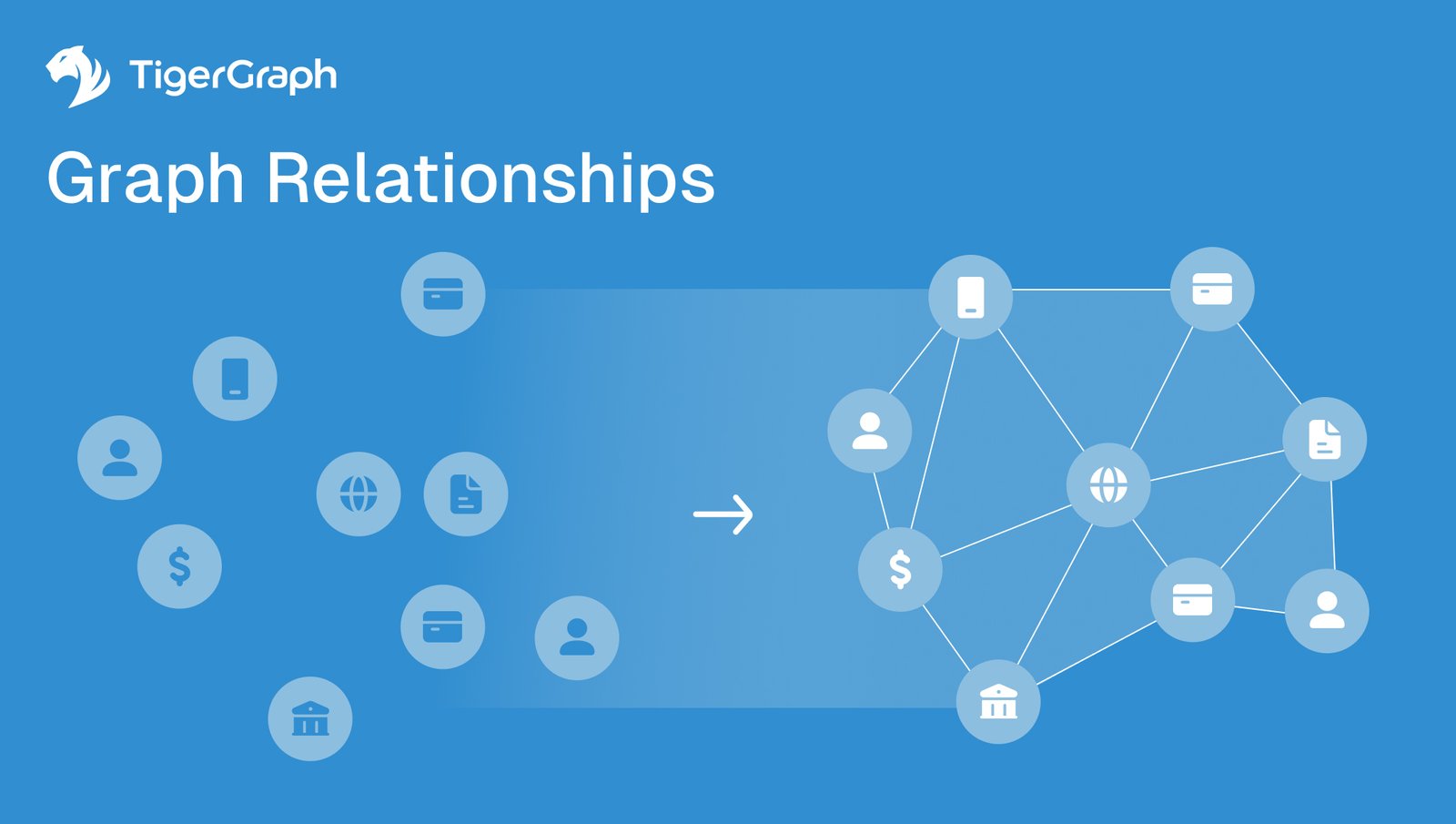
Graph relationships map how people, accounts, devices, suppliers, and policies interact.  And when you model these links in a relationship graph, also called a connection graph, dashboards inform strategic decisions: fraud is traced across hops, supply chains show true dependencies, and operations move from guesswork to clarity. This is the foundation for resilient analytics, stronger models, and regulator-ready explanations.

What Are Graph Relationships?

Relationships in graphs are the edges that connect entities (nodes) and define how they interact: customer—account, account—device, supplier—shipment, data—decision. Capturing these links in a relationship graph, or sometimes called a connection graph, preserves context that tables oversimplify and flatten 

Types of relationships in graphs include transactional (money movement), ownership (control), dependency (what breaks if X fails), and lineage (how an output was produced). There are other types that capture temporal connections that change over time and proximity edges that show closeness.

When leaders can see these relationships clearly, they unlock faster analysis, better predictions, and explainable outcomes. Executives can point to named edges with timestamps and sources. This ability turns abstract analytics into operational intelligence.

Why Graphing Relationships Improves Decisions

Most organizations operate with fragmented data, but graphing relationships pulls those fragments together. The value becomes clear in five dimensions:

In short, graph relationships reduce noise, improve defensibility, and open new paths for growth.

A Taxonomy of Types of Graphical Relationships (with Examples)

Not all relationships in a graph serve the same purpose. To make connected intelligence operational, enterprises benefit from standardizing the types of relationships they track. By naming, defining, and cataloging these edges, teams ensure consistency across analytics, machine learning, and compliance workflows.

The most common categories include:

By establishing a taxonomy like this, organizations reduce duplication of effort, align semantics across teams, and create reusable analytics components. The result is faster time-to-insight, more consistent reporting, and defensible outputs that regulators and executives alike can trust.

Real-World Use Cases for a Relationship Graph

Fraud & AML

Fraudsters build networks, not single anomalies. Analysts trace rings via graph relationship paths: shared devices, IPs, merchants, mule clusters. Investigators pivot on paths, exporting timestamped chains for SARs. Models ingest features computed from these relationships: proximity to risk, communities, and time-bounded fan-in/fan-out.

Example: A fraud analyst reviews accounts that look clean individually. The relationship graph shows they all connect to the same IP and funnel funds into a common mule hub. Instead of chasing 200 isolated alerts, the team identifies and dismantles an entire ring.

Supply Chain & Operations

Enterprises are increasingly judged on resilience. A relationship graph maps multi-tier suppliers, contracts, and logistics. Leaders can identify graph relationship types that create bottlenecks or cascading failures. When disruptions hit, they answer “What if supplier X fails?” with a concrete multi-hop impact path.

Example: A manufacturer loses a Tier-2 supplier in Asia. A connection graph reveals that five factories, three shipping lanes, and dozens of retailers are affected downstream. The team quickly re-routes to mitigate losses.

Customer 360 & Growth

Customers are more than rows in a CRM—they’re connected ecosystems. By graphing relationships, banks see households, affiliates, and shared devices. Retailers discover cross-sell paths through these relationships: ownership + behavior + channel. Segmentation becomes explainable.

Example: A bank realizes that small-business credit card owners are also linked to consumer households. The relationship graph shows cross-use of devices and addresses, as well as the potential for bundled offers that improve retention.

Data Lineage & Governance

For compliance, lineage is everything. Types of relationships in graphs connect dataset→feature→model→decision. When asked which relationship is shown in the graph?, teams provide lineage, timestamps, and approvals.

Example: A regulator questions why a fraud model flagged a transaction. The relationship graph exports the full path—data source, engineered feature, model, score—eliminating ambiguity and reinforcing trust.

Traditional Models vs. a Relationship Graph (What Changes)

DimensionTraditional TablesRelationship Graph
ContextFlattened by joinsPreserved via edges & paths
Speed to InsightSlow joins, brittleSub-millisecond traversal on targeted patterns
ScalabilityDegrades with complexityBuilt for deep, multi-hop analysis
ExplainabilityManual stitchingPath-level lineage on demand
ML FeaturesLimited, row-boundRich: proximity, communities, fan-in/fan-out

The bottom line is that graph relationships compress time-to-answer and raise confidence in every decision.

TigerGraph’s Advantage for Graph Relationships

Not all platforms can operationalize graph relationships at scale. TigerGraph turns them into enterprise-grade outcomes:

Implementation Guide: From Silos to a Relationship Graph

Measuring Success (What Execs Should Track)

Quick Answers on Graph Relationships

Conclusion

Graph relationships are more than lines between dots—they’re the structure that makes data useful. By modeling relationships and operationalizing them, enterprises break silos, surface risk earlier, and turn context into competitive advantage.

With TigerGraph, you get sub-millisecond traversal, streaming scale, and path-level explainability—capabilities already delivering exceptional detection lift, significantly faster investigations, and many millions in savings for fraud/AML programs. Those same strengths apply broadly wherever connection graphs drive outcomes.

Context isn’t optional. Build your graphs deliberately. Name your edges, govern semantics, and put paths in front of analysts and models. That’s how you convert data into connected intelligence—at enterprise scale, with measurable ROI. Want to see this in action? Reach out to learn more!

Frequently Asked Questions

What are graph relationships and why are they important?

Graph relationships are the connections (or edges) that link entities like people, accounts, devices, suppliers, or datasets in a network. They define how these entities interact—such as customer → account, supplier → factory, or dataset → model. They are important because they preserve context that traditional tables flatten or lose, allowing enterprises to trace dependencies, detect risk, and make faster, more explainable decisions. With graph relationships, insights move from isolated data points to connected intelligence.

How do graph relationships improve decision-making and analytics?

Graph relationships reveal how everything is connected, turning fragmented data into a unified view of operations, risk, and opportunity.
By modeling relationships, organizations gain:

What are the main types of graph relationships used in enterprise data?

The most common graph relationship types include:

How does TigerGraph enhance the power of graph relationships?

TigerGraph operationalizes graph relationships at enterprise scale and sub-millisecond speed.
Its key advantages include:

What are practical use cases for relationship graphs in business?

Relationship graphs power many real-world applications: