Contact Us

Preventing Entity Resolution Merges That Ignore Lifecycle Evolution

It feels logical to treat entity resolution as a convergence problem. As records arrive over time and attributes accumulate, confidence increases. Eventually, everything that belongs together is merged into a single, stable entity.

But that model logic breaks down because identity does not stand still.

The variables are endless. People change addresses, devices and contact details. Businesses restructure, spin off subsidiaries, dissolve entities and reconstitute under new ownership. Accounts open, close and go dormant. Relationships expire even if records persist.

When entity resolution ignores lifecycle, it begins merging records that should no longer belong together. The result is an entity view that looks comprehensive but no longer represents a single, coherent subject.

This is how lifecycle-blind merges quietly degrade identity truth, and we are going to explore how to prevent them.

Key takeaways

To see why this happens so consistently, it helps to look at how most resolution logic treats time.

Why Lifecycle Matters in Entity Resolution?

Entity resolution answers a practical question. Which records represent the same real-world entity right now? It’s a question that changes as entities evolve.

Most resolution pipelines are optimized to detect similarity. If names align, addresses overlap, and identifiers match, then similarity increases, and records are merged.

What similarity alone does not capture, though, is when those attributes were valid and whether they still apply.

A record that was correct five years ago may no longer describe the current entity. A relationship that once implied control may have expired. An identifier that once anchored resolution may have rotated.

When lifecycle is ignored, resolution logic assumes continuity where none exists, and these assumptions surface in predictable, repeatable ways.

How Lifecycle-Blind Merges Show Up in Practice

Programs tend to encounter lifecycle failures in a few recurring patterns.

Merging records from incompatible lifecycle stages
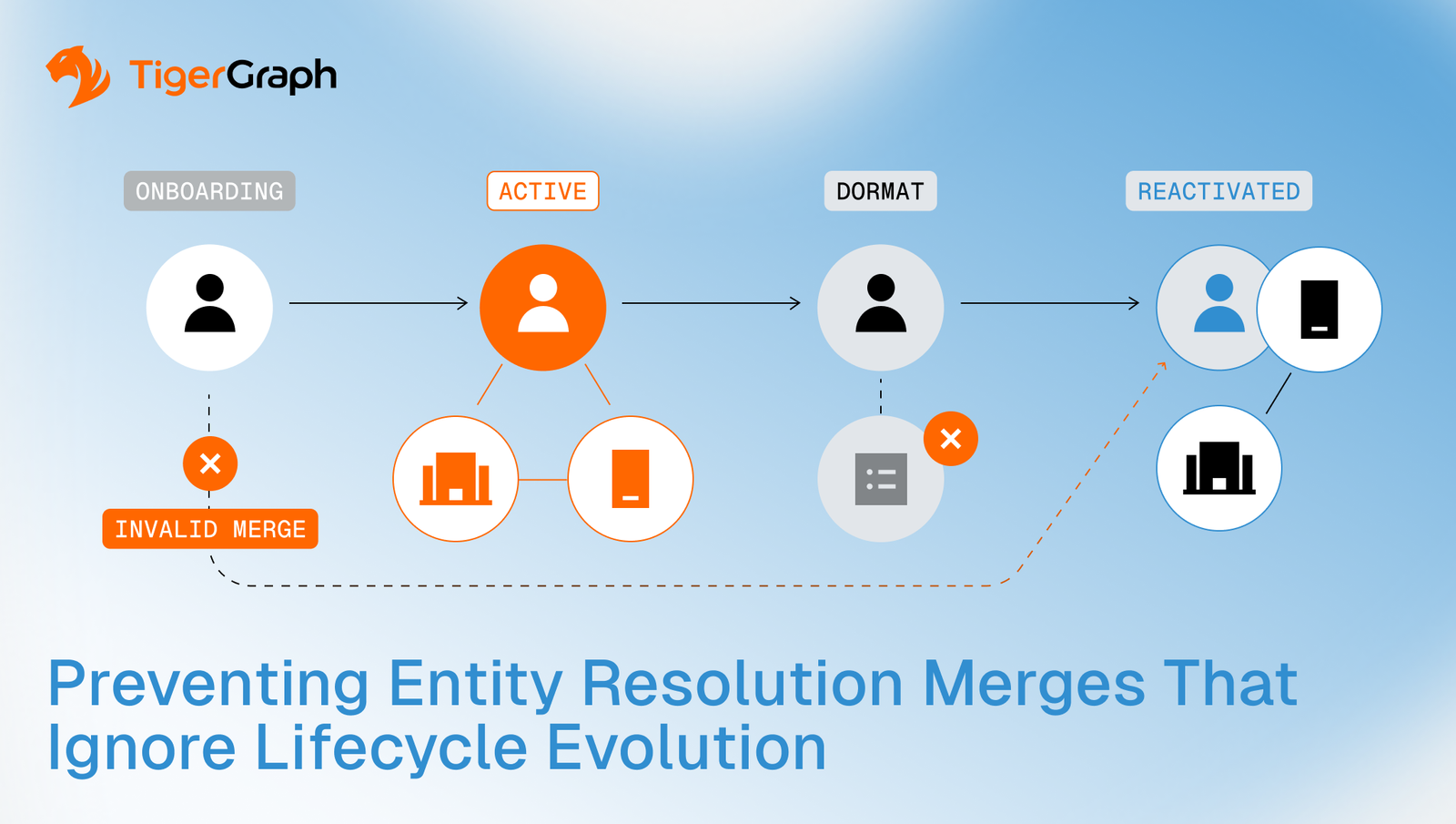
Onboarding records merge with post-closure activity, dormant entities merge with active ones, and historical profiles collapse into current views, regardless of timing.

Expired relationships treated as active
Ownership, control or operational relationships persist in the resolved entity even after they are no longer valid. Exposure logic continues to rely on links that should have aged out.

Identity drift masked by aggregation
Attributes change gradually, as devices rotate and behaviors shift. Instead of triggering reassessment, resolution absorbs the changes into a growing entity cluster that no longer reflects a single state.

Reactivation without separation
Entities that go dormant and later reappear are treated as continuous, even when the material context has changed. Resolution assumes everything stays the same rather than reevaluating relevance.

In each case, the issue is that time is not being evaluated as part of the merge validity process.

These merge patterns do not stay confined to resolution. They ripple into every workflow that depends on the resolved entity.

Why Lifecycle-blind Resolution Creates Downstream Risk?

When a resolved entity is treated as fixed, teams assume the identity is settled, but behavior and context change over time. Detection models end up learning from a mix of old and current information and risk scores blend activity from different stages of an entity’s life. Investigators are then left trying to explain today’s behavior using attributes that may no longer apply.

When questions arise, explanations become fragile.

The answers often depend on assumptions rather than reviewable evidence. This is how lifecycle failures turn into inconsistent outcomes instead of obvious data defects.

Addressing these downstream issues starts with rethinking what evidence resolution should consider.

What Lifecycle-aware Resolution Actually Requires?

Lifecycle-aware resolution does not require predicting intent or modeling behavior change. It requires treating time, role, and relationship validity as first-class evidence.

This means asking:

These questions cannot be answered solely from static similarity. This is where connected context becomes essential.

What Connected Analysis Adds

Connected analysis makes the lifecycle visible. Instead of evaluating records only at rest, teams can evaluate how relationships and attributes evolve over time within the network.

This supports several critical capabilities.

Temporal validation of links
Relationships can be assessed based on when they were active, not just whether they exist.

Detection of stale or incompatible connections
Traversal, or walking relationships step by step across connected entities, makes it possible to identify links that persist even though the underlying evidence has changed over time.

Separation of historical context from current identity
Historical relationships remain available for explanation without automatically influencing present-day resolution.

Reviewable merge decisions
When merges are questioned, teams can show not only what matched, but why it still matched given the entity’s evolution.

This preserves continuity without forcing permanence. Making lifecycle visible changes how teams review and correct decisions.

How this Improves Review, Quality Assurance, and Remediation

Lifecycle-aware resolution improves explainability.

Investigators can see when links were formed, how long they were valid and what evidence replaced them. QA teams can identify resolution failures tied to aging, drift or improper persistence rather than logic defects.

Remediation becomes targeted. Instead of splitting entire entities, teams can retire specific links, reclassify lifecycle stages or adjust merge rules where timing invalidates assumptions.

Most importantly, outcomes become easier to defend because identity decisions reflect how entities actually change over time.

Supporting this level of lifecycle-aware analysis requires more than adding timestamped records to the workflow.

How TigerGraph Fits the Workflow

The operational challenge is evaluating identity structure as it evolves. TigerGraph supports lifecycle-aware resolution by enabling:

The system provides the connected context needed to apply program-defined rules consistently and transparently. For most programs, adopting lifecycle awareness starts with a few concrete governance changes.

Practical Steps for Lifecycle-aware Resolution

Programs seeking to reduce lifecycle-driven resolution failures often start with a few actions.

Lifecycle awareness works best when it is embedded into resolution governance, not handled as an exception. 

Conclusion

Entity resolution fails quietly when time is ignored. Identities do not break all at once; they evolve. Lifecycle-aware resolution places historical context in the right frame.

By evaluating whether links and merges still make sense given when the evidence occurred, teams can prevent stale context from distorting identity and undermining confidence in outcomes.

A single customer view is not defined once. It has to be maintained as the entity changes.

If your teams are struggling with merges that no longer reflect how entities actually change over time, contact TigerGraph to see how connected analysis helps keep identity views accurate and reviewable as conditions evolve.

Frequently Asked Questions

1. What is Lifecycle-aware Entity resolution in Fraud and AML Systems?

Lifecycle-aware entity resolution is the practice of evaluating identity records based not only on attribute similarity but also on when relationships, identifiers, and attributes were valid. In fraud, AML, and KYC systems, identities evolve over time as customers change addresses, devices, ownership structures, or account status. Lifecycle-aware resolution ensures that records are merged only when they represent the same entity during the same time period, preventing outdated relationships from distorting the current identity view.

2. Why can Traditional Entity Resolution Create Inaccurate Identity Views in Financial Systems?

Traditional entity resolution focuses on matching similar attributes such as names, addresses, or identifiers. However, it often ignores when those attributes were valid. In financial systems, identities frequently change as accounts close, businesses restructure, or devices rotate. When resolution logic treats these attributes as permanent, it can merge records that belong to different lifecycle stages, creating identity profiles that combine outdated and current information.

3. How do Lifecycle-blind Identity Merges Affect Fraud and AML Investigations?

Lifecycle-blind merges can distort investigations by combining historical and current identity evidence into a single profile. Fraud and AML investigators may see relationships that are no longer valid, such as expired ownership links or outdated contact information. This can lead to incorrect risk assessments, confusing investigation paths, and inconsistent case decisions because analysts cannot clearly distinguish between historical context and current activity.

4. How can Graph Analytics Help Manage Identity Changes Over Time?

Graph analytics helps manage identity changes by modeling entities, attributes, and relationships as a connected network that includes temporal context. Investigators and data teams can traverse identity relationships and evaluate when those links were active. This allows organizations to separate historical identity evidence from current relationships, detect stale connections, and ensure that entity resolution decisions reflect how identities evolve over time.

5. Why is Time-aware Identity Modeling Important for KYC, Fraud, and AML Programs?

Time-aware identity modeling is critical for KYC, fraud, and AML programs because regulatory decisions and risk assessments depend on accurate identity context at a specific point in time. Without lifecycle awareness, identity resolution may rely on outdated relationships or attributes. Graph-based identity models allow institutions to evaluate when connections existed, helping investigators and compliance teams make defensible decisions based on current and historically valid evidence.

Why Temporal Conflicts in Entity Resolution Cause Chaos

Entity resolution often assumes that identity becomes more stable over time. As more data arrives, records are expected to converge, links are expected to strengthen, and confidence is expected to increase. But in reality, time can be disruptive.

Many entity resolution failures do not stem from missing data or weak matching logic alone. They emerge when changes over time are ignored, misinterpreted or collapsed into a single static view. The result is an identity representation that looks coherent on paper but no longer reflects reality.

This is where temporal conflicts appear.

Key takeaways

Why Time Creates Risk in Entity Resolution

Entity resolution answers a practical operational question: “Which records represent the same real-world entity right now?”

That question changes continuously. People move, businesses restructure, accounts open and close, and behavior shifts across channels and over time.

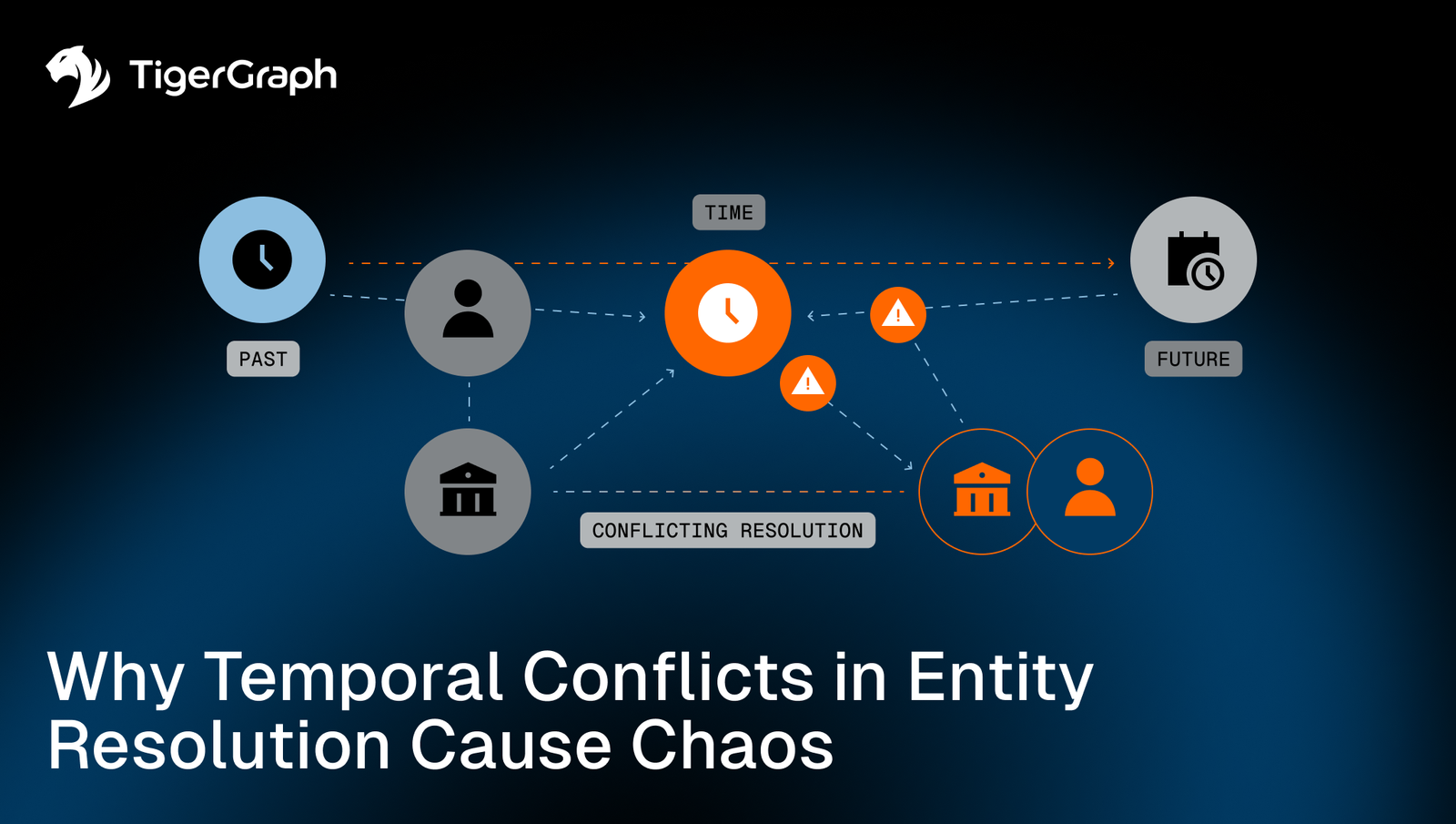
Most resolution pipelines are designed to link records based on similarity at a point in time. They are far less effective at evaluating whether those links remain valid as conditions change. When time is treated as secondary metadata rather than as part of link validity, outdated relationships persist longer than they should.

This creates tension between historical truth and current truth. Both may be accurate in isolation. The risk emerges when they are treated as equivalent.

The tension becomes operationally visible in a small number of repeatable failure patterns.

Where Temporal Conflicts Show Up in Practice

These conflicts do not appear randomly. They tend to surface in a small number of recurring patterns.

Incompatible attributes within a resolved entity
Attributes that should not coexist appear together because they were correct at different moments. Address histories overlap incorrectly, device usage patterns conflict and behavioral timelines no longer align.

Identity change without resolution update
Records update, but resolution does not. New identifiers are added while old ones continue to dominate linkage logic. The resolved entity stops evolving even as the underlying evidence changes.

Lifecycle stage mismatches
Records from incompatible stages are merged because they share attributes, even though their timing makes the merge questionable. Onboarding data collapses into previously closed profiles and dormant relationships persist as active ones.

In each case, the issue is that time is not being evaluated when determining whether links still make sense. When these conflicts persist, their impact extends beyond resolution accuracy into downstream decision-making.

Why Static Resolution Breaks Downstream Workflows

A static “single customer view” creates operational confidence. Teams assume that once records are resolved, identity context is settled.

When that assumption is wrong, downstream systems inherit the error.

Detection models train on outdated identity groupings, and risk scores blend evidence that should no longer be combined. Investigations struggle to reconcile current behavior with historical attributes that still influence decisions.

Explanations become harder as well. When reviewers ask why records are linked or why a risk score changed, the answer often depends on evidence that is no longer relevant but remains structurally present.

This is how time-related resolution failures turn into operational friction rather than obvious data defects. Addressing this requires a way to evaluate identity structure as it changes, not just how it appears at rest.

What Connected Context Adds to Time-aware Resolution

Connected data makes temporal conflicts visible because it allows teams to evaluate identity structure over time, not just attributes at rest.

Instead of asking whether two records match, teams can ask whether the relationships that justified the match still hold given when the evidence occurred.

Graph traversal supports this by allowing reviewers to follow relationships step by step across time-stamped connections. Traversal simply means walking through related entities and relationships to understand how they connect and how those connections change over time.

Some links strengthen as evidence accumulates. Others weaken, expire or diverge as behavior changes. Evaluating relationship paths rather than static pairwise similarity makes it easier to detect drift before it cascades downstream.

This approach does not infer intent or predict behavior. It preserves time as evidence and evaluates whether identity structure remains coherent as the network evolves.

Making temporal structure visible changes how teams review, validate and correct resolution outcomes.

How this Supports Review, QA, and Remediation

Time-aware resolution improves reviewability. Investigators can see when links were formed, what evidence supported them at the time and what has changed since.

Quality assurance teams can identify recurring failure modes where resolution freezes too early or updates too slowly. Remediation becomes more targeted because teams can focus on links that no longer align with current evidence instead of reworking entire identity clusters.

Most importantly, decisions become easier to explain. Resolution outcomes can be justified based on how identity evolved, not just how it was matched at a single point in time.

Supporting this consistently depends on whether the underlying platform can treat time as part of relationship logic.

How TigerGraph Fits the Workflow

The operational challenge is not detecting change. It is determining whether existing identity links still hold given when the supporting evidence occurred.

TigerGraph supports this workflow by enabling teams to treat time as part of relationship context rather than background metadata. Relationships can be evaluated alongside timestamps so reviewers can understand when links were formed, how they evolved, and whether they remain relevant.

In practice, this supports:

Resolution logic, thresholds and remediation decisions remain program-defined. TigerGraph provides the connected, time-aware context that allows those decisions to be applied consistently and explained clearly.

Conclusion

Temporal conflicts reveal where resolution logic has stopped keeping pace with reality. Addressing them doesn’t mean abandoning existing approaches, but it does require evaluating whether identity links still make sense given when the evidence occurred.

Use these patterns to assess whether your resolution process can detect identity changes, lifecycle mismatches, and stale linkages before they surface as inconsistent decisions, degraded models or investigation dead ends.

A stable customer view is not defined once; it has to be maintained over time, and TigerGraph helps teams facilitate that capability. Reach out today to learn more about this and other entity resolution features that graph models offer.

Frequently Asked Questions

1. What are Temporal Conflicts in Entity Resolution?

Temporal conflicts in entity resolution occur when records that were accurate at different times are merged into a single identity without considering when the information was valid. For example, outdated addresses, devices, or relationships may remain linked to a profile even after they are no longer relevant. These conflicts create identity views that appear consistent but no longer reflect the current real-world entity.

2. Why can a Static “Single Customer View” Create Risk in Data Systems?

A static single customer view assumes that once records are linked, the identity remains stable. In reality, identities evolve as customers move, businesses restructure, or accounts change status. When time is ignored, outdated relationships and attributes may remain active in the resolved entity, leading to incorrect risk assessments, inconsistent analytics, and investigation confusion.

3. How do Temporal Conflicts Affect Fraud, AML, and Compliance Workflows?

Temporal conflicts can cause fraud detection models, AML monitoring systems, and compliance reviews to rely on outdated identity information. When historical and current data are blended together without context, risk scores may reflect conditions that no longer exist. Investigators may also struggle to explain why certain records are linked or why risk levels changed.

4. How does Graph Analysis Help Manage Identity Changes Over Time?

Graph analysis models identities, attributes, and relationships as a connected network that can include time-based context. By following relationships step by step across time-stamped connections, investigators can evaluate when links were valid and whether they should still influence the current identity structure. This approach helps detect identity drift, stale relationships, and lifecycle mismatches.

5. Why is Time-aware Identity Analysis Important for Entity Resolution Quality?

Time-aware identity analysis ensures that entity resolution reflects how identities evolve rather than how they appeared at a single moment. By evaluating when relationships were created, updated, or expired, teams can maintain more accurate identity views, improve data quality, and provide clearer explanations during audits, investigations, or regulatory reviews.